

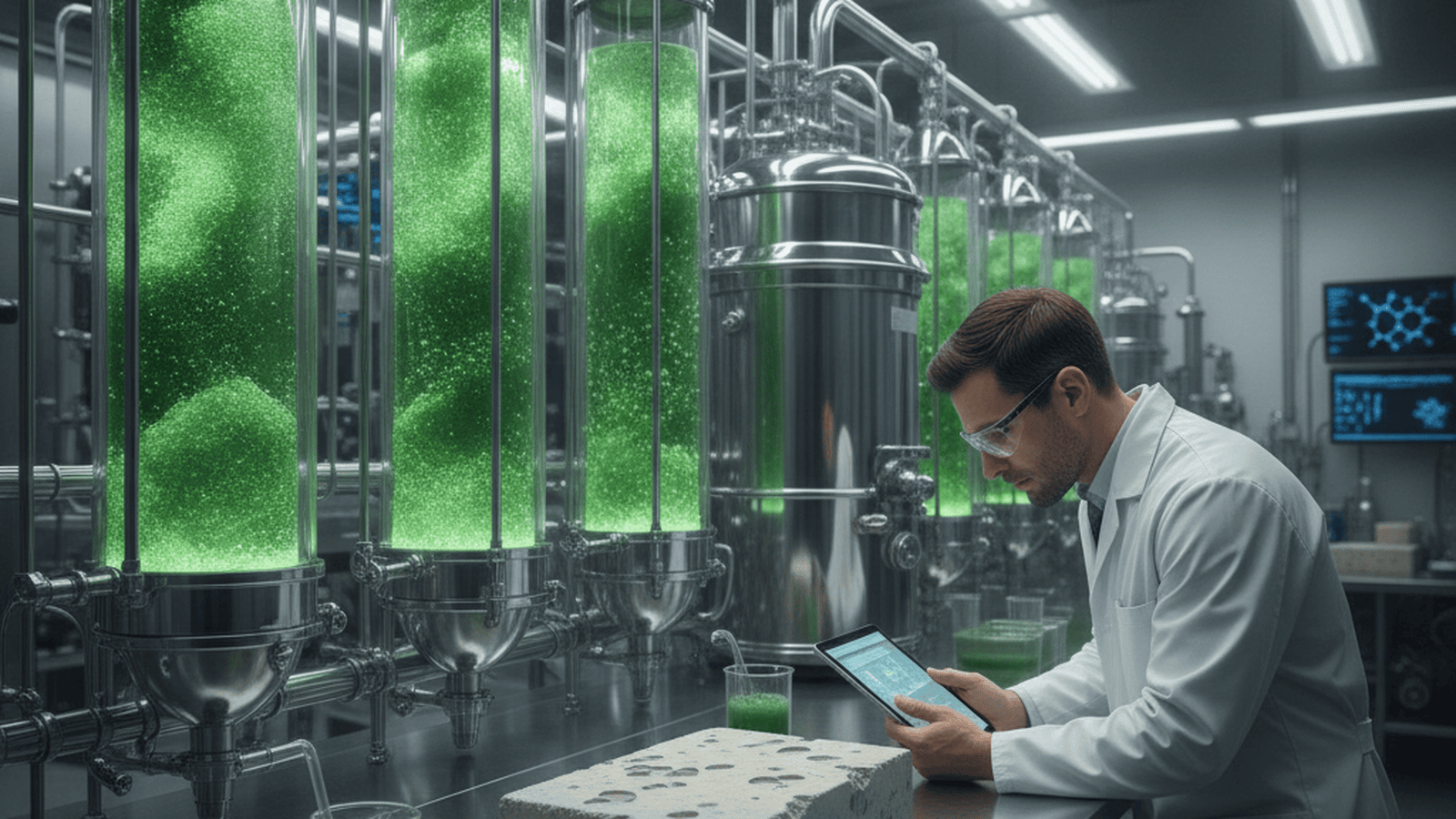
Researchers at Prometheus Materials have developed a zero-carbon bio-cement using microalgae and biomineralization. This process mimics coral reef formation to create high-strength building blocks that sequester carbon dioxide rather than emitting it.
TLDR: Scientists have engineered a bio-cement using photosynthetic microalgae to create carbon-neutral building materials. By utilizing biomineralization at ambient temperatures, the process replaces carbon-heavy traditional kilns. This breakthrough offers a sustainable alternative for the construction industry, potentially eliminating a major source of global industrial emissions while maintaining structural integrity.
The global construction industry is currently responsible for approximately eight percent of total worldwide carbon dioxide emissions, a figure largely driven by the production of Portland cement. To address this environmental burden, researchers at Prometheus Materials, a private-sector biotechnology firm based in Colorado, have developed a bio-cement alternative that utilizes microalgae to produce high-strength building materials. This breakthrough leverages the natural process of biomineralization, the same biological mechanism that allows coral reefs and seashells to form in marine environments.
Traditional cement manufacturing is an inherently carbon-intensive process. It requires heating a mixture of limestone and clay to temperatures exceeding 1,450 degrees Celsius in massive kilns, typically powered by fossil fuels. This process releases carbon dioxide in two ways: through the combustion of the fuel and through the chemical decomposition of the limestone, which sheds CO2 as it transforms into lime. The bio-cement process developed in the Prometheus laboratory bypasses these requirements entirely by operating at ambient temperatures and utilizing photosynthesis.
The core of the technology involves specific strains of cyanobacteria, often referred to as blue-green algae. These organisms are cultivated in specialized bioreactors where they absorb carbon dioxide from the atmosphere or from industrial exhaust streams. Through a proprietary stimulation process, the researchers trigger the algae to produce calcium carbonate. This mineral precipitate acts as a natural binder, effectively replacing the carbon-heavy clinker used in traditional cement. When this bio-mineral is combined with water and aggregate, it creates a bio-concrete that hardens into a structural material.
Inside the company’s facility, the production cycle is monitored by advanced sensors that track nutrient levels, light intensity, and CO2 absorption rates in real-time. The resulting bio-concrete blocks have undergone rigorous mechanical testing at third-party laboratories to ensure they meet the structural demands of modern architecture. Results indicate that these blocks possess compressive strengths and thermal properties that are comparable to, and in some cases superior to, standard concrete masonry units. Because the algae continue to sequester carbon throughout their growth phase, the final material can achieve a carbon-neutral or even carbon-negative footprint over its entire lifecycle.
The environmental implications of shifting to bio-based cement are profound for the global climate strategy. By eliminating the need for high-heat kilns, the process significantly reduces the energy demand of material production while avoiding the use of fossil fuels. Furthermore, the ability to grow building materials locally using sunlight and recycled CO2 could decentralize the supply chain for construction materials, reducing transportation-related emissions. This is particularly relevant for urban centers looking to meet ambitious net-zero goals without halting necessary infrastructure development or economic growth.
The transition from laboratory success to widespread industrial application remains the primary focus for the Prometheus team. Current efforts are centered on optimizing the growth rates of the algae to ensure a consistent supply of bio-mineral binder for large-scale projects. The company is also navigating the complex landscape of international building codes and material certifications to gain approval for use in load-bearing structures. This involves long-term durability studies to observe how the bio-cement performs under various environmental stressors over several decades.
As global urbanization continues to accelerate, the demand for concrete is expected to rise, making the search for sustainable alternatives more urgent. Future research will explore the potential for different algae strains to produce specialized materials, such as lightweight insulation or high-flexibility bio-composites. By integrating biological systems into the field of materials science, this innovation provides a scalable and scientifically grounded roadmap for the future of sustainable urban development.

Mason Reed serves as a Staff Writer for Just Right News, where he spearheads the Future Frontiers & Special Projects desk. In an era defined by rapid technological shifts and evolving social landscapes, Mason provides a steady, principled voice, examining the innovations of tomorrow through the lens of traditional American values. His work is most prominently featured in his signature series, “The Next Horizon,” where he explores the intersection of emerging technology, national sovereignty, and the preservation of individual liberty.
A native of San Diego, California, Mason’s worldview was shaped by the unique culture of his hometown. Growing up in a region defined by its strong military presence and its history of maritime industry, he developed a deep-seated respect for the institutions that provide national stability and the entrepreneurial spirit that drives the American economy. This upbringing instilled in him a belief that true progress is not found in discarding the past, but in building upon a foundation of proven principles. His reporting often reflects this San Diego influence, emphasizing the importance of a robust national defense and the necessity of maintaining a competitive edge in the global marketplace.
Now based in San Francisco, Mason operates from the heart of the world’s technological engine. Living and working in the Bay Area provides him with a front-row seat to the advancements—and the ideological challenges—emanating from Silicon Valley. While many in the region embrace a “move fast and break things” mentality, Mason’s reporting serves as a vital counterweight. He offers Just Right News readers a “boots on the ground” perspective, documenting how radical local policies and the concentration of tech power impact the everyday lives of citizens. His proximity to the industry allows him to cut through the marketing jargon of big tech to uncover the real-world implications for privacy, free speech, and the nuclear family.
In his “Future Frontiers” beat, Mason tackles complex subjects ranging from the ethics of artificial intelligence to the burgeoning private space race. He approaches these topics with a healthy skepticism toward centralized bureaucracy, championing instead the decentralized innovations that empower individuals. Through “The Next Horizon,” he highlights the pioneers and thinkers who are working to ensure that the future remains a place where human dignity and constitutional rights are protected. He believes that the rapid pace of change requires more than just technical expertise; it requires a moral compass rooted in the Western tradition.
Throughout his tenure at Just Right News, Mason has remained committed to the idea that the future is something to be shaped, not merely accepted. His writing is characterized by a rigorous defense of American exceptionalism and a belief that the country’s best days lie ahead, provided it remains true to its founding ideals. Whether he is investigating the impact of automation on the American workforce or profiling the next generation of aerospace engineers, Mason Reed ensures that his readers are equipped with the insights they need to navigate a changing world with confidence and clarity.