

Internal records and whistleblower disclosures reveal millions in wasted school technology funds and alleged pay-to-play clemency schemes within the federal government.
A series of newly released internal audits and whistleblower disclosures have exposed administrative mismanagement ranging from local school districts to the highest levels of federal law enforcement. These documents, obtained through public records requests and internal oversight channels, provide a factual baseline for ongoing investigations into the use of taxpayer funds and the integrity of the justice system.
In El Paso, Texas, an internal audit of the Independent School District uncovered a significant lapse in procurement oversight involving federal Title I funds. Records show the district spent $3.1 million to purchase 3,000 Mimio Interactive Flat Panels. However, the audit revealed that 929 of these units, valued at $2.3 million, remained in storage for over a year. Some of these high-tech panels were eventually installed in the cafeterias of schools that had already been closed, and one panel is documented as missing. This pattern of waste extends to technology infrastructure, where 88 Dell servers purchased for $805,000 in February 2024 remain largely unused. These findings coincide with a consultant’s recommendation that the district consider bankruptcy due to fragmented accountability and chronic overspending.
At the federal level, a Department of Justice whistleblower has come forward with allegations regarding the handling of Julio Herrera Velutini, a Venezuelan billionaire accused of funneling millions to a pro-Trump super PAC. The whistleblower described the DOJ’s move to grant a lenient plea deal as “staggering,” framing it as a “second chance” for a fraudster. This disclosure has fueled a broader congressional inquiry into what investigators call a “pardon on steroids”—a one-page settlement that allegedly shields specific parties from future federal cases tied to certain conduct. The investigation examines whether these settlements were used to bypass standard prosecutorial protocols.
Lobbying records further complicate the clemency landscape. Mo Strategies, a firm staffed by former administration officials, has reportedly focused on “immigration and pardons,” securing $500,000 from a single client. Advocacy watchdogs monitoring these filings suggest that lobbyists close to the administration are charging between $1 million and $6 million to facilitate clemency requests. These documented financial trails have prompted calls for the Inspector General to review the transparency of pardon-related influence and undisclosed contacts. The data suggests a burgeoning industry where access to executive mercy is being commodified.
Meanwhile, in Michigan, state police are utilizing forensic records to advance an investigation into a death at the Electric Forest festival. Autopsy results confirmed that a neonate found in a portable restroom on June 28 was born alive, with fluid in the lungs and stomach indicating the infant had breathed. While the death is not currently classified as a homicide, investigators are seeking public assistance to fill the gaps in the timeline established by the medical examiner’s report. Authorities are currently reviewing festival entry logs and medical records to identify the mother.
These developments occur as the executive branch focuses on the 250th anniversary of the country, including President Trump’s recent rebuke of communism at Mount Rushmore. However, the paper trail left by administrative actions continues to provide the primary evidence for those seeking to hold the state accountable. From idle school equipment to million-dollar fees for pardon brokers, the records indicate a critical need for document-driven oversight to ensure the government remains answerable to the people.
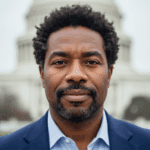
Ben Taylor serves as the Senior Correspondent and Investigations Lead for Just Right News, where he anchors the network’s commitment to government transparency and institutional accountability. With a career defined by a relentless pursuit of the facts, Taylor spearheads the acclaimed feature series “The Paper Trail,” a deep-dive investigative column that prioritizes primary source documentation over political rhetoric. Based in the heart of the nation’s capital, he has earned a reputation as one of the most formidable investigative journalists in Washington, D.C., known specifically for his mastery of public records and the Freedom of Information Act.
Taylor’s approach to journalism is deeply rooted in his upbringing in Kansas City, Missouri. Growing up in the “Show Me State,” he developed a healthy skepticism of centralized power and a profound respect for the common-sense values of the American heartland. This Midwestern foundation informs his reporting today, as he bridges the gap between the complex machinations of federal bureaucracy and the everyday concerns of citizens across the country. For Taylor, investigative reporting is not about chasing headlines; it is about ensuring that the government remains answerable to the people it serves.
As an African American man working within the conservative media landscape, Taylor brings a principled perspective to his beat. He views the Constitution and the right to information as the ultimate equalizers in a free society. His work often highlights how bureaucratic overreach and lack of transparency disproportionately affect individual liberties. By focusing on the “paper trail,” Taylor strips away the spin of partisan talking points, instead providing Just Right News readers with the raw data and internal communications that reveal how their tax dollars are spent and how policy decisions are actually made.
In his role as Investigations Lead, Taylor oversees a team dedicated to uncovering the stories that mainstream outlets often overlook. Whether he is auditing federal spending, investigating regulatory overreach, or exposing inefficiencies within the administrative state, his methodology remains consistent: follow the evidence wherever it leads. His presence in Washington, D.C., allows him to maintain a constant watch over the halls of power, yet he remains steadfastly connected to his roots, ensuring his reporting reflects the clarity and directness of his Missouri home.
Throughout his tenure at Just Right News, Taylor has become a vital voice for those who demand integrity in public office. He believes that a well-informed electorate is the strongest defense against government overreach, and he has dedicated his career to providing the public with the tools they need to hold their leaders accountable. Through “The Paper Trail” and his broader investigative work, Ben Taylor continues to set the standard for rigorous, document-driven journalism that champions the values of transparency, individual responsibility, and the rule of law.