

The Trump administration is utilizing Qatari mediation to stabilize Middle Eastern shipping while Beijing intensifies its historic commitment to reunifying Taiwan.
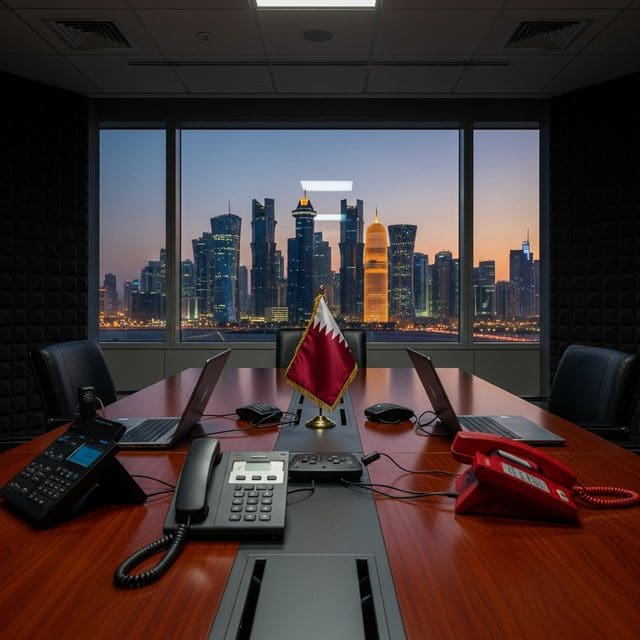
The landscape of global security shifted this week as the United States and Iran entered complex technical negotiations in Doha. While the Trump administration maintains a posture of ‘peace through strength,’ the opening of these working-level talks suggests a pragmatic pivot toward stabilizing energy corridors. Special envoy Steve Witkoff and Jared Kushner facilitated the diplomatic groundwork in Qatar on June 29, 2026, at Tehran’s request. Despite this opening, the Iranian delegation continues to refuse direct high-level contact with American envoys, necessitating a mediated approach relying on Qatari and Pakistani intermediaries.
These discussions are grounded in a reciprocal de-escalation framework aimed at securing American interests without further military entanglement. Tehran is linking progress to the phased unfreezing of approximately $12 billion in assets held in Qatari accounts, alongside relief from oil sanctions. In exchange, U.S. officials are pressing for a formal pledge to cease attacks on commercial shipping in the Strait of Hormuz. President Trump noted Wednesday that Iran has remained ‘fine’ regarding its adherence to existing memorandums of understanding, signaling cautious optimism that technical compliance can be maintained.
While the Middle East seeks a fragile equilibrium, the Indo-Pacific remains a theater of escalating tension. In a major address marking the 105th anniversary of the Chinese Communist Party, President Xi Jinping described the ‘reunification’ of Taiwan as an ‘unshakable commitment.’ Xi’s rhetoric has sharpened, framing the absorption of the island as ‘unstoppable’ and warning the international community to prepare for ‘perilous storms.’ This follows recent large-scale military drills by the People’s Liberation Army that simulated a total blockade of the island, testing the limits of Western maritime dominance.
In Eastern Europe, the shadow war between Kyiv and Moscow continues to manifest in targeted operations threatening potential negotiated settlements. Ukrainian law enforcement recently reported foiling a Russian intelligence plot to assassinate a senior military-intelligence official in Kyiv using a specialized drone. Conversely, Moscow has accused Ukraine of organizing an earlier assassination attempt on Lieutenant General Vladimir Alexeyev to sabotage back-channel peace talks. These incidents underscore the persistent instability on NATO’s eastern flank, where the line between conventional warfare and intelligence-led liquidations has blurred.
Domestically, the Trump administration’s foreign policy is executed against significant institutional shifts. The Supreme Court recently issued landmark rulings on June 30, 2026, including striking down limits on political party spending and affirming state bans on transgender athletes in school sports. Furthermore, the administration appointed a new UFO council to study national security risks posed by unidentified aerial phenomena. Speaker Mike Johnson also confirmed the President will not veto a bipartisan housing bill, suggesting a desire to maintain domestic stability while the executive branch focuses on these high-stakes international maneuvers.
The geopolitical stakes are further complicated by shifting regional dynamics in Gaza. Reports indicate the Israeli government has explored plans for the ‘voluntary emigration’ of Gaza residents to third countries. While these nations have reportedly rejected the proposal, the move has complicated broader Middle East diplomacy. As these conflicts converge, the U.S. remains anchored to a realist doctrine, balancing Middle Eastern maritime security with the long-term strategic challenge posed by a determined China.

Olivia Kendall serves as the Senior Correspondent for Geopolitics, Defense, and Foreign Policy at Just Right News, where she provides a principled, conservative perspective on the complex forces shaping the global stage. With a career dedicated to deconstructing the intricacies of international relations, Kendall has become a trusted voice for readers who value national sovereignty, a robust military, and a foreign policy that prioritizes American interests above all else.
A native of Washington, D.C., Kendall’s professional journey is deeply rooted in her upbringing within the nation’s capital. Growing up in the epicenter of American political life, she developed an early and profound understanding of how policy is crafted and, more importantly, how it often fails to account for the values of the American heartland. This unique vantage point allowed her to witness firsthand the rise of globalist bureaucracies, fueling her commitment to reporting that champions the constitutional foundations of the United States. Her background as a British White American further informs her worldview, providing her with a keen appreciation for the Western tradition and the enduring importance of the “Special Relationship” in maintaining global stability.
Now based in Arlington, Virginia, Kendall operates from the doorstep of the Pentagon and the heart of the nation’s defense establishment. Her proximity to the decision-makers in the military and intelligence communities allows her to provide boots-on-the-ground reporting that is both timely and deeply informed. For Kendall, Arlington is more than just a base of operations; it is a daily reminder of the sacrifices made by the men and women in uniform. This connection to the defense community drives her rigorous coverage of military readiness and her advocacy for a “peace through strength” approach to diplomacy.
At Just Right News, Kendall is perhaps best known for her acclaimed feature series, “The World’s Shadow on America.” In this ongoing project, she explores the direct correlation between international developments and the daily lives of American citizens. Whether she is analyzing the encroachment of foreign adversaries in domestic supply chains or the impact of international treaties on local economies, Kendall’s work serves as a vital bridge between distant geopolitical shifts and their consequences at home. She rejects the notion that foreign policy is an abstract concern for elites, instead proving that what happens in the corridors of power in Brussels or Beijing has a tangible “shadow” that falls across every American doorstep.
Throughout her tenure, Kendall has remained a steadfast critic of international overreach and a vocal proponent of a clear-eyed, realistic foreign policy. She brings a sharp analytical mind to her beat, often challenging the prevailing narratives of the mainstream media to uncover the underlying truths that affect national security. Her reporting is characterized by a refusal to compromise on the truth and a dedication to the idea that a strong, secure America is the world’s best hope for liberty. As a Senior Correspondent, Olivia Kendall continues to lead the charge in providing the essential context and conservative insight necessary to navigate an increasingly volatile world.