

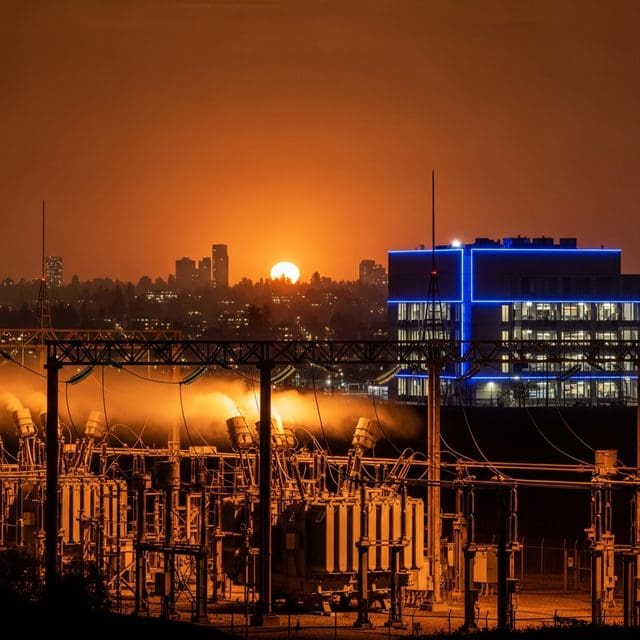
Record temperatures and surging data center loads are straining electricity markets from London to New York, forcing governments to weigh windfall taxes against rising consumer costs.
The intersection of extreme weather and rapid digital infrastructure expansion is pushing global energy markets into sustained volatility. As of July 1, 2026, grid operators in the U.S. and UK are grappling with record demand that threatens reliability and forces difficult policy trade-offs. The crisis is no longer just about seasonal peaks; electricity has emerged as a scarce commodity.
In the United Kingdom, Ofgem has implemented a 13% price cap increase for the July–September period, raising typical annual bills to approximately £1,862. This adds roughly £18 a month to household expenses, prompting Chancellor Rachel Reeves to propose increasing the windfall tax on low-carbon generators from 45% to 55%. The move seeks to fund targeted relief for low-income households, yet it highlights the tension between clean energy investment and protecting consumers from price shocks. Nearly 90% of British adults remain unaware of the specific network and policy costs comprising these rising bills.
Across the Atlantic, a massive heat dome is testing the American grid. PJM Interconnection, managing power for 65 million people, forecasts peak summer demand up to 169 GW, potentially shattering records. This surge is not merely residential; it is increasingly driven by the AI boom. Google, Amazon, and Microsoft reported record electricity and water consumption in 2025 due to AI infrastructure. Water has become a major flashpoint as data centers require millions of gallons for cooling during extreme heat.
In New York City and Chicago, emergency plans are active as aging coal and gas plants struggle to maintain the baseload required for both cooling and industrial-scale data centers. The grid is further strained by electric vehicle adoption and solar surges that threaten to overwhelm the National Grid during peak daylight. The Trump administration’s decision to lift export controls on advanced AI models like Anthropic’s Claude Fable 5 signals that domestic AI expansion will continue placing long-term pressure on the U.S. energy supply.
The strain is even more acute in Ukraine, where the energy system enters the high-demand summer severely degraded. Following systematic strikes on infrastructure, civilians face rolling blackouts, leaving some areas with only hours of power daily. This instability ripples through global markets, contributing to inflationary pressures in economies like Peru, where energy costs are driving up food prices.
JPMorgan strategists are now flagging extreme heat as a structural driver of higher baseline demand. The convergence of heat-wave load growth with AI expansion is creating a new reality for utility valuations. For the American taxpayer, the era of cheap, surplus energy is being replaced by a landscape where electricity is a scarce resource, requiring significant capital investment to ensure reliability. As industrial giants like Nippon Steel navigate U.S. investment, grid stability has become as critical to the economic outlook as labor or raw materials.

Mark Davis serves as the Senior Correspondent for Energy, Climate, and Resource Economics at Just Right News. In an era where the conversation around the environment is often dominated by alarmism and top-down mandates, Mark provides a vital, market-oriented perspective on the complex forces shaping our world. As the lead voice behind the acclaimed feature series “Power and the Planet,” he explores the intersection of environmental policy, global energy markets, and the fundamental economic principles that sustain modern civilization.
Mark’s pragmatic approach to resource management was forged in the high desert of his hometown, Albuquerque, New Mexico. Growing up in a region defined by both its breathtaking natural beauty and its rugged, resource-dependent landscape, he developed an early appreciation for the delicate balance between conservation and utilization. New Mexico’s unique position as a hub for both traditional energy production and cutting-edge scientific research provided Mark with a front-row seat to the evolution of the American energy sector. This upbringing instilled in him a deep-seated belief that true environmental stewardship is inseparable from economic prosperity and technological innovation.
Now based in Boulder, Colorado, Mark operates from the heart of the nation’s climate research community. While Boulder is often seen as a bastion of environmental idealism, Mark utilizes his post to provide a necessary counterweight, grounded in the realities of resource economics. He understands that energy policy does not exist in a vacuum; it has tangible consequences for the American taxpayer, the stability of the national power grid, and the strength of the domestic manufacturing sector. By reporting from the front lines of the climate debate, he is able to challenge prevailing narratives with hard data and a commitment to the principles of the free market.
Throughout his tenure at Just Right News, Mark has distinguished himself by focusing on the “Resource Economics” aspect of his beat. He frequently highlights the hidden costs of rapid energy transitions and advocates for an “all-of-the-above” energy strategy that prioritizes American energy independence. His work often shines a light on the geopolitical implications of resource scarcity, arguing that a secure nation must first be an energy-secure nation. Whether he is analyzing the impact of federal land-use regulations or investigating the supply chains required for new technologies, Mark remains focused on how policy decisions affect the lives and livelihoods of everyday citizens.
In “Power and the Planet,” Mark continues to bridge the gap between complex scientific concepts and the economic realities facing the country. He rejects the false choice between a healthy environment and a thriving economy, instead seeking out solutions that leverage American ingenuity and private-sector competition. For Mark, reporting on the climate is not about following the latest trends, but about ensuring that the conversation remains tethered to the foundational values of liberty, property rights, and fiscal responsibility. His contributions ensure that Just Right News readers receive a comprehensive, clear-eyed view of the challenges and opportunities defining the future of our planet.