

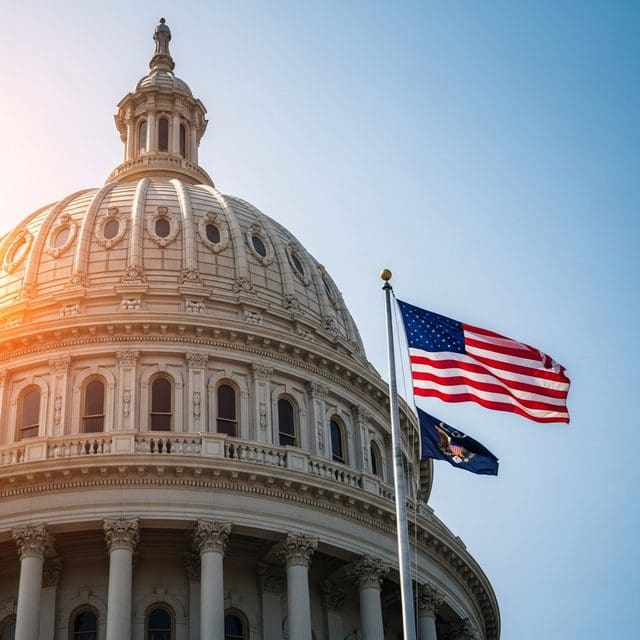
A landmark 6–3 Supreme Court ruling affirms the right of states to regulate athletic participation, reinforcing the Tenth Amendment and sparking a wave of new legislative proposals across the country.
The laboratories of democracy received a significant boost this week as the U.S. Supreme Court ruled 6–3 to uphold state laws banning transgender girls and women from participating in female school sports. The decision, addressing challenges to statutes in Idaho and West Virginia, serves as a definitive affirmation of the Tenth Amendment. By recognizing the authority of states to regulate athletic competition, the Court has cleared the path for dozens of other jurisdictions to implement similar protections. President Trump hailed the ruling as a victory for fairness, aligning the judicial outcome with his administration’s executive orders. The ruling creates a synergy between judicial precedent and executive policy, as federal funding remains tied to compliance with these standards. For governors, the decision is a green light to pursue policy experiments that prioritize local values over federal mandates.
While the courts address social policy, a different battle over federalism is unfolding on the House floor. Florida Representative Anna Paulina Luna has initiated a procedural blockade to force a vote on the Safeguard American Voter Eligibility (SAVE) Act. The legislation seeks to mandate proof of citizenship for voter registration—a move Luna argues is necessary to prevent non-citizens from influencing federal elections. By conditioning her support for funding packages on the Senate’s willingness to take up the bill, Luna is attempting to use federal leverage to ensure election integrity across all fifty states. This strategy has already begun to freeze House operations, creating a live struggle between the White House and the Senate over the future of federal election rules. The tension highlights the ongoing conflict between centralized standards and the constitutional prerogative of states to manage their own electoral processes.
This tension between state autonomy and federal oversight is also visible internationally. In Nigeria, Ekiti State Governor Biodun Oyebanji, recently reelected in a landslide, has begun advocating for reforms to strengthen local government finances. His focus on fiscal due process and revenue autonomy mirrors the efforts of American governors who seek to insulate their states from central government volatility. Oyebanji’s agenda serves as a regional case study in how localized economic reforms can validate broader national shifts. By emphasizing institutional strength, Oyebanji is demonstrating how state-level policy consolidation can provide stability even when national economic indicators, such as inflation, remain volatile.
However, the path of state-led governance is not without hurdles. In California, gasoline prices have exceeded the national average by $1.50 per gallon since the start of the Iran conflict in March, sparking calls for new anti-price gouging laws. This highlights the double-edged sword of state policy: while states have the power to innovate, they also bear the direct consequences of their regulatory environments. As personal consumption expenditures inflation data released in late June showed rates remaining above 4 percent, the pressure on statehouses to provide relief through deregulation or targeted local action continues to mount.
From the courtroom to the statehouse, the current political landscape reinforces the necessity of decentralized power. Whether it is Idaho protecting its athletes or Florida demanding secure ballots, the resurgence of state-level assertiveness proves that the most effective solutions are often those crafted closest to the people. As these policy experiments continue to yield results, the role of the state as a sovereign entity remains the most vital safeguard against federal overreach. The convergence of judicial backing for state bans and executive-branch pressure ensures that the coming months will see an acceleration of state-level legislative activity as governors move to solidify their local mandates.

Dylan Brooks serves as the Senior Correspondent for Statehouses and Local Governance at Just Right News, where he brings a principled, constitutionalist lens to the often-overlooked machinery of state-level politics. As the lead voice behind the acclaimed feature series “Fifty Laboratories of Power,” Dylan has dedicated his career to the idea that the most impactful governance happens closest to home. His reporting consistently champions the Tenth Amendment, exploring how individual states can serve as testing grounds for innovative, conservative policy solutions that prioritize personal liberty and fiscal responsibility.
A native of Des Moines, Iowa, Dylan’s journalistic philosophy was forged in the heart of the American Midwest. Growing up in a community where local school board meetings and town halls were the bedrock of civic life, he developed a deep appreciation for the “retail politics” of the heartland. This upbringing instilled in him a fundamental belief that the American experiment is best preserved when power is decentralized. He carries the values of his Iowa roots into every assignment, maintaining a healthy skepticism of federal overreach and a steadfast commitment to the concerns of everyday citizens over the interests of the administrative state.
Now based in Madison, Wisconsin, Dylan operates from one of the nation’s most pivotal political battlegrounds. His location in a state capital known for its rigorous policy debates allows him to provide Just Right News readers with a front-row seat to the legislative process. From Madison, he tracks the ripple effects of statehouse decisions on local municipalities, ensuring that the connection between high-level policy and community impact is never lost. His work often highlights the success of conservative governors and legislatures in fostering economic growth, protecting parental rights, and securing the integrity of local institutions.
As an African American man in the conservative media landscape, Dylan offers a vital perspective on how limited government and free-market principles empower individuals and families. He frequently reports on how deregulation and school choice initiatives provide new avenues for success in underserved communities, challenging the monolithic narratives often presented by legacy media outlets. Dylan’s work is characterized by a commitment to the facts and a refusal to shy away from the complex realities of modern governance.
Throughout his tenure at Just Right News, Dylan has become a trusted authority for readers who value a rigorous, principled approach to the news. Whether he is dissecting a complex state budget or profiling a local grassroots movement, his goal remains the same: to provide the American public with the information they need to hold their local leaders accountable. By focusing on the “Fifty Laboratories of Power,” Dylan Brooks ensures that the vital work being done in statehouses across the country receives the national attention it deserves, always through a lens that respects the traditions and sovereignty of the American people.