

Governments in India and Indonesia are intervening to protect students from excessive medical school fees and high-level procurement fraud in the education sector.
The global landscape of higher education is undergoing a rigorous period of self-correction as regulatory bodies move to protect human capital from institutional exploitation. From the courtrooms of Jakarta to the administrative offices of Kerala, the focus has shifted toward ensuring that upward mobility remains grounded in merit rather than bureaucratic greed or systemic corruption.
In India, the Kerala state government has taken a definitive stand against predatory pricing models used by private medical and dental colleges. Health Minister Veena George recently clarified that these institutions must strictly limit fee collection to the standard 4.5-year course duration, as mandated by the National Medical Commission. This directive effectively ends the practice of charging students for additional ‘block’ years or extended internships—tactics that have historically inflated the cost of medical degrees and saddled young professionals with unnecessary debt. By restructuring these fee orders, the Kerala government is signaling that private institutions cannot treat professional training as an open-ended revenue stream.
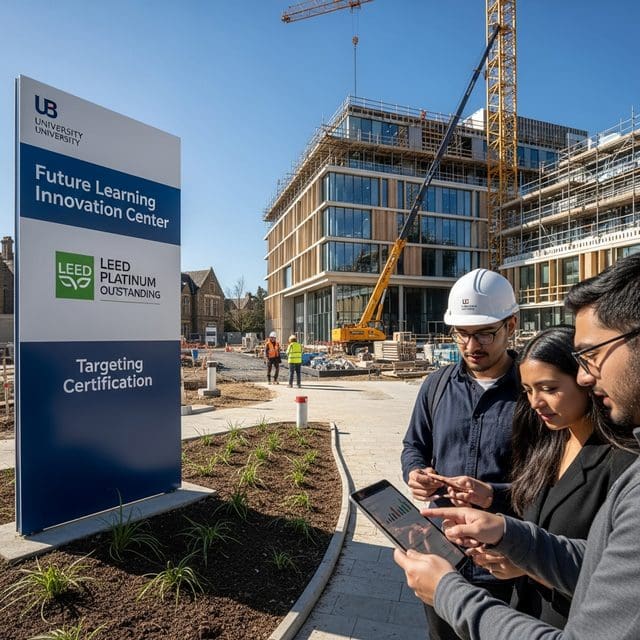
While regulators in Southern India focus on cost containment, Delhi is betting on massive infrastructure to meet workforce demands. Dr. B.R. Ambedkar University Delhi has secured a Rs 1,668-crore approval for its new 50-acre Dheerpur campus. The project, cleared by the Expenditure Finance Committee, is designed to accommodate 8,000 students and features a 2,500-seat auditorium. Crucially, the expansion is being framed as a model of sustainable governance, aiming for 5-Star GRIHA green building certification. This comes as the university actively seeks to grow its international footprint, running an admissions window through late June to attract foreign talent.
However, the risks of blending education policy with private sector interests were highlighted by the conviction of Nadiem Makarim in Indonesia. The Gojek co-founder and former education minister was sentenced to 10 years in prison for his involvement in a corrupt procurement scheme involving school laptops. The anti-graft court found that Makarim leveraged his ministerial authority to favor Google Chromebooks while Google was weighing an investment in his former company. The case, which includes a $45 million restitution order, serves as a warning to the ed-tech sector. It underscores the necessity of rigid firewalls between government procurement and private tech interests to ensure classroom technology serves students rather than corporate shareholders.
In Nigeria, the challenge of rising costs continues to test the limits of what families can bear. Recent schedules from Veritas University Abuja reveal that specialized programs, such as medicine, have climbed to nearly ₦6 million annually when including hostel and departmental levies. While Veritas is attempting to distinguish itself by adopting the Humanitas AI Compact—becoming the first African university to implement an ethical AI governance framework—the financial barrier to entry remains a significant hurdle. The university’s move toward ethical AI shows a commitment to modernizing curriculum, but rising tuition suggests a disconnect between institutional ambition and student affordability.
Across these regions, the common thread is a growing skepticism of top-down institutional power. Whether it is the Archdiocese of San Francisco reaching a record $395 million settlement for child protection failures or the Teamsters authorizing strikes at Penske to protect worker rights, the trend is toward accountability. In education, this means ensuring that every dollar spent is an investment in the student’s future, not a subsidy for administrative mismanagement or corrupt influence.
Daniel Owens serves as a Senior Correspondent for Just Right News, where he leads the newsroom’s coverage of Education, Workforce, and Upward Mobility. In an era where the national conversation often overlooks the practical foundations of success, Owens brings a principled perspective to the forefront of the media landscape. His work is defined by a commitment to the idea that a strong society is built on the pillars of quality education, a robust work ethic, and the removal of bureaucratic barriers to individual achievement.
Born and raised in Cleveland, Ohio, Owens’s worldview was shaped by the industrial landscape of the Midwest. Growing up in a city known for its grit and resilience, he witnessed firsthand the transformative power of steady employment and the devastating effects of economic stagnation. This background instilled in him a deep respect for the American worker and a healthy skepticism toward top-down government solutions that often fail to reach the communities they intend to help. As an African American man who has navigated the path to professional success, Owens approaches his beat with a nuanced understanding of how meritocracy and personal responsibility intersect with opportunity. He frequently draws on his roots to highlight the importance of family stability and community-led initiatives in fostering the next generation of leaders.
At Just Right News, Owens is the architect of the acclaimed feature series, “The Learning Curve.” Through this platform, he explores the evolving landscape of American schooling, from the rise of the school choice movement to the revitalization of trade schools and vocational training. He frequently challenges the status quo of higher education, advocating for a return to academic rigor and the practical alignment of degrees with market demands. For Owens, education is not merely about obtaining credentials; it is about equipping young people with the tools necessary to lead self-sufficient, meaningful lives. His reporting on “The Learning Curve” has become essential reading for parents and policymakers who believe that educational competition and parental rights are the keys to a brighter future.
Now based in Raleigh, North Carolina, Owens finds himself at the heart of one of the nation’s most dynamic regions for innovation and growth. Raleigh’s unique blend of traditional values and a fast-paced economy provides the perfect backdrop for his reporting on the modern workforce. From the tech hubs of the Research Triangle to the rural communities of the South, he tracks how shifts in the economy are impacting families and local industries. His reporting often highlights the success stories of entrepreneurs and workers who are thriving by embracing the values of hard work and innovation.
Throughout his career, Daniel Owens has remained a steadfast voice for the student seeking a better path and the worker striving for a better life. His reporting for Just Right News serves as a vital resource for readers who value common-sense solutions to the challenges of the 21st-century economy. By focusing on the intersection of policy and the human spirit, Owens continues to provide a roadmap for how individuals and communities can achieve lasting upward mobility.