

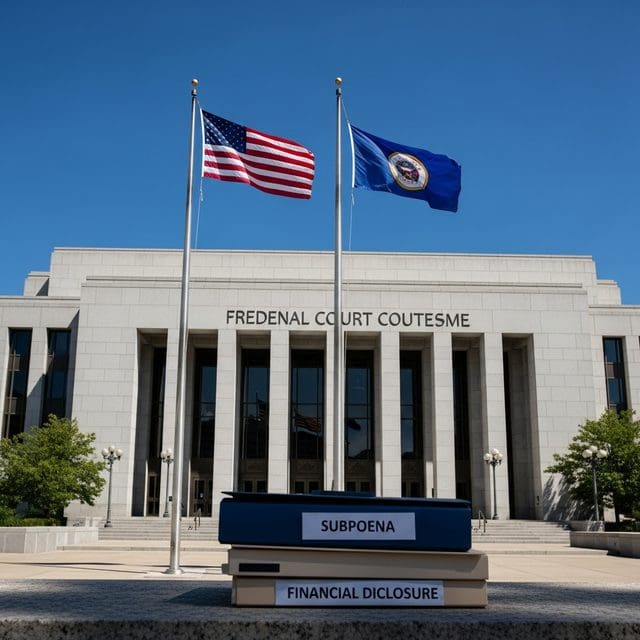
A federal judge quashed subpoenas targeting Governor Tim Walz in an immigration probe, while House investigators move to the ethics phase over Rep. Ilhan Omar’s financial disclosures.
A federal judge on Monday issued a scathing 29-page ruling quashing Department of Justice subpoenas directed at Minnesota Governor Tim Walz and several state and local officials. The decision effectively halts an active criminal investigation into whether the Walz administration and Minneapolis Mayor Jacob Frey conspired to obstruct federal immigration enforcement. The judge characterized the federal government’s legal maneuvers as an attempt to coerce state cooperation and retaliate against officials for their public policy stances regarding ICE operations.
The DOJ probe, which originated in early 2026, focused on a series of grand jury subpoenas served in January seeking records on the state’s “cooperation or lack thereof” with federal authorities during a large-scale immigration enforcement action. Federal investigators had demanded a broad range of internal communications to determine if state leadership violated conspiracy laws by actively limiting federal access to resources. In throwing out the subpoenas, the court deemed the administration’s tactics as “harassment,” marking a significant setback for the Justice Department’s efforts to hold sanctuary jurisdictions legally accountable for non-compliance.
While the immigration-related subpoenas have been blocked, Governor Walz remains entangled in a separate, document-driven inquiry regarding the oversight of federally funded social programs. On June 7, 2026, the House Oversight Committee released a staff report titled “The Cost of Doing Nothing: How Tim Walz and Keith Ellison Fueled Minnesota’s Fraud Explosion.” The report alleges that senior Minnesota officials possessed evidence of widespread fraud within the “Feeding Our Future” program for years but failed to take corrective action. This legislative record underpinned Vice President Vance’s June referral of Walz and Attorney General Keith Ellison to the DOJ for a criminal fraud investigation, a probe that remains distinct from the now-halted immigration subpoenas.
In a parallel development on Capitol Hill, the House Oversight Committee has formally moved its investigation into Rep. Ilhan Omar (D-MN) into an ethics-enforcement phase. The committee requested that the House Ethics Committee review the rapidly rising wealth of Omar and her husband, Tim Mynett, citing noncompliance with previous document demands. At the center of the inquiry is an unexplained jump in the reported value of Mynett-linked entities, specifically eStCru LLC and Rose Lake Capital LLC. Financial disclosures from February 2026 showed these assets valued at approximately $51,000 in 2023, only to be reported as worth as much as $30 million in 2024.
Rep. Omar recently filed a new income report claiming her husband made as little as $200 last year, characterizing the previous $30 million valuation as a multimillion-dollar “accounting error.” Despite this explanation, federal law enforcement has been briefed on a network of companies operated by Mynett. Federal investigators are reportedly running a parallel probe into the couple’s finances alongside the congressional inquiry. Minnesota legislative Republicans, who previously failed to subpoena Omar’s communications at the state level, have publicly urged Congress to utilize its subpoena power to secure records related to the state’s various fraud scandals.
Simultaneously, the administrative state is exerting pressure on the private sector through the Federal Communications Commission (FCC). The agency is currently conducting two simultaneous investigations into the television network ABC. In response, ABC has launched an on-air campaign during the program ‘The View’—itself a subject of one of the inquiries—encouraging viewers to back the network against the FCC’s demands for public comment. These overlapping investigations into state officials, federal legislators, and media entities underscore a period of intense friction between the executive branch and the institutions it seeks to regulate.
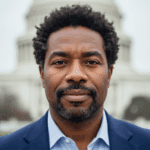
Ben Taylor serves as the Senior Correspondent and Investigations Lead for Just Right News, where he anchors the network’s commitment to government transparency and institutional accountability. With a career defined by a relentless pursuit of the facts, Taylor spearheads the acclaimed feature series “The Paper Trail,” a deep-dive investigative column that prioritizes primary source documentation over political rhetoric. Based in the heart of the nation’s capital, he has earned a reputation as one of the most formidable investigative journalists in Washington, D.C., known specifically for his mastery of public records and the Freedom of Information Act.
Taylor’s approach to journalism is deeply rooted in his upbringing in Kansas City, Missouri. Growing up in the “Show Me State,” he developed a healthy skepticism of centralized power and a profound respect for the common-sense values of the American heartland. This Midwestern foundation informs his reporting today, as he bridges the gap between the complex machinations of federal bureaucracy and the everyday concerns of citizens across the country. For Taylor, investigative reporting is not about chasing headlines; it is about ensuring that the government remains answerable to the people it serves.
As an African American man working within the conservative media landscape, Taylor brings a principled perspective to his beat. He views the Constitution and the right to information as the ultimate equalizers in a free society. His work often highlights how bureaucratic overreach and lack of transparency disproportionately affect individual liberties. By focusing on the “paper trail,” Taylor strips away the spin of partisan talking points, instead providing Just Right News readers with the raw data and internal communications that reveal how their tax dollars are spent and how policy decisions are actually made.
In his role as Investigations Lead, Taylor oversees a team dedicated to uncovering the stories that mainstream outlets often overlook. Whether he is auditing federal spending, investigating regulatory overreach, or exposing inefficiencies within the administrative state, his methodology remains consistent: follow the evidence wherever it leads. His presence in Washington, D.C., allows him to maintain a constant watch over the halls of power, yet he remains steadfastly connected to his roots, ensuring his reporting reflects the clarity and directness of his Missouri home.
Throughout his tenure at Just Right News, Taylor has become a vital voice for those who demand integrity in public office. He believes that a well-informed electorate is the strongest defense against government overreach, and he has dedicated his career to providing the public with the tools they need to hold their leaders accountable. Through “The Paper Trail” and his broader investigative work, Ben Taylor continues to set the standard for rigorous, document-driven journalism that champions the values of transparency, individual responsibility, and the rule of law.