

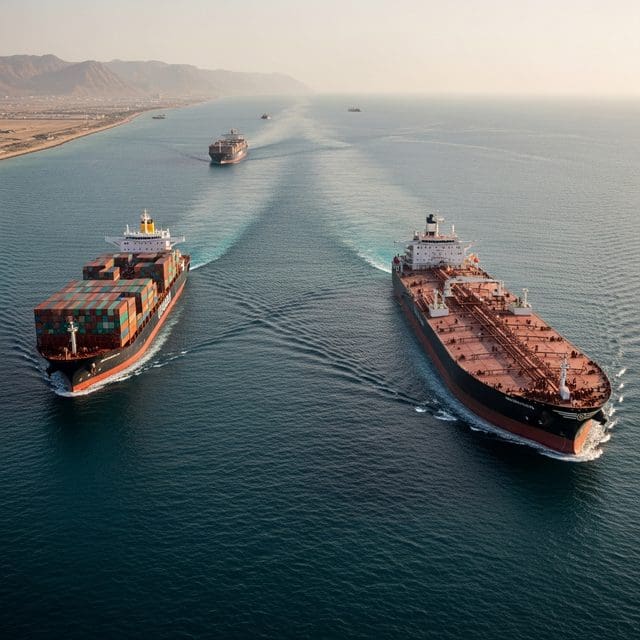
A fragile U.S.-Iran memorandum has begun restoring traffic in the Strait of Hormuz, though security risks and potential fees threaten long-term stability for domestic manufacturers and the blue-collar workforce.
The lifeblood of the global energy trade is pulsing again through the Strait of Hormuz, yet for the American manufacturer, the relief remains thin. Following a landmark memorandum of understanding between the United States and Iran, the first trickles of commercial traffic have emerged from a month-long paralysis. On Thursday, 25 ships, including 14 tankers, successfully transited the waterway. This marks a tentative step toward restoring a supply chain that dictates the cost of resins and fuel used in American factories, though volumes remain far below prewar levels.
Despite the diplomatic breakthrough, the journey from origin to shelf remains fraught with friction. The agreement ostensibly reopens the Strait without tolls, but the reality on the water is complex. Lloyd’s List data indicates that at least five Iranian-flagged vessels, including three tankers carrying 5 million barrels, slipped past the U.S. blockade line between June 16 and 17. These enforcement gaps, paired with ongoing mine-clearing operations, have kept war-risk surcharges in place. For the American enterprise, this means the economic toll has not been fully lifted, as insurers remain wary of substantial risk ratings in the Gulf.
Skepticism remains the primary currency among shipping analysts. The current 60-day negotiation window offers a temporary reprieve, but Iran retains the room to reimpose transit fees once the window concludes. This creates a volatile environment for long-term freight pricing, forcing domestic refiners to maintain costly inventory buffers. When the cost of moving raw materials remains unpredictable, the burden shifts to the local manufacturer who must choose between raising prices or cutting production. The U.S. Navy has insisted its blockade authority remains active pending a formal agreement, leaving shippers in a gray zone over legal exposure for voyages booked before the memorandum.
The fragility of this arrangement is exacerbated by regional instability. Recent Israeli strikes in Lebanon have placed the broader ceasefire framework under immense pressure. As long as these kinetic actions continue, the 60-day Hormuz reopening remains at risk of collapse. United Against Nuclear Iran has already counted approximately 50 maritime incidents in the theater since the conflict began, a statistic that keeps re-routing strategies at the forefront of corporate logistics planning. For the American worker, this volatility is a reminder of the risks inherent in globalist trade dependencies.
True economic security will not come from fragile memorandums, but from a renewed commitment to domestic production and the shortening of supply chains that currently stretch across dangerous waters. While the April 17 ceasefire and subsequent oil price drop of over 10% provided a brief respite, the long-term outlook for the American shelf remains tied to foreign actors. The reliance on a single chokepoint controlled by a hostile power is a strategic liability for American prosperity.
As the 30-day target to restore full flows approaches, the American public must watch the Strait as a barometer for national independence. The memorandum includes sanctions relief based on compliance, yet the sight of Iranian tankers bypassing blockades suggests compliance is a moving target. For the machinist in Ohio or the shipbuilder in Maine, the geopolitics of the Strait are not distant abstractions; they are the direct determinants of the cost of doing business in a world that often prioritizes corporate efficiency over local stability.

Sean Bradley serves as the Senior Correspondent for Trade, Supply Chains, and Global Labor at Just Right News, where he brings a principled, clear-eyed perspective to the complex systems that power the modern world. With a focus on the economic forces that impact the American household, Bradley has distinguished himself as a leading voice in explaining how global shifts in manufacturing and logistics translate to the kitchen table.
Growing up in Long Beach, California, Bradley’s interest in the movement of goods was forged against the backdrop of one of the nation’s most vital maritime gateways. Raised in a community where the towering cranes of the port were a constant fixture on the horizon, he developed an early appreciation for the blue-collar industries that form the backbone of the American economy. This upbringing instilled in him a profound respect for the dockworkers, truckers, and laborers who keep the country moving, a sentiment that remains a cornerstone of his reporting today. For Bradley, trade is not merely a series of abstract figures on a spreadsheet; it is a human endeavor that sustains families and defines the strength of a nation.
Now based in Seattle, Washington, Bradley occupies a strategic vantage point in another of the country’s most significant trade hubs. His location allows him to witness firsthand the intersection of traditional industry and the evolving technological landscape of global logistics. From the Pacific Northwest, he monitors the flow of goods across the ocean, providing Just Right News readers with timely insights into how international tensions, regulatory hurdles, and labor disputes affect the availability and cost of essential goods.
His signature feature series, “The Journey of Things,” has become a staple for readers seeking to understand the intricate path products take from raw materials to the retail shelf. Through this series, Bradley pulls back the curtain on the global marketplace, often highlighting the risks of over-reliance on foreign adversaries and the importance of domestic manufacturing resilience. His reporting consistently emphasizes the conservative values of national sovereignty, free-market competition, and the protection of the American worker from unfair global practices.
As a journalist of Irish heritage, Bradley maintains a deep-seated respect for the dignity of the individual worker and the importance of community stability. He approaches his beat with a commitment to transparency, often questioning the status quo of globalist policies that prioritize corporate efficiency over local prosperity. Whether he is reporting from a warehouse floor or analyzing a new international trade agreement, his goal remains the same: to provide the American public with the truth about where their products come from and what it costs to get them there.
Throughout his tenure at Just Right News, Bradley has remained a steadfast advocate for economic common sense. His work serves as a vital resource for those who believe that a strong nation is built on secure borders, robust trade, and a respected workforce. By combining his local roots in Long Beach with his professional experience in Seattle, Bradley continues to offer a unique and necessary perspective on the forces that shape the American way of life.