

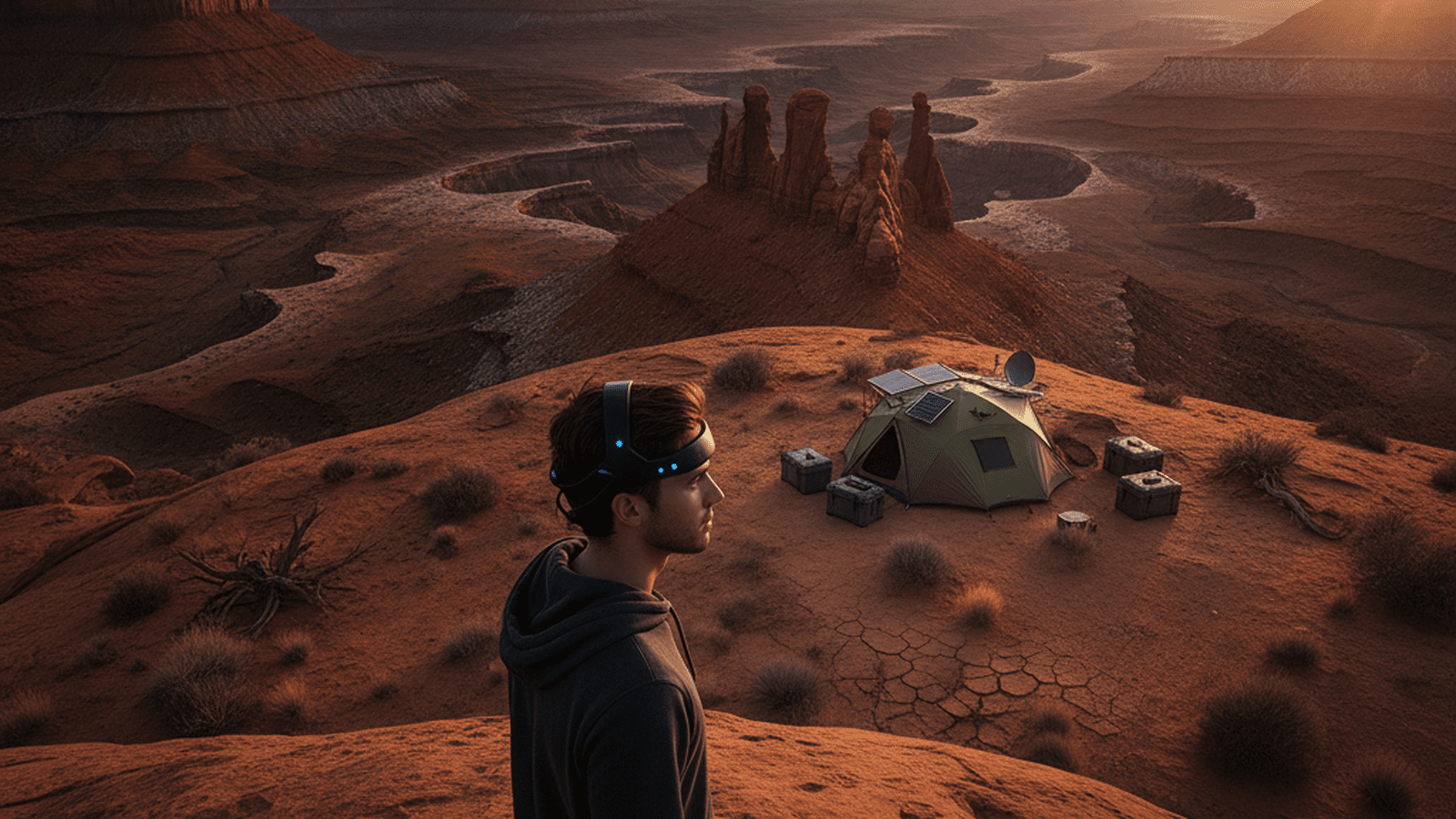
A field expedition in the Utah wilderness used portable EEG technology to map how the human brain responds to prolonged nature exposure. The study found that after three days, the prefrontal cortex enters a restorative state, significantly reducing cognitive fatigue and enhancing creative problem-solving.
TLDR: Neuroscientists conducting field research in remote canyons have identified a “three-day effect” where the brain’s executive control center shifts into a restorative mode. Using portable EEG headsets, the team documented a significant drop in neural noise, suggesting that deep wilderness immersion is essential for recovering from modern cognitive overload.
Neuroscientists have long observed that spending time in nature correlates with improved mood and cognitive performance. However, the underlying neurological mechanisms have remained largely theoretical until a recent field expedition provided direct evidence of how the brain reconfigures itself during prolonged wilderness immersion. A team of researchers conducted a rigorous study in the rugged backcountry of the American Southwest to measure the “three-day effect” on the human brain, focusing on the transition from urban stress to natural tranquility.
The expedition utilized advanced, portable electroencephalogram (EEG) technology to record the neural activity of participants as they navigated remote canyons in southern Utah. Unlike traditional laboratory settings, which can be sterile and artificial, this field-based approach allowed scientists to capture data in an environment free from the electromagnetic interference and psychological stressors of modern life. Participants were required to surrender all electronic devices for the duration of the trek, ensuring that their neural responses were shaped solely by the natural surroundings and the physical demands of the journey.
Data analysis revealed a marked decrease in high-frequency beta wave activity within the prefrontal cortex. This region of the brain is responsible for executive functions such as decision-making, multitasking, and complex problem-solving. In modern society, the prefrontal cortex is often overstimulated by constant notifications, traffic, and work-related demands, leading to a state known as directed attention fatigue. The EEG readings showed that after three days in the wilderness, the prefrontal cortex effectively “quiets down,” allowing the brain’s default mode network to engage more deeply.
This shift is characterized by a transition from “top-down” processing to “bottom-up” sensory engagement. Instead of actively filtering and processing information to achieve specific goals, the brain begins to respond more fluidly to the environment. This state, often referred to by psychologists as “soft fascination,” allows the neural circuits associated with focused attention to rest and recover. The researchers noted that the most significant changes occurred around the seventy-two-hour mark, suggesting that a brief walk in a city park may not be sufficient to trigger a full cognitive reset.
The behavioral outcomes of this neural shift were measured using the Remote Associates Test, a standard metric for creative problem-solving. Participants demonstrated a fifty percent increase in performance on these tasks following the three-day immersion compared to their baseline scores in urban environments. This suggests that the reduction in prefrontal cortex activity does not represent a decline in cognitive ability, but rather a clearing of “neural noise” that inhibits divergent thinking. The study provides a biological framework for understanding why many of history’s greatest thinkers sought solitude in nature to solve complex problems.
The implications of these findings extend beyond personal well-being into the realms of public health and urban planning. As global populations become increasingly concentrated in cities, the lack of access to deep nature may be contributing to a widespread “nature deficit disorder” that impacts collective cognitive health. Future research will focus on the durability of these neural changes and whether specific elements of the natural environment, such as the sound of moving water or the fractal patterns of trees, are more effective at inducing this restorative state. Scientists also hope to explore how virtual reality simulations of nature might offer a partial substitute for those unable to access the physical wilderness, though the current data suggests that the physical presence in a remote environment is a critical component of the effect.

Mason Reed serves as a Staff Writer for Just Right News, where he spearheads the Future Frontiers & Special Projects desk. In an era defined by rapid technological shifts and evolving social landscapes, Mason provides a steady, principled voice, examining the innovations of tomorrow through the lens of traditional American values. His work is most prominently featured in his signature series, “The Next Horizon,” where he explores the intersection of emerging technology, national sovereignty, and the preservation of individual liberty.
A native of San Diego, California, Mason’s worldview was shaped by the unique culture of his hometown. Growing up in a region defined by its strong military presence and its history of maritime industry, he developed a deep-seated respect for the institutions that provide national stability and the entrepreneurial spirit that drives the American economy. This upbringing instilled in him a belief that true progress is not found in discarding the past, but in building upon a foundation of proven principles. His reporting often reflects this San Diego influence, emphasizing the importance of a robust national defense and the necessity of maintaining a competitive edge in the global marketplace.
Now based in San Francisco, Mason operates from the heart of the world’s technological engine. Living and working in the Bay Area provides him with a front-row seat to the advancements—and the ideological challenges—emanating from Silicon Valley. While many in the region embrace a “move fast and break things” mentality, Mason’s reporting serves as a vital counterweight. He offers Just Right News readers a “boots on the ground” perspective, documenting how radical local policies and the concentration of tech power impact the everyday lives of citizens. His proximity to the industry allows him to cut through the marketing jargon of big tech to uncover the real-world implications for privacy, free speech, and the nuclear family.
In his “Future Frontiers” beat, Mason tackles complex subjects ranging from the ethics of artificial intelligence to the burgeoning private space race. He approaches these topics with a healthy skepticism toward centralized bureaucracy, championing instead the decentralized innovations that empower individuals. Through “The Next Horizon,” he highlights the pioneers and thinkers who are working to ensure that the future remains a place where human dignity and constitutional rights are protected. He believes that the rapid pace of change requires more than just technical expertise; it requires a moral compass rooted in the Western tradition.
Throughout his tenure at Just Right News, Mason has remained committed to the idea that the future is something to be shaped, not merely accepted. His writing is characterized by a rigorous defense of American exceptionalism and a belief that the country’s best days lie ahead, provided it remains true to its founding ideals. Whether he is investigating the impact of automation on the American workforce or profiling the next generation of aerospace engineers, Mason Reed ensures that his readers are equipped with the insights they need to navigate a changing world with confidence and clarity.