

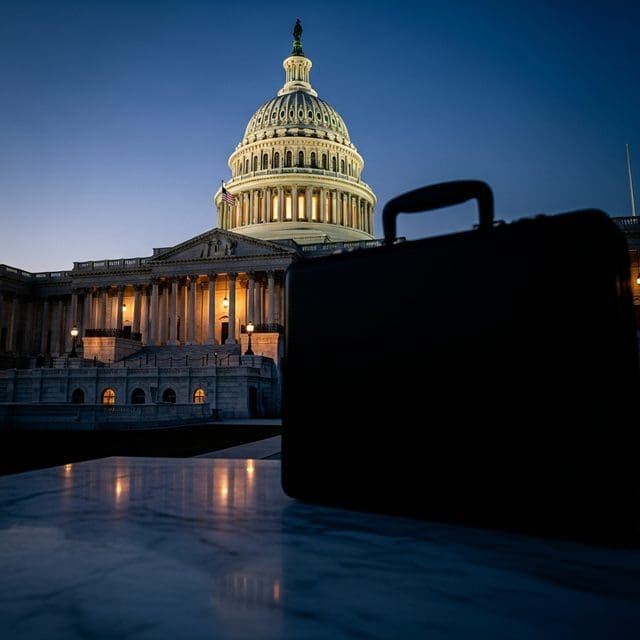
The House passed a bipartisan resolution directing President Trump to end hostilities with Iran, challenging executive authority as a critical 60-day diplomatic window opens for a comprehensive nuclear deal.
The constitutional tug-of-war between the executive and legislative branches reached a fever pitch this week as the House of Representatives passed a War Powers Resolution directing President Donald Trump to withdraw U.S. forces from hostilities with Iran. The 215–208 vote represents a significant institutional challenge to the administration’s Middle East policy, occurring just as a 60-day diplomatic window opens to finalize a comprehensive nuclear and sanctions relief deal mediated by Pakistan.
Speaker Mike Johnson and House GOP leadership previously pulled the vote on May 21 after internal counts indicated a likely defeat, sending members home early. However, when the measure finally reached the floor, four Republicans—Reps. Thomas Massie, Brian Fitzpatrick, Tom Barrett, and Warren Davidson—broke ranks. These members argue that the 60-day window for military engagement without congressional approval, mandated by the War Powers Act of 1973, has expired. Rep. Fitzpatrick noted the House was simply following the law, as the conflict has persisted well beyond the legal timeline for unilateral action.
The White House maintains that the War Powers Act does not apply because a ceasefire was declared in April. This position is increasingly at odds with lawmakers who point to continued U.S. operations and casualties as evidence that hostilities remain active. President Trump has added to the tension, stating military leaders should remain prepared for a “full, large scale assault” if negotiations fail, even as he unveiled a new Air Force One aircraft gifted by Qatar at Joint Base Andrews. This rhetoric has drawn criticism from Republican senators like Thom Tillis, who expressed frustration with the administration’s status quo.
The legislative friction comes at a pivotal moment. On June 17, President Trump signed a memorandum of understanding with Iran at Versailles, flanked by French President Emmanuel Macron. The agreement aims to open the Strait of Hormuz and extend a ceasefire. However, the path remains fraught; Iran’s Supreme Leader Mojtaba Khamenei expressed reservations only a day after the signing, and technical talks scheduled for this weekend were delayed due to fighting in Lebanon and logistical complications.
For the American heartland, the stakes are tangible. House Minority Leader Hakeem Jeffries and Senator Chuck Schumer have highlighted the economic toll, noting the nationwide average gas price has risen to $4.53. Senator Tammy Duckworth characterized the conflict as a strategic blunder that allowed Iran to exert a chokehold on commercial shipping. By invoking the War Powers Resolution, proponents seek to prioritize national stability and constitutional adherence over prolonged foreign entanglements lacking a clear mandate.
Internal administration tensions have also complicated the diplomatic front. Vice President J.D. Vance drew rebukes from Rep. Randy Fine after criticizing Israeli leadership during a briefing. Simultaneously, diplomatic relations with G7 allies faced strain as Italian Prime Minister Giorgia Meloni rebuked the President over claims regarding their interactions at the summit, leading Italy’s top diplomat to cancel a Washington visit. As the resolution moves to the Senate, Schumer must decide whether to force a floor vote that could put additional Republicans on record against the President’s policy during the 60-day negotiation window.

Olivia Kendall serves as the Senior Correspondent for Geopolitics, Defense, and Foreign Policy at Just Right News, where she provides a principled, conservative perspective on the complex forces shaping the global stage. With a career dedicated to deconstructing the intricacies of international relations, Kendall has become a trusted voice for readers who value national sovereignty, a robust military, and a foreign policy that prioritizes American interests above all else.
A native of Washington, D.C., Kendall’s professional journey is deeply rooted in her upbringing within the nation’s capital. Growing up in the epicenter of American political life, she developed an early and profound understanding of how policy is crafted and, more importantly, how it often fails to account for the values of the American heartland. This unique vantage point allowed her to witness firsthand the rise of globalist bureaucracies, fueling her commitment to reporting that champions the constitutional foundations of the United States. Her background as a British White American further informs her worldview, providing her with a keen appreciation for the Western tradition and the enduring importance of the “Special Relationship” in maintaining global stability.
Now based in Arlington, Virginia, Kendall operates from the doorstep of the Pentagon and the heart of the nation’s defense establishment. Her proximity to the decision-makers in the military and intelligence communities allows her to provide boots-on-the-ground reporting that is both timely and deeply informed. For Kendall, Arlington is more than just a base of operations; it is a daily reminder of the sacrifices made by the men and women in uniform. This connection to the defense community drives her rigorous coverage of military readiness and her advocacy for a “peace through strength” approach to diplomacy.
At Just Right News, Kendall is perhaps best known for her acclaimed feature series, “The World’s Shadow on America.” In this ongoing project, she explores the direct correlation between international developments and the daily lives of American citizens. Whether she is analyzing the encroachment of foreign adversaries in domestic supply chains or the impact of international treaties on local economies, Kendall’s work serves as a vital bridge between distant geopolitical shifts and their consequences at home. She rejects the notion that foreign policy is an abstract concern for elites, instead proving that what happens in the corridors of power in Brussels or Beijing has a tangible “shadow” that falls across every American doorstep.
Throughout her tenure, Kendall has remained a steadfast critic of international overreach and a vocal proponent of a clear-eyed, realistic foreign policy. She brings a sharp analytical mind to her beat, often challenging the prevailing narratives of the mainstream media to uncover the underlying truths that affect national security. Her reporting is characterized by a refusal to compromise on the truth and a dedication to the idea that a strong, secure America is the world’s best hope for liberty. As a Senior Correspondent, Olivia Kendall continues to lead the charge in providing the essential context and conservative insight necessary to navigate an increasingly volatile world.