

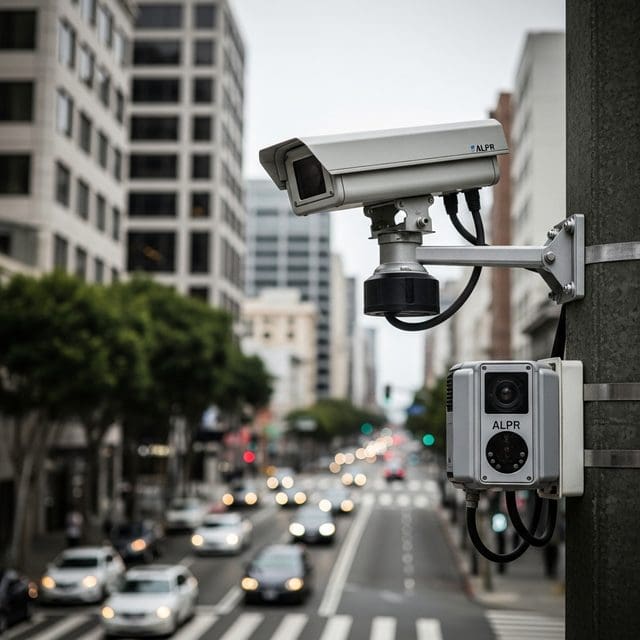
Audits reveal San Francisco and Oakland police may have violated sanctuary laws by allowing federal agencies, including ICE, to access local automated license plate reader databases.
San Francisco and Oakland law enforcement agencies are facing renewed scrutiny following reports that local surveillance data was funneled to federal and out-of-state agencies. The controversy centers on Automated License Plate Reader (ALPR) technology, which captures vehicle movements across municipal streets. Allegations suggest that despite California’s limits on data sharing, local pipelines remained accessible to federal entities, including U.S. Immigration and Customs Enforcement (ICE). This development highlights a persistent tension between local sanctuary policies and the technical realities of modern inter-agency data sharing.
The San Francisco Standard reported on June 18, 2026, that audits revealed hundreds of potentially unauthorized searches within the San Francisco Police Department’s (SFPD) license plate system. This follows previous disclosures indicating that outside agencies had conducted over 1.6 million searches in shared Bay Area databases. In one documented case in Oakland, ALPR data was utilized to fulfill a request tied to an ICE investigation, a practice critics argue undermines the integrity of local governance and the specific intent of state privacy laws designed to protect migrant populations.
These data-sharing practices appear to conflict directly with San Francisco’s Sanctuary Ordinance and its recently established “ICE-Free Zones.” Under these mandates, city employees and departments are prohibited from using local resources to assist in civil immigration enforcement or allowing federal immigration operations on city property, unless required by higher law. The intersection of automated surveillance and federal enforcement has created a significant legal friction point for city administrators who must balance public safety cooperation with the preservation of community character as defined by municipal voters.
Civil liberties organizations, including the ACLU and the Electronic Frontier Foundation, have intensified pressure on California regulators to revoke federal permits for license-plate reader surveillance. They warn that these systems create a back-door for federal agencies to bypass state-level privacy protections. Since early 2025, at least 30 jurisdictions across the United States have deactivated systems like Flock due to concerns that local data was being queried by U.S. Border Patrol and other federal authorities, even when city officials believed they had implemented tighter controls.
The Trump administration has maintained a pressure campaign on sanctuary jurisdictions, explicitly listing San Francisco for its restrictions on information sharing with ICE. This complicates the participation of local police in multi-agency databases, as federal authorities frequently query these systems to track individuals for administrative immigration violations. While the SFPD emphasizes that its officers are restricted from assisting in civil immigration matters, the automated nature of these databases often allows federal agents to pull information without the explicit knowledge of local personnel.
California policy advocates are now monitoring potential legislative moves in Sacramento to tighten ALPR regulations. This follows investigations into several Southern California sheriff departments and the LAPD, which were found to have conducted plate searches on behalf of ICE and Customs and Border Protection. These precedents suggest the state may move toward a more restrictive regulatory framework to ensure that local law enforcement technology does not inadvertently serve as a tool for federal demographic tracking or civil enforcement. For local communities, the debate remains centered on whether high-tech policing tools justify the potential erosion of the local social contract and established sanctuary protocols.

Julie Harris serves as a Staff Writer for Just Right News, where she tackles some of the most pressing and complex issues facing the nation today. As the lead reporter for the Migration, Demographics & Cultural Shifts beat, Julie provides a grounded, principled perspective on how the movement of people and the changing makeup of communities are reshaping the American landscape. Her work is defined by a commitment to exploring the long-term consequences of social change, prioritizing the stability of local institutions and the preservation of national identity.
Her deep understanding of these issues is rooted in her upbringing in Tucson, Arizona. Growing up in a prominent border state, Julie witnessed firsthand the intricate realities of migration and the profound impact it has on local infrastructure, law enforcement, and the social fabric. This early exposure instilled in her a respect for the rule of law and a keen awareness of the challenges that arise when federal policies fail to align with the needs of border communities. Her reporting often reflects this lived experience, bringing a necessary level of nuance to topics that are often treated with abstraction in coastal newsrooms.
Now based in Santa Fe, New Mexico, Julie continues to report from the heart of the American Southwest. Her location provides a unique vantage point to observe the intersection of traditional regional cultures and the modern shifts brought about by both internal and external migration. In Santa Fe, a city defined by its rich history and distinct cultural heritage, she finds a perfect environment to explore how communities strive to maintain their character while navigating the pressures of a rapidly changing world. This perspective allows her to bridge the gap between policy debates in Washington and the reality of life in the high desert.
At Just Right News, Julie’s work is characterized by a dedication to examining the data and the human stories that define the “New Mosaic” of America. Her signature feature series, “The New Mosaic,” has become a cornerstone of her reporting. Through this series, Julie explores the evolving social architecture of the United States, documenting how shifts in population affect everything from local economies to the political landscape. She brings a critical eye to the narrative of demographic inevitability, instead asking how these shifts impact the average citizen’s sense of belonging and the integrity of the American social contract.
Julie’s background and her dedication to conservative principles make her a vital voice in contemporary journalism. She understands that demographics are more than just numbers on a spreadsheet; they represent the future of the American family and the nation’s enduring legacy. Through her diligent reporting and insightful analysis, Julie Harris ensures that her readers are informed about the forces shaping their world, providing a perspective that is as thoughtful as it is necessary for the modern era.