

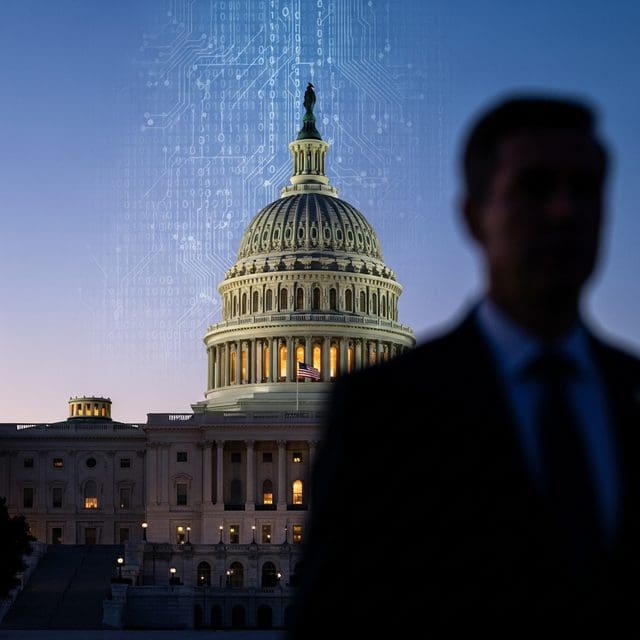
A high-stakes standoff over Section 702 and DNI nominee Jay Clayton has left U.S. intelligence agencies in legal limbo while China expands its global digital governance initiatives.
The digital battlefield does not pause for partisan bickering, yet the American intelligence apparatus finds itself effectively disarmed following the June 12 expiration of FISA Section 702. As of June 18, 2026, the Senate Intelligence Committee remains locked in a closed-door stalemate, paralyzed by Democratic procedural hurdles and President Trump’s demand for fundamental reforms. This legislative vacuum follows a 218-198 House rejection of a temporary extension, leaving agencies to navigate a treacherous legal landscape without their primary tool for intercepting foreign communications.
At the center of the storm is the nomination of Jay Clayton for Director of National Intelligence. In a bold move to reclaim executive leverage, President Trump has paused Clayton’s confirmation and ordered the cancellation of scheduled hearings. The administration is signaling it will not move forward on personnel until Congress delivers a Section 702 reauthorization that includes robust protections against warrantless searches of Americans, coupled with a national voter ID mandate. This strategy treats digital sovereignty not just as a matter of foreign policy, but as a domestic necessity to restore public trust in the institutions overseeing sensitive data.
Senate Judiciary Chairman Chuck Grassley has stepped into the fray, backing a reauthorization package that attempts to bridge the gap through increased oversight. Grassley’s proposal includes mandatory Department of Justice memo changes, stricter FBI query reporting, and Inspector General referrals for noncompliance. Grassley has publicly accused Senate Democrats of bad-faith obstruction, noting that Senator Ron Wyden’s refusal to allow even short-term extensions has left the country’s signals intelligence capabilities in a state of total uncertainty. This friction is exacerbated by Senate Majority Leader John Thune’s admission that Republican leaders have yet to be read in on the administration’s Iran memorandum of understanding.
While Washington remains inward-looking, America’s primary adversaries are filling the vacuum. On June 17, China outlined initiatives to advance its Global Governance Initiative, specifically targeting coordination mechanisms for artificial intelligence. Beijing’s move to set the rules for the next generation of digital warfare stands in stark contrast to the legislative paralysis in the United States. Without Section 702, the U.S. intelligence community loses its most effective tool for monitoring state-sponsored hacking and foreign influence operations in real-time, just as China seeks to export its model of digital authoritarianism.
The stakes of this ‘New Cold War’ are further complicated by internal Republican divisions and institutional instability. While the Senate Armed Services Committee moves to curb the President’s power to remove troops from Europe, the intelligence community faces a leadership crisis. Acting Attorney General Todd Blanche continues to face a rocky confirmation path, with over 20 Republican senators expressing concerns regarding his independence. This lack of a unified front, combined with Democratic leverage-seeking, has created a vacuum of leadership at a time when digital threats from the East are accelerating and kinetic tensions in the Middle East remain unresolved following the Senate’s failure to advance a withdrawal of forces from Iran hostilities.
For those who view technology through the lens of national survival, the current impasse is more than a political drama; it is a dereliction of duty. The failure to secure our digital borders while China codifies its vision of global AI governance risks a permanent shift in the balance of power. Until the Senate can reconcile constitutional privacy with the kinetic reality of cyber warfare, the American digital flank remains dangerously exposed to those who do not share our values of liberty and sovereignty.

Ryan Mitchell serves as a Staff Writer for Just Right News, where he anchors the desk for Cyber, Technology Policy, and Digital Sovereignty. In an era where the digital landscape has become as much a battlefield as any physical territory, Ryan provides a critical conservative lens on the forces shaping the future of American innovation and national security. His work is defined by a commitment to the idea that American leadership in the digital age is not just a matter of economic success, but a necessity for the preservation of global liberty.
Born and raised in Austin, Texas, Ryan’s perspective is deeply rooted in the Lone Star State’s tradition of independence and skepticism of centralized authority. Growing up in a city that transformed from a quiet state capital into a global technology hub, he witnessed firsthand the disruptive power of the tech industry. This upbringing instilled in him a firm belief in free-market principles and the necessity of protecting individual liberties from both government overreach and corporate overstep. His Texan background serves as a foundational compass, guiding his reporting toward stories that emphasize national resilience and the preservation of constitutional values in an increasingly virtual world.
Now based in San Francisco, California, Ryan operates from the epicenter of the very industry he scrutinizes. Living and working in the heart of Silicon Valley allows him to provide “boots on the ground” reporting that few conservative journalists can match. He navigates the cultural and political complexities of the Bay Area to bring Just Right News readers an inside look at the boardrooms and coding labs where the next generation of digital policy is forged. For Ryan, being stationed in San Francisco is a strategic choice; it allows him to challenge the prevailing ideological monoculture of the tech elite from within their own backyard, ensuring that the concerns of middle America are represented in the conversation about our digital future.
His beat—Cyber, Technology Policy, and Digital Sovereignty—covers the high-stakes world of data privacy, artificial intelligence, and the infrastructure of the modern web. Ryan is particularly focused on the concept of digital sovereignty, arguing that for a nation to remain truly free, it must maintain control over its own technological destiny and critical infrastructure. He frequently explores how international regulations and domestic policies impact the ability of American firms to compete without sacrificing the privacy or security of their citizens.
Central to his current body of work is his featured series, “The New Cold War.” Through this project, Ryan examines the escalating technological rivalry between the United States and its global adversaries. He delves into the complexities of state-sponsored hacking, the global race for semiconductor dominance, and the ideological struggle to define the rules of the internet. Ryan views this competition not merely as a commercial race, but as a fundamental defense of Western values against authoritarian digital models. Through his rigorous reporting and principled analysis, Ryan Mitchell ensures that the readers of Just Right News stay informed about the invisible forces defining the 21st century, always advocating for a future where technology serves the cause of freedom.