

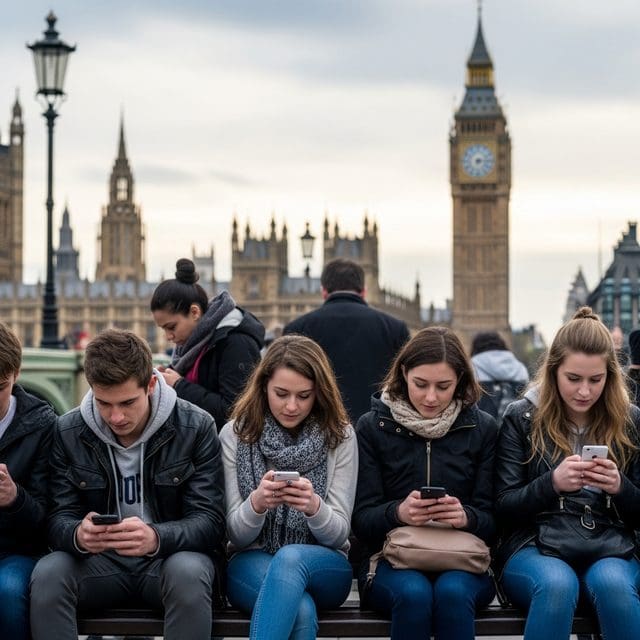
Prime Minister Keir Starmer’s proposed ban on social media for under-16s forces a media reckoning over digital safety, platform accountability, and the limits of state intervention.
The announcement by Prime Minister Keir Starmer that the United Kingdom will ban children under 16 from social media by early 2027 has ignited a firestorm across the media landscape. Reporting from the BBC suggests the government is modeling its approach after Australia, specifically naming Instagram, YouTube, and TikTok as primary targets. This move follows a consultation period that closed on May 26, 2026, signaling a shift from advisory guidelines to hard law. While the government promised a full response by summer, the press is already grappling with a policy that seeks to rewire the digital habits of a generation.
From a media integrity perspective, coverage of this policy reveals a gap in how the press addresses platform moderation. While mainstream reporting emphasizes protection, it often glosses over the technical hurdles of implementation. The government clarified that enforcement will target tech corporations rather than children, yet specific age-verification mechanisms remain vaguely defined. This lack of detail presents a challenge for journalists who must distinguish between political posturing and actionable policy. The press must ask whether the media is reporting on a solution or merely a new layer of bureaucracy.
Notably, the ban extends beyond social media access. Proposed regulations, expected before the end of 2026, include restrictions on livestreaming and stranger contact within gaming for all users under 18. However, the exclusion of encrypted messaging services like WhatsApp and Signal raises questions about the government’s logic. If the goal is to protect children from digital harm, the carve-out for these platforms suggests a compromise the media has yet to fully interrogate. This inconsistency provides fertile ground for misinformation if the public perceives the ban as arbitrary.
As the press navigates this development, Ofcom has become central to the narrative. The regulator asserts that major digital services are not safe enough, citing addictive design and AI chatbots as primary concerns. This institutional pressure coincides with a global trend of tightening information flow. For those valuing information integrity, the media’s duty is to interrogate whether these bans protect the family unit or merely centralize control over the digital square. Reporting should not just echo government press releases but scrutinize potential overreach.
This policy shift occurs against a backdrop of platform volatility and global news. While the UK debates curfews, the financial world is reacting to the $75 billion SpaceX IPO, valuing the company at $1.77 trillion. Simultaneously, the nomination of Jay Clayton as DNI and the 10-day ceasefire between Israel and Lebanon announced by Donald Trump demonstrate an information environment crowded with high-stakes developments. These stories often break on the very platforms the UK seeks to restrict, creating a paradox where tools of global communication are viewed as both essential and existential threats.
Furthermore, the media must account for the legal realities shaping the tech sector. Recent developments, such as the Delaware jury finding Amgen in infringement of antibody patents or investigations into Nara Organics for infant botulism, remind us that corporate accountability is multi-faceted. When the press covers the social media ban, it must do so with an understanding that these platforms are massive corporate entities subject to legal standards. The challenge for journalism in 2026 is to maintain a commitment to objective truth, ensuring digital safety conversations do not sacrifice transparency for a manufactured consensus.

Chloe Foster serves as a Staff Writer for Just Right News, where she spearheads the outlet’s coverage of Media, Culture, and Information Integrity. In an era defined by rapid-fire digital communication and shifting societal norms, Chloe has distinguished herself as a vital voice for readers seeking clarity amidst the noise. Her signature feature series, “The Story Wars,” has become a cornerstone of the publication, offering a deep dive into the ideological battles currently shaping American life and the ways in which mainstream narratives are constructed, disseminated, and often manipulated.
Chloe’s unique perspective is informed by a life lived in two of the nation’s most influential cultural hubs. Raised in Los Angeles, California, she grew up in the shadow of the world’s most powerful media and entertainment apparatus. This upbringing provided her with a front-row seat to the “dream factory,” allowing her to observe firsthand how cultural exports are crafted and how they often diverge from the lived experiences of everyday Americans. Her time in Los Angeles instilled in her a healthy skepticism of manufactured consensus and a passion for uncovering the truths that lie beneath polished public relations campaigns.
Today, Chloe operates from Brooklyn, New York, a vantage point that places her at the epicenter of the modern media landscape. Living and working in a deep-blue urban environment as a conservative journalist has sharpened her reporting, requiring a rigorous commitment to intellectual honesty and a steadfast defense of traditional values. Her base in Brooklyn allows her to engage directly with the institutions and influencers who drive the national conversation, providing Just Right News readers with an “on-the-ground” look at the cultural shifts originating in the Northeast.
As a Hispanic woman, Chloe brings a nuanced understanding of community and heritage to her beat. She frequently explores how media portrayals of the Latino community often overlook the deep-seated faith, entrepreneurial spirit, and family-centric values that define it. Her work challenges the monolithic labels often applied by mainstream outlets, instead highlighting the diversity of thought and the conservative principles that resonate within her community.
In her role at Just Right News, Chloe views “Information Integrity” not merely as a buzzword, but as a mission. She believes that a healthy republic requires a media landscape where facts are prioritized over agendas and where the public is empowered to think for themselves. Through “The Story Wars,” she deconstructs the framing of major news events, exposing bias and providing the context necessary for readers to understand the broader cultural implications of the day’s headlines.
Chloe Foster’s reporting is more than just a collection of articles; it is a sustained effort to reclaim the narrative for those who feel sidelined by the prevailing media establishment. By bridging the gap between her West Coast roots and her East Coast base, she continues to provide essential commentary on the forces that define our shared American culture.