

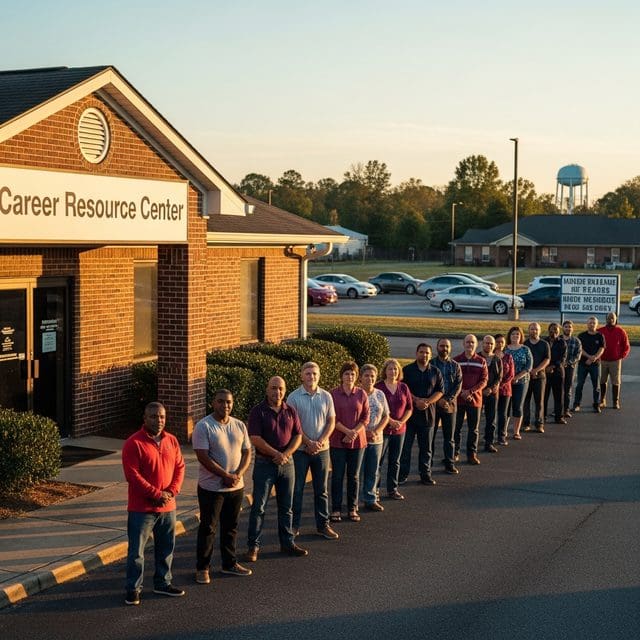
Stricter federal work requirements have removed 3.5 million Americans from SNAP, sparking a national debate on the balance between fiscal discipline and the essential social safety net.
The American social safety net is undergoing its most significant structural shift in a generation. Since the implementation of the federal legislative package known as the ‘One Big Beautiful Bill’ in July 2025, more than 3.5 million people—nearly 9% of all beneficiaries—have been removed from the Supplemental Nutrition Assistance Program (SNAP). This contraction represents a $187 billion reduction in federal spending projected over the next decade, marking the largest cut in the program’s history. As of June 2026, the policy is a lived reality for households navigating a landscape where work is the primary currency of support.
At the heart of this transformation is a renewed emphasis on the dignity of work. New provisions have extended work requirements to adults aged 55 to 64, certain parents of teenagers, veterans, and individuals experiencing homelessness. State agencies are now grappling with the administrative reality of these mandates. In Illinois, able-bodied adults without dependents who fail to meet work quotas for three months began losing benefits on May 1, 2026. Maryland officials estimate 80,000 additional residents are now subject to these requirements, shifting the burden of local economic resilience back to state administration and civic institutions.
The policy shift arrives during a period of stark economic divergence. While the macroeconomy appears robust—with GDP per capita reaching $70,140 and middle-class household wealth near $496,000—the benefits remain concentrated. Federal Reserve data indicates the top 1% of households now hold 32% of all U.S. wealth, matching the combined holdings of the bottom 90%. For those on the lower rungs, the springboard of work is often hampered by a lack of assets; the median net worth for U.S.-born Black households remains near $30,000, while Mexican-origin households hold just $5,000. This disparity underscores the challenge of the ‘conflicted middle,’ where even those with steady income feel financially precarious.
Child poverty remains a persistent shadow over these reforms. Following the lapse of the expanded Child Tax Credit, approximately 13% of American children—more than 9 million—live in poverty. Critics of the SNAP contraction argue that the loss of food aid may destabilize families before they can secure steady employment. However, proponents maintain that reforms are necessary to curb federal overreach and encourage local communities to play a larger role. The tension is palpable in states like California, where enrollment dropped over 6% year-over-year by February 2026, forcing local food banks to fill gaps left by the federal retreat.
As the Federal Reserve prepares to release bank stress test results on June 24 and new chair Kevin Warsh navigates a complex interest rate environment, the broader economy faces new pressures. Pimco has warned that defaults in debt markets are resurfacing, suggesting the era of easy credit is ending just as the safety net tightens. Furthermore, the AI boom is driving a surge in energy demand, turning electricity into a scarce commodity that could drive up utility costs for low-income households. These converging factors create a high-stakes environment for the millions of older adults and veterans now required to re-enter a rapidly changing workforce.
Ultimately, the success of the SNAP overhaul will be measured by whether it fosters true economic mobility. The transition to a work-based safety net is a bold experiment in fiscal discipline, testing the capacity of the American worker to rise in an increasingly stratified economy. While the ‘One Big Beautiful Bill’ aims to restore the restorative power of hard work, the data suggests a widening gap between macro growth and basic security. As 2026 progresses, the resilience of local communities and the ability of the private sector to absorb these new workers will determine if the safety net remains a springboard or becomes a fraying tether.

James Foster serves as the Senior Correspondent for Inequality and the Social Safety Net at Just Right News, where he brings a principled and nuanced perspective to the most pressing economic challenges facing the nation. With a career dedicated to exploring the intersection of policy and personal responsibility, Foster has become a leading voice in documenting how government programs and economic shifts impact the American family. His reporting is characterized by a commitment to the “human element,” moving beyond cold statistics to highlight the stories of resilience, work, and community that define the modern American experience.
Foster’s perspective is deeply rooted in his upbringing in Birmingham, Alabama. Growing up in a city with a rich industrial heritage and a history of economic transformation, he witnessed firsthand the importance of the dignity of work and the strength of local institutions. In Birmingham, he saw how the most effective safety nets were often those woven by neighbors, faith-based organizations, and local civic groups. This background instilled in him a lifelong skepticism of “one-size-fits-all” solutions from distant bureaucracies, favoring instead the localized, community-driven support systems that he frequently champions in his writing.
Now based in Atlanta, Georgia, Foster operates from one of the most dynamic and rapidly evolving metropolitan hubs in the South. His location provides a front-row seat to the stark contrasts of the modern economy. From the gleaming towers of Atlanta’s financial districts to the struggling neighborhoods on the city’s periphery, Foster finds the stories that illustrate the complexities of upward mobility. His reporting from the Sun Belt serves as a microcosm for the national debate on poverty, highlighting how inflation, housing costs, and labor market shifts affect the working class in real-time.
As the lead for the acclaimed feature series “America’s Balancing Act,” Foster explores the delicate tension between providing a necessary hand up and fostering long-term independence. The series has become a cornerstone of Just Right News, offering a deep dive into the unintended consequences of social welfare policies. Foster’s work often focuses on the “cliff effect” and other systemic hurdles that can inadvertently discourage employment, arguing that true compassion is measured by how many people are empowered to leave the safety net, rather than how many are added to it.
Throughout his tenure, Foster has remained dedicated to the mission of Just Right News, providing a clear-eyed, conservative analysis of social issues. He believes that a free society thrives when individuals are empowered and the private sector is allowed to innovate. Whether he is interviewing small business owners about the challenges of a changing workforce or documenting the success of private charitable initiatives, Foster’s goal is to provide readers with the truth about the state of the American Dream. His work serves as a vital reminder that while the challenges of inequality are great, the solutions are often found in the strength of the American spirit and the preservation of traditional values.