

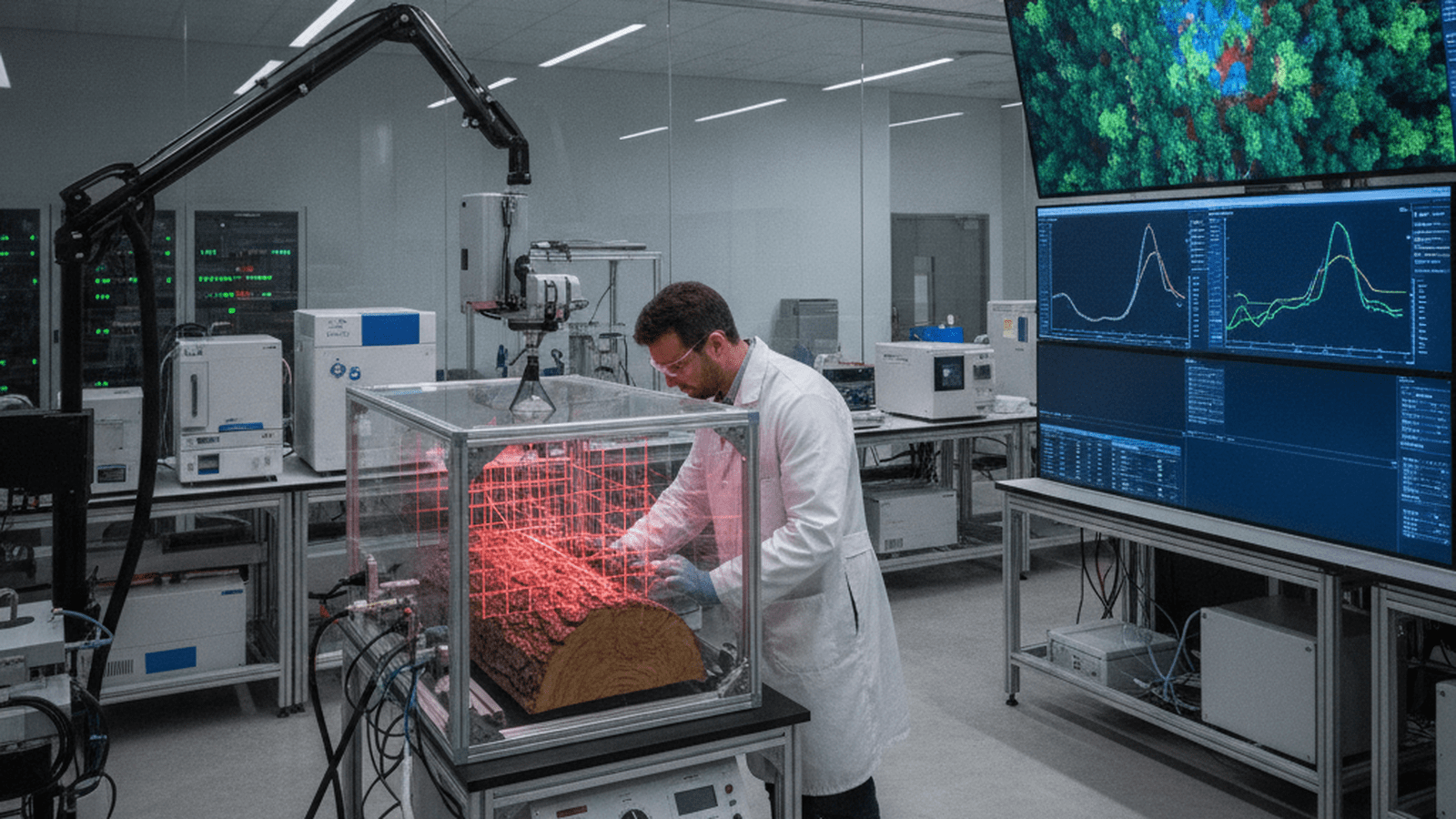
A global study led by the University of Birmingham has discovered that tree bark plays a crucial role in removing methane from the atmosphere. This previously overlooked mechanism, driven by microbes living within the bark, increases the overall climate benefit of temperate and tropical forests by approximately 10 percent.
TLDR: Researchers have identified that microbes inhabiting tree bark absorb significant amounts of methane, a potent greenhouse gas. This discovery suggests that the climate-cooling potential of global forests is roughly 10 percent higher than previously estimated, emphasizing the urgent need for forest conservation and reforestation in international climate strategies.
For decades, the scientific community has quantified the value of global forests primarily through their ability to sequester carbon dioxide within their wood and soil. A landmark study led by the University of Birmingham has now revealed a secondary, previously unknown mechanism by which trees mitigate climate change. Research published in the journal Nature demonstrates that tree bark serves as a significant sink for methane, a greenhouse gas with a warming potential over 80 times greater than carbon dioxide over a 20-year period. This discovery suggests that the climate-cooling potential of global forests is roughly 10 percent higher than previously estimated.
The international team of researchers discovered that microbes living within the bark or on the surface of trees actively consume methane from the atmosphere. This process, known as methanotrophy, was previously thought to occur almost exclusively in well-aerated soils. By expanding the scope of atmospheric exchange measurements to include the vertical surfaces of trees, the study identifies a massive, overlooked biological filter that spans the globe’s forested regions. This finding shifts the understanding of how terrestrial ecosystems regulate atmospheric chemistry.
To reach these conclusions, scientists conducted field measurements across a diverse range of ecosystems, including tropical rainforests in Brazil and Ethiopia, temperate broadleaf forests in the United Kingdom, and boreal forests in Sweden. They utilized specialized chambers wrapped around tree trunks to monitor gas concentrations over time. The results showed that while the lower parts of trees might sometimes emit small amounts of methane, the upper portions of the trunks and the branches act as powerful methane absorbers. This vertical gradient suggests that the microbial communities change in composition or activity as they move further from the soil.
The efficiency of this methane uptake appears to scale with the total surface area of the bark. To estimate the global impact, the researchers employed terrestrial laser scanning to create high-resolution 3D models of forest structures. These models allowed the team to calculate the total bark surface area available for microbial activity worldwide. Their calculations suggest that the total amount of methane removed by tree bark is between 25 and 50 million tonnes annually. This figure is comparable to the methane sink provided by all of the world’s soils combined.
This discovery fundamentally alters the economic and environmental calculus of forest conservation. By accounting for methane absorption, the total climate-cooling benefit of temperate and tropical forests increases significantly. This finding suggests that the preservation of old-growth forests is even more critical than previously estimated, as these ecosystems possess the complex bark structures and established microbial communities necessary for maximum methane removal. It also provides a new metric for evaluating the success of reforestation projects beyond simple carbon storage.
The study also highlights a potential synergy between biodiversity and climate stability. The researchers found that the methane-eating microbes are most effective in tropical environments, where high humidity and temperature support robust microbial metabolism. However, the presence of this mechanism in colder boreal regions indicates that the phenomenon is a near-universal feature of woody plants. This suggests that even urban forestry initiatives could contribute to methane reduction if the right species and conditions are maintained.
Future research will focus on identifying the specific strains of bacteria responsible for this bark-based methane consumption and determining how environmental stressors affect their efficiency. Understanding the genetic and environmental drivers of these microbes could lead to new strategies in forest management. Scientists hope to integrate these findings into global climate models to provide more accurate predictions of future atmospheric compositions. Refining international carbon credit frameworks to include methane absorption could also incentivize more aggressive forest protection measures.

Mark Davis serves as the Senior Correspondent for Energy, Climate, and Resource Economics at Just Right News. In an era where the conversation around the environment is often dominated by alarmism and top-down mandates, Mark provides a vital, market-oriented perspective on the complex forces shaping our world. As the lead voice behind the acclaimed feature series “Power and the Planet,” he explores the intersection of environmental policy, global energy markets, and the fundamental economic principles that sustain modern civilization.
Mark’s pragmatic approach to resource management was forged in the high desert of his hometown, Albuquerque, New Mexico. Growing up in a region defined by both its breathtaking natural beauty and its rugged, resource-dependent landscape, he developed an early appreciation for the delicate balance between conservation and utilization. New Mexico’s unique position as a hub for both traditional energy production and cutting-edge scientific research provided Mark with a front-row seat to the evolution of the American energy sector. This upbringing instilled in him a deep-seated belief that true environmental stewardship is inseparable from economic prosperity and technological innovation.
Now based in Boulder, Colorado, Mark operates from the heart of the nation’s climate research community. While Boulder is often seen as a bastion of environmental idealism, Mark utilizes his post to provide a necessary counterweight, grounded in the realities of resource economics. He understands that energy policy does not exist in a vacuum; it has tangible consequences for the American taxpayer, the stability of the national power grid, and the strength of the domestic manufacturing sector. By reporting from the front lines of the climate debate, he is able to challenge prevailing narratives with hard data and a commitment to the principles of the free market.
Throughout his tenure at Just Right News, Mark has distinguished himself by focusing on the “Resource Economics” aspect of his beat. He frequently highlights the hidden costs of rapid energy transitions and advocates for an “all-of-the-above” energy strategy that prioritizes American energy independence. His work often shines a light on the geopolitical implications of resource scarcity, arguing that a secure nation must first be an energy-secure nation. Whether he is analyzing the impact of federal land-use regulations or investigating the supply chains required for new technologies, Mark remains focused on how policy decisions affect the lives and livelihoods of everyday citizens.
In “Power and the Planet,” Mark continues to bridge the gap between complex scientific concepts and the economic realities facing the country. He rejects the false choice between a healthy environment and a thriving economy, instead seeking out solutions that leverage American ingenuity and private-sector competition. For Mark, reporting on the climate is not about following the latest trends, but about ensuring that the conversation remains tethered to the foundational values of liberty, property rights, and fiscal responsibility. His contributions ensure that Just Right News readers receive a comprehensive, clear-eyed view of the challenges and opportunities defining the future of our planet.