

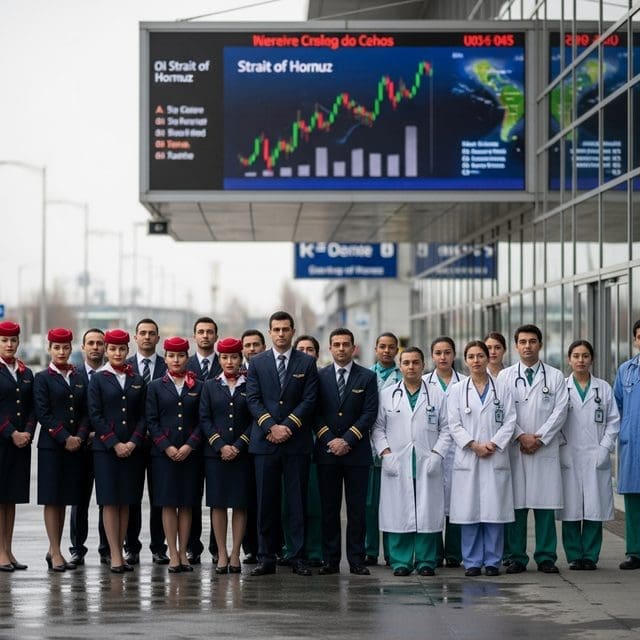
American and Canadian workers face a convergence of unpaid labor disputes and algorithmic displacement as renewed Middle East conflict drives energy prices toward record highs.
The American worker is navigating a landscape where the promise of technological growth often clashes with stagnant wages and increased operational demands. While the second quarter of 2026 saw growth driven by artificial intelligence demand, the benefits have yet to stabilize blue-collar budgets. Instead, the workforce faces a dual threat: erosion of real wages due to energy inflation and the replacement of human judgment by automated systems.
In the transportation sector, WestJet is bracing for a labor disruption as early as August 2, 2026. Approximately 4,400 flight attendants, represented by CUPE Local 8125, delivered a 99.4 percent strike authorization. The dispute centers on unpaid ground work; union leadership estimates attendants perform 35 hours of unpaid labor monthly, as pay triggers only when the aircraft moves. This struggle for fair compensation reflects a broader demand for transparency in how time is valued. WestJet has activated wind-down plans, signaling a potential travel halt during a major holiday weekend if mediation fails.
Simultaneously, the healthcare sector is grappling with automation’s encroachment on professional expertise. At Kaiser Permanente, labor representatives raised alarms over the use of algorithms to evaluate mental health patients. This shift toward algorithmic management represents a new frontier where the concern is the systematic replacement of specialists with cost-cutting software. This follows intense bargaining where 61,000 workers sought raises to match accelerating inflation. In Massachusetts, the Nurses Association filed unfair labor practice charges against Brigham and Women’s Hospital for allegedly preventing NICU nurses from joining a strike that began July 8.
These domestic tensions are exacerbated by a volatile global energy market. After a brief decline to $87 per barrel, oil prices surged following a July 29 missile attack by Iran on a U.S. base in Jordan. The collapse of peace talks and the naval blockade in the Strait of Hormuz have reintroduced supply disruptions that drive up the cost of living. The U.S. Senate’s 86-12 vote to advance sanctions underscores the permanence of this geopolitical friction, which acts as a hidden tax on every worker who drives to a job site.
Even critical infrastructure faces modern threats that bypass traditional labor protections. A coordinated cyberattack recently targeted 30 water utilities in Minnesota, briefly taking one plant offline. While backup procedures prevented catastrophe, the incident highlights the vulnerability of systems that manual tradesmen operate. This vulnerability is matched by a cooling real estate market, where international home sales hit near-record lows, tightening economic options for those whose wealth is tied to local industry.
As the U.S. military prepares for potential retaliation and the administration weighs military operations, the American worker remains caught between globalism and the shift toward automation. The current climate suggests that without prioritizing tangible human labor over algorithmic efficiency and foreign entanglements, the stability of the blue-collar workforce will remain under constant threat.

Tom Blake serves as the Senior Correspondent for Labor, Wages, and Automation at Just Right News, where he brings a grounded, principled perspective to the most pressing economic issues facing the American heartland. As the lead voice behind the acclaimed feature series “The Price of Work,” Tom focuses his reporting on the intersection of traditional industry and the rapidly evolving technological landscape, always prioritizing the dignity of the individual worker and the health of the American family.
Tom’s deep understanding of the labor market is not merely academic; it is rooted in his upbringing in Detroit, Michigan. Growing up in the shadow of the automotive industry, he witnessed firsthand the triumphs and tribulations of the American blue-collar workforce. He saw how the stability of a manufacturing job could build a community and, conversely, how the erosion of those industries could tear the social fabric apart. This background instilled in him a lifelong respect for the trades and a healthy skepticism toward economic policies that prioritize globalist interests over the well-being of local communities.
Now based in Pittsburgh, Pennsylvania, Tom continues to report from the front lines of the shifting economy. Pittsburgh, a city that has reinvented itself while maintaining its gritty, industrious spirit, provides the perfect vantage point for his beat. From the steel mills that remain to the high-tech robotics labs reshaping the city’s future, Tom explores how automation is changing the nature of employment. His reporting often highlights the tension between innovation and tradition, arguing that while progress is inevitable, it must not come at the expense of the American worker’s ability to provide for their family through honest, meaningful labor.
In his role at Just Right News, Tom has become a vital voice for those who feel overlooked by mainstream economic coverage. He rejects the notion that the decline of American manufacturing is an unavoidable casualty of the modern era. Instead, his work often examines how regulatory overreach, rising energy costs, and the unchecked rise of automation impact the take-home pay of everyday citizens. Through “The Price of Work,” Tom delves into the true cost of economic shifts, looking beyond the raw data to tell the stories of the people behind the statistics.
Tom’s reporting is characterized by a commitment to the conservative values of self-reliance, fiscal responsibility, and the preservation of the American dream. He believes that a strong nation is built on a foundation of stable jobs and fair wages, and his work seeks to hold both government and corporate entities accountable to that standard. Whether he is interviewing a shop floor manager about the implementation of new AI technology or analyzing the impact of wage inflation on small businesses, Tom provides a clear-eyed analysis that resonates with readers who value hard work and common sense.
Through his dedicated coverage, Tom Blake remains a steadfast advocate for the American workforce, ensuring that the voices of those in the industrial heartland are heard loud and clear in the national conversation. His perspective is essential for anyone seeking to understand the complex realities of labor and automation in the twenty-first century.