

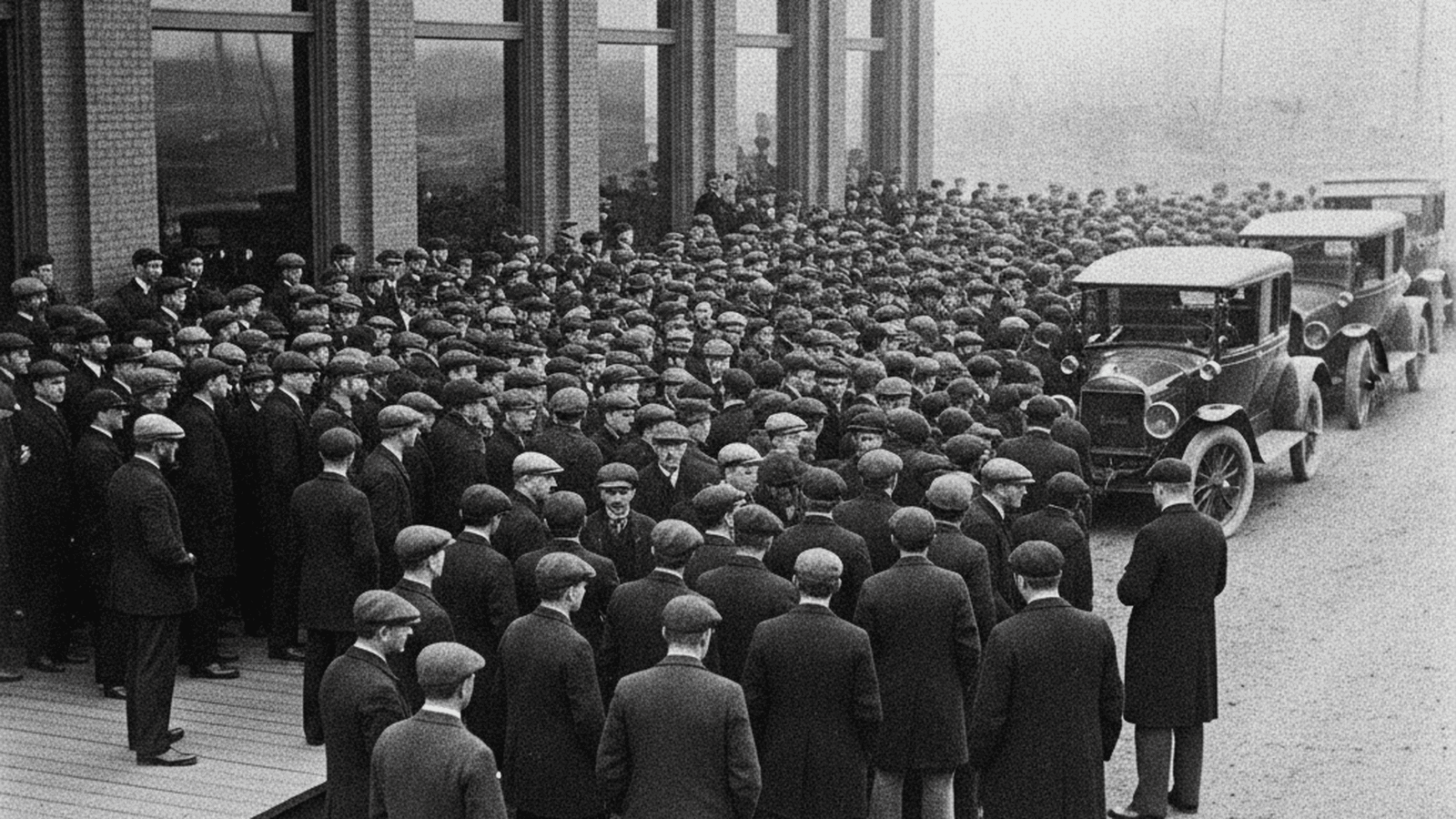
In 1921, North Dakota voters conducted the first successful gubernatorial recall in United States history, removing Governor Lynn Frazier from office. The election was the culmination of a fierce struggle between the Nonpartisan League and the Independent Voters Association over state-owned industries.
TLDR: In 1921, North Dakota made history by removing Governor Lynn Frazier through the nation’s first successful gubernatorial recall. Triggered by economic distress and opposition to state-owned enterprises, the event proved that Progressive Era reforms could provide a direct check on executive power, setting a lasting precedent for United States political accountability.
In the early 20th century, North Dakota became the epicenter of a radical political experiment that tested the limits of state-led economic intervention and direct democracy. The Nonpartisan League (NPL), founded in 1915 by Arthur C. Townley, sought to liberate farmers from the perceived grip of out-of-state grain elevators, banks, and railroads. By 1918, the NPL had gained total control of the state government, electing Lynn Frazier as governor. Their ambitious “Industrial Program” established the Bank of North Dakota and the North Dakota Mill and Elevator, marking a significant shift toward state-owned enterprises that was unprecedented in the United States.
However, the rapid expansion of state power triggered a fierce backlash from conservative and moderate factions who viewed the NPL as a threat to private enterprise. The Independent Voters Association (IVA) emerged as the primary opposition, arguing that the NPL’s policies were fiscally irresponsible and bordered on socialism. The tension reached a breaking point following the 1920 election. While Frazier won re-election, the IVA gained control of the state house, leading to a legislative deadlock that paralyzed the government. Simultaneously, a post-World War I agricultural depression caused grain prices to plummet, straining the newly formed state bank and fueling public discontent among the very farmers the NPL aimed to protect.
The IVA utilized a relatively new Progressive Era tool to break the NPL’s hold: the recall election. North Dakota had adopted the recall mechanism via constitutional amendment in 1914, but it had never been tested against a statewide executive. In 1921, the IVA successfully organized a massive petition drive, gathering enough signatures to force a recall election for Governor Frazier, Attorney General William Lemke, and Commissioner of Agriculture and Labor John Hagan. The campaign was exceptionally bitter, with the IVA accusing the NPL of gross mismanagement and corruption, while the NPL defended their programs as essential protections against monopoly interests.
On October 28, 1921, North Dakota voters went to the polls in a historic exercise of direct democracy. The results were narrow but decisive, reflecting a deeply divided electorate. Governor Frazier was ousted by a margin of approximately 4,000 votes, replaced by the IVA-backed candidate, Ragnvald A. Nestos. Lemke and Hagan were also removed from office, completing a clean sweep for the opposition. This marked the first time in United States history that a sitting governor was removed from office through a recall election, a feat that would not be repeated for over eighty years.
Despite the removal of the NPL leadership, the recall did not result in the immediate dismantling of their signature programs. The Bank of North Dakota and the state-owned mill and elevator survived the transition of power, as they had already become deeply integrated into the state’s economic fabric. Nestos and the IVA found that while voters were frustrated with the NPL’s management and political tactics, there was still significant support for the institutions themselves. The new administration was forced to manage the state-owned enterprises they had previously campaigned against, leading to a period of stabilization rather than abolition.
The 1921 recall established a major precedent for executive accountability and the use of direct democracy in the United States. It demonstrated that the Progressive Era reforms of initiative, referendum, and recall could be used to check the power of the very movements that championed them. While gubernatorial recalls remained rare for the next century, the North Dakota event proved that the electorate possessed the ultimate authority to terminate an administration mid-term. This legacy of direct oversight continues to influence state-level governance and the legal frameworks governing elective office across the country, serving as a reminder of the volatile intersection between economic crisis and democratic reform.

Sophie Carter serves as a Staff Writer for Just Right News, where she anchors the outlet’s critical coverage of Elections, Influence, and Democracy Infrastructure. In an era where the mechanics of voting and the flow of political capital are under constant scrutiny, Sophie provides a steady, principled voice dedicated to the preservation of American institutional integrity and the rule of law.
Raised in Charlotte, North Carolina, Sophie’s perspective was forged in a community that balances rapid modern growth with a deep respect for tradition and civic duty. Growing up in the Queen City, she witnessed firsthand how a robust local culture depends on the trust between the citizen and the state. This upbringing instilled in her a foundational belief that the right to vote is a sacred trust—one that must be protected from both administrative overreach and the encroaching influence of special interest groups. Her reporting reflects these North Carolina roots, emphasizing the importance of community-led governance and the preservation of the individual’s voice in the face of nationalized political movements.
Now based in Atlanta, Georgia, Sophie operates from the heart of one of the nation’s most pivotal and contested political landscapes. Her location allows her to report from the front lines of the debate over election security, legislative reform, and the modernization of voting systems. For Sophie, the “infrastructure” of democracy is not merely a matter of machines and ballots; it is the collection of laws, people, and transparent processes required to maintain public confidence. Her work often highlights the necessity of clear, enforceable standards that ensure every legal vote is counted fairly and that the machinery of our republic remains accountable to the taxpayers who fund it.
Central to her work at Just Right News is her acclaimed feature series, “The Price of a Vote.” Through this ongoing project, Sophie explores the complex web of influence that shapes modern campaigns and policy decisions. She delves into how high-level lobbying, non-governmental organizations, and shifting bureaucratic regulations impact the weight of an individual citizen’s ballot. By examining the financial and structural pressures placed on the electoral process, she provides readers with a comprehensive look at the forces vying for control over the American political system.
Sophie’s approach to journalism is rooted in a commitment to the constitutional framework. She views her role as a watchdog for the voter, ensuring that the systems meant to serve the public remain transparent and free from corruption. Whether she is analyzing the implementation of new voting technologies or investigating the influence of outside money on state-level policy, her work is characterized by a rigorous adherence to facts and a refusal to succumb to the sensationalism that often plagues modern political reporting.
At Just Right News, Sophie Carter continues to be a vital resource for readers who value clarity, conviction, and a defense of traditional American values. Her deep ties to the Southeast and her specialized focus on the mechanics of our republic make her an essential voice in the ongoing conversation about the future of American self-governance. Through her reporting, she remains dedicated to the idea that a secure and honest electoral system is the bedrock of a free and prosperous society.