

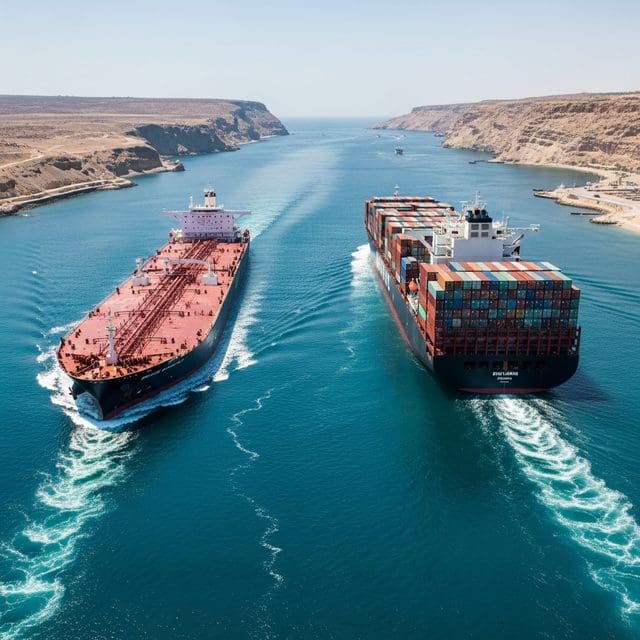
A fragile U.S.-Iran memorandum aims to restore the flow of one-fifth of global energy trade, though shipping operators remain wary after months of maritime conflict.
The physical journey of goods across the globe hinges on narrow geographic chokepoints, none more vital than the Strait of Hormuz. Following months of conflict that removed roughly one-fifth of global oil and liquefied gas trade from traditional routes, a fragile opening has emerged. A June 12 memorandum of understanding between the United States and Iran has established a framework to reopen the waterway without tolls, providing a potential reprieve for a global supply chain battered by rerouting costs and insurance spikes. This development follows a 10-day ceasefire between Israel and Lebanon initiated in April 2026, which has now been extended into a broader 60-day window intended to stabilize the region.
For the American blue-collar worker, the stability of this maritime corridor is not an abstract geopolitical concern but a direct factor in the cost of living. When the Strait closed, the resulting war-driven price spikes forced manufacturers to contend with soaring diesel and energy costs. While oil prices dropped over 10 percent on April 17 following the initial ceasefire announcement by the Trump administration, the path to the shelf remains cluttered. Vessel-tracking platforms currently show only patchy, below-normal traffic through the Strait. Analysts warn it will take months of consistent flows to restock Asian refineries and normalize fuel supplies even if the reopening holds.
Industry analysts at Wood Mackenzie have warned of the catastrophic stakes involved in this diplomatic opening. Had the closure persisted, Brent crude was projected to approach 200 dollars per barrel by late 2026, with jet fuel and diesel potentially nearing 300 dollars. Such figures represent a direct tax on the movement of every physical good, from raw steel to finished consumer products, threatening a global GDP hit of roughly 0.4 percent. While emergency stockpiles and strategic inventories have prevented a total economic collapse thus far, Brookings researchers warn that these buffers are rapidly depleting. The supply shortfall will accumulate over coming months if flows through the Gulf do not ramp up quickly.
Despite the political progress, the scars of recent months remain visible. Tanker and container operators remain extremely cautious about fully re-entering the Strait despite the memorandum. This hesitation stems from months of Iranian harassment, seizures, and missile attacks on shipping infrastructure. These hostilities previously pushed trade onto longer, more expensive routes around the Cape of Good Hope, inflating the cost of everything from electronics to industrial machinery. Insurance costs remain at historic highs, and many firms are waiting for a consistent period of verified safety before they are willing to risk their crews and cargo in the waterway again.
Fitch Ratings suggests that if the reopening remains reliable, the oil market could swing back toward an oversupply, with 2026 prices averaging in the high-$80s per barrel. However, the transition from a war footing to a commercial equilibrium is rarely seamless. The U.S.-Iran memorandum includes sanctions relief based strictly on compliance, a move that places the burden of proof on Tehran. For the American manufacturer, this means the threat of renewed volatility remains a constant shadow over long-term planning and domestic production costs.
As the U.S. government monitors compliance, the focus remains on whether this deal will translate into tangible relief at the pump and the port. The current situation reinforces the argument for shorter, more resilient supply chains and increased domestic production to insulate the American economy from foreign chokepoints. For now, the world watches the horizon of the Strait, where the dignity of the individual worker’s paycheck is tied to the safe passage of the massive tankers that fuel the modern industrial machine.

Sean Bradley serves as the Senior Correspondent for Trade, Supply Chains, and Global Labor at Just Right News, where he brings a principled, clear-eyed perspective to the complex systems that power the modern world. With a focus on the economic forces that impact the American household, Bradley has distinguished himself as a leading voice in explaining how global shifts in manufacturing and logistics translate to the kitchen table.
Growing up in Long Beach, California, Bradley’s interest in the movement of goods was forged against the backdrop of one of the nation’s most vital maritime gateways. Raised in a community where the towering cranes of the port were a constant fixture on the horizon, he developed an early appreciation for the blue-collar industries that form the backbone of the American economy. This upbringing instilled in him a profound respect for the dockworkers, truckers, and laborers who keep the country moving, a sentiment that remains a cornerstone of his reporting today. For Bradley, trade is not merely a series of abstract figures on a spreadsheet; it is a human endeavor that sustains families and defines the strength of a nation.
Now based in Seattle, Washington, Bradley occupies a strategic vantage point in another of the country’s most significant trade hubs. His location allows him to witness firsthand the intersection of traditional industry and the evolving technological landscape of global logistics. From the Pacific Northwest, he monitors the flow of goods across the ocean, providing Just Right News readers with timely insights into how international tensions, regulatory hurdles, and labor disputes affect the availability and cost of essential goods.
His signature feature series, “The Journey of Things,” has become a staple for readers seeking to understand the intricate path products take from raw materials to the retail shelf. Through this series, Bradley pulls back the curtain on the global marketplace, often highlighting the risks of over-reliance on foreign adversaries and the importance of domestic manufacturing resilience. His reporting consistently emphasizes the conservative values of national sovereignty, free-market competition, and the protection of the American worker from unfair global practices.
As a journalist of Irish heritage, Bradley maintains a deep-seated respect for the dignity of the individual worker and the importance of community stability. He approaches his beat with a commitment to transparency, often questioning the status quo of globalist policies that prioritize corporate efficiency over local prosperity. Whether he is reporting from a warehouse floor or analyzing a new international trade agreement, his goal remains the same: to provide the American public with the truth about where their products come from and what it costs to get them there.
Throughout his tenure at Just Right News, Bradley has remained a steadfast advocate for economic common sense. His work serves as a vital resource for those who believe that a strong nation is built on secure borders, robust trade, and a respected workforce. By combining his local roots in Long Beach with his professional experience in Seattle, Bradley continues to offer a unique and necessary perspective on the forces that shape the American way of life.