

The Silent Ransom Group is blending digital vishing with in-person office breaches, targeting high-value legal data and demanding ransoms as high as $20 million.
The digital battlefield has expanded from the vacuum of cyberspace into the physical lobbies of American law firms. Federal investigators and private threat analysts are sounding the alarm on the Silent Ransom Group (SRG), a Russian-linked syndicate that has evolved beyond traditional ransomware. Since 2022, SRG has conducted over 100 data-extortion campaigns, but its latest tactics represent a dangerous escalation in the ‘New Cold War’ for data: hackers are now physically showing up at corporate offices posing as IT support staff to facilitate network breaches.
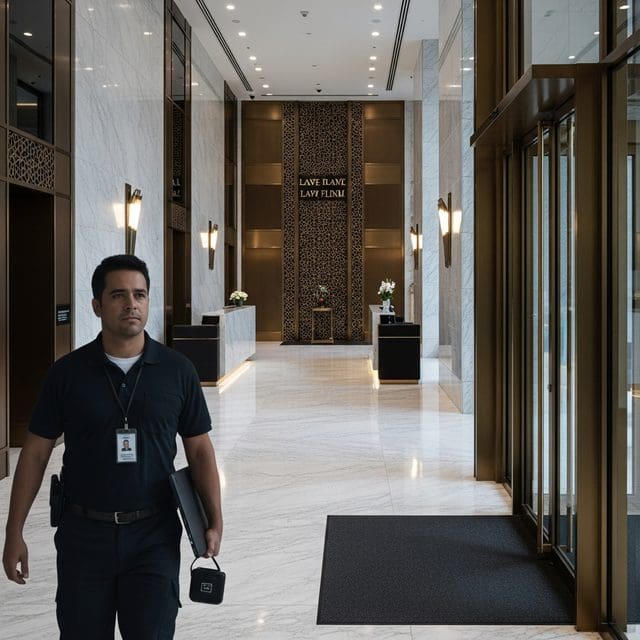
Operating out of the remnants of the notorious Conti syndicate, SRG has largely abandoned the ‘encrypt-and-lock’ model in favor of pure data theft and extortion. By targeting regional legal hubs and insurance entities, such as those in Las Vegas, the group exploits the vulnerabilities of firms that rely on outsourced IT or lack rigorous identity verification protocols. When remote social engineering and ‘vishing’ (voice phishing) fail to gain the necessary credentials, these operatives reportedly walk through the front door. Using physical access, they plug storage devices into internal workstations to bypass the perimeter and pivot into sensitive legal databases.
This hybrid warfare strategy relies on ‘living off the land’—a technique that makes detection nearly impossible for standard antivirus software. Once inside, the group utilizes a suite of legitimate remote-management tools including Zoho Assist, Quick Assist, AnyDesk, RustDesk, Syncro, Splashtop, and Atera to maintain persistence. Because these utilities are common in standard IT environments, the intruders often remain undetected while exfiltrating massive volumes of data via utilities like WinSCP and Rclone. In May 2026, at least one ransom demand against a targeted firm reportedly reached $20 million, highlighting the massive financial stakes of these security failures.
The threat to American digital sovereignty is compounded by a broader geopolitical shift toward securing domestic infrastructure. As the Trump administration moves to tighten national security controls—evidenced by the June 13, 2026, directive to shut down Anthropic’s Fable and Mythos models due to jailbreak vulnerabilities—adversaries are finding more tactile ways to bypass the firewall. While companies like OpenText are investing €105 million in European sovereign clouds and Reka AI is merging with Moonvalley to advance physical AI models, the immediate threat remains the low-tech vulnerability of the human element in the office.
Google threat analysts have been publicly flagged alongside the FBI as key sources on SRG’s campaign, underlining that major tech-provider telemetry is now feeding into federal warnings about these fake IT workers. The group’s focus on law firms is particularly strategic; these entities hold the ‘keys to the kingdom’ regarding intellectual property, litigation strategy, and sensitive corporate disclosures. By compromising a single regional law firm, a state-sponsored or state-aligned actor can gain leverage over multiple sectors of the American economy.
Federal guidance now urges firms to treat physical security as an extension of cybersecurity. Recommendations from the latest FBI and industry advisories go beyond generic hygiene, pushing firms to establish written IT-verification procedures for any on-site technician and centralize help-desk contact points. Organizations are being told to audit and allowlist remote-access tools and enforce least-privilege document access with multifactor authentication and bulk-download alerts. As foreign actors increasingly treat American soil as a permissive environment for corporate espionage, the era of trusting a badge and a clipboard at the office reception desk must come to an end. The defense of the constitutional order now requires a vigilant gatekeeper at every physical and digital entrance.

Ryan Mitchell serves as a Staff Writer for Just Right News, where he anchors the desk for Cyber, Technology Policy, and Digital Sovereignty. In an era where the digital landscape has become as much a battlefield as any physical territory, Ryan provides a critical conservative lens on the forces shaping the future of American innovation and national security. His work is defined by a commitment to the idea that American leadership in the digital age is not just a matter of economic success, but a necessity for the preservation of global liberty.
Born and raised in Austin, Texas, Ryan’s perspective is deeply rooted in the Lone Star State’s tradition of independence and skepticism of centralized authority. Growing up in a city that transformed from a quiet state capital into a global technology hub, he witnessed firsthand the disruptive power of the tech industry. This upbringing instilled in him a firm belief in free-market principles and the necessity of protecting individual liberties from both government overreach and corporate overstep. His Texan background serves as a foundational compass, guiding his reporting toward stories that emphasize national resilience and the preservation of constitutional values in an increasingly virtual world.
Now based in San Francisco, California, Ryan operates from the epicenter of the very industry he scrutinizes. Living and working in the heart of Silicon Valley allows him to provide “boots on the ground” reporting that few conservative journalists can match. He navigates the cultural and political complexities of the Bay Area to bring Just Right News readers an inside look at the boardrooms and coding labs where the next generation of digital policy is forged. For Ryan, being stationed in San Francisco is a strategic choice; it allows him to challenge the prevailing ideological monoculture of the tech elite from within their own backyard, ensuring that the concerns of middle America are represented in the conversation about our digital future.
His beat—Cyber, Technology Policy, and Digital Sovereignty—covers the high-stakes world of data privacy, artificial intelligence, and the infrastructure of the modern web. Ryan is particularly focused on the concept of digital sovereignty, arguing that for a nation to remain truly free, it must maintain control over its own technological destiny and critical infrastructure. He frequently explores how international regulations and domestic policies impact the ability of American firms to compete without sacrificing the privacy or security of their citizens.
Central to his current body of work is his featured series, “The New Cold War.” Through this project, Ryan examines the escalating technological rivalry between the United States and its global adversaries. He delves into the complexities of state-sponsored hacking, the global race for semiconductor dominance, and the ideological struggle to define the rules of the internet. Ryan views this competition not merely as a commercial race, but as a fundamental defense of Western values against authoritarian digital models. Through his rigorous reporting and principled analysis, Ryan Mitchell ensures that the readers of Just Right News stay informed about the invisible forces defining the 21st century, always advocating for a future where technology serves the cause of freedom.