

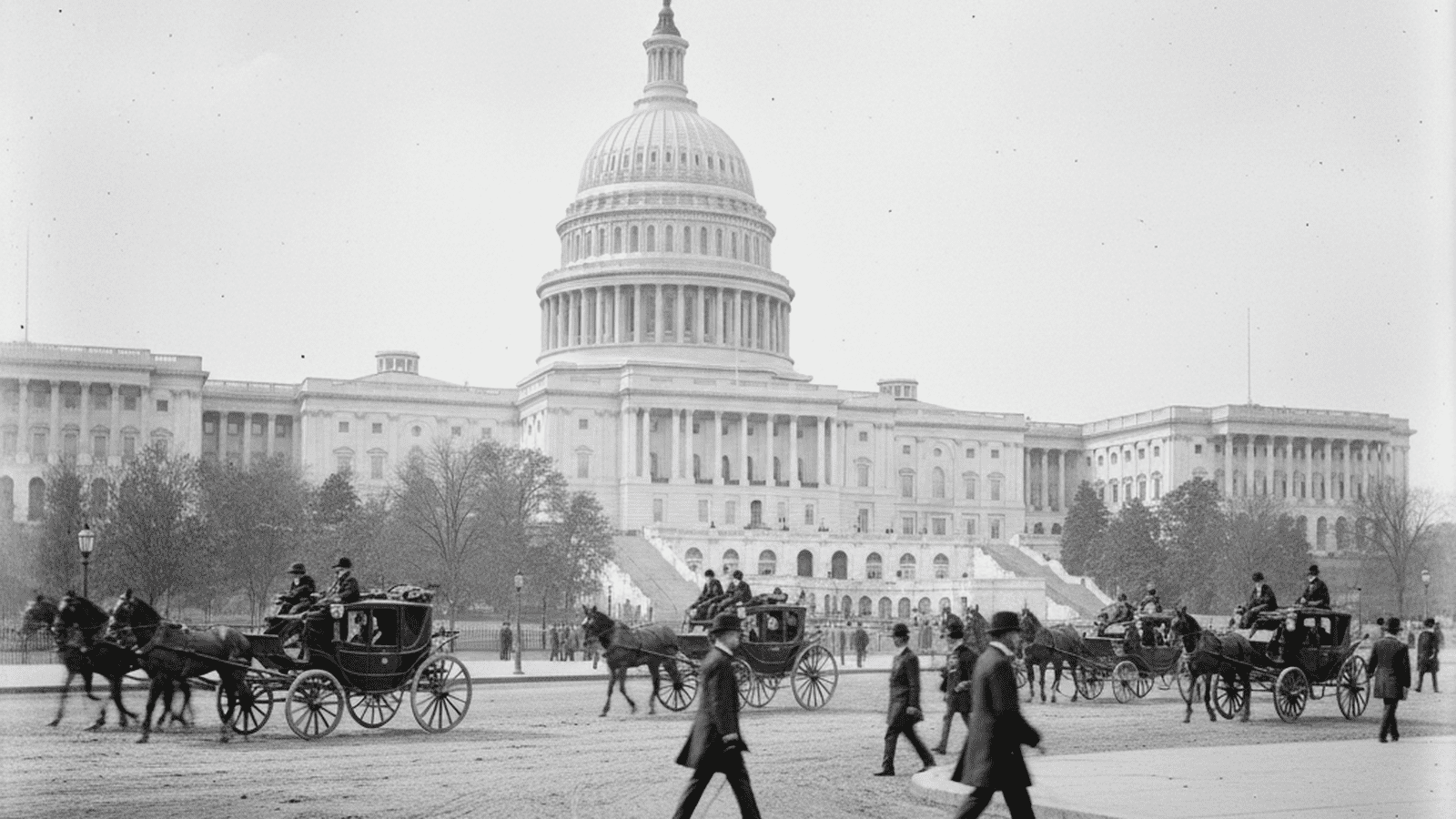
In 1890, Representative Henry Cabot Lodge introduced the Federal Elections Bill to provide federal oversight of congressional elections in the United States. The legislation aimed to protect the voting rights of African Americans in the South but was ultimately defeated in the Senate through a legislative trade-off.
TLDR: The 1890 Lodge Bill represented the last major Gilded Age attempt to secure federal oversight of United States elections. Despite passing the House, the bill failed in the Senate after a political bargain, effectively ending federal intervention in Southern voting practices for over sixty years.
The Gilded Age is frequently characterized by its rapid industrialization and the rise of corporate monopolies, yet it was also a defining era for the future of American democracy. In 1890, the United States Congress engaged in a high-stakes legislative battle that would determine the federal government’s role in protecting the integrity of the ballot. The Federal Elections Bill, championed by Representative Henry Cabot Lodge of Massachusetts, represented the last major effort of the 19th century to ensure that the constitutional right to vote was more than a hollow promise for African Americans in the South.
Henry Cabot Lodge, a young and ambitious Republican, introduced the bill to address the widespread fraud, intimidation, and violence that had become commonplace in Southern elections following the end of Reconstruction. The legislation proposed a sophisticated mechanism for federal oversight: if a small number of citizens in any congressional district petitioned for it, federal circuit courts would be required to appoint bipartisan supervisors. These officials were granted the authority to oversee voter registration, witness the casting of ballots, and verify the final tally. By placing this power in the hands of the judiciary rather than the executive branch, Lodge hoped to bypass accusations of partisan military interference.
The bill successfully passed the House of Representatives in July 1890, largely due to the disciplined leadership of Speaker Thomas Brackett Reed. However, the Senate proved to be a far more hostile environment. Southern Democrats, desperate to maintain the white supremacist “Redeemer” governments they had established, launched a ferocious rhetorical campaign. They branded the measure the “Force Bill,” a term carefully chosen to evoke the trauma of federal military occupation during Reconstruction. They argued that federal oversight was an unconstitutional violation of state sovereignty that would reignite racial conflict and destroy the social fabric of the South.
The Senate debate stretched into a grueling months-long ordeal. To block the bill, Democrats employed the filibuster, effectively paralyzing the chamber. The political landscape was further complicated by the emergence of “Silver Republicans” from Western states. These senators were less concerned with civil rights than with the economic goal of inflating the currency through the free coinage of silver. They became the “swing votes” in a complex legislative dance involving the McKinley Tariff and other partisan priorities.
In early 1891, the fate of the Lodge Bill was sealed by a cynical political trade-off. A group of eight Republican senators, primarily from the West, struck a bargain with the Democrats. In exchange for Democratic support on silver-related legislation, these Republicans agreed to abandon the Lodge Bill. On January 22, 1891, the Senate voted to set aside the elections bill, effectively killing it. The defeat was not merely a procedural loss; it signaled a broader retreat by the Republican Party from the civil rights commitments of the post-Civil War era.
The failure of the Lodge Bill had profound long-term consequences for United States democracy. It ushered in an era of “home rule” in the South that saw the systematic removal of Black citizens from the political process. With the federal government signaling its unwillingness to intervene, Southern states moved rapidly to formalize disenfranchisement through poll taxes, literacy tests, and grandfather clauses. This period of disenfranchisement would persist for more than sixty years, largely unchallenged by federal authorities. It was not until the mid-20th century, with the passage of the Civil Rights Act of 1960 and the Voting Rights Act of 1965, that the federal government would again assert the level of oversight envisioned by Lodge. The 1890 debate remains a stark reminder of how legislative trade-offs and the prioritization of economic policy over civil rights can reshape the political landscape for generations.

Sophie Carter serves as a Staff Writer for Just Right News, where she anchors the outlet’s critical coverage of Elections, Influence, and Democracy Infrastructure. In an era where the mechanics of voting and the flow of political capital are under constant scrutiny, Sophie provides a steady, principled voice dedicated to the preservation of American institutional integrity and the rule of law.
Raised in Charlotte, North Carolina, Sophie’s perspective was forged in a community that balances rapid modern growth with a deep respect for tradition and civic duty. Growing up in the Queen City, she witnessed firsthand how a robust local culture depends on the trust between the citizen and the state. This upbringing instilled in her a foundational belief that the right to vote is a sacred trust—one that must be protected from both administrative overreach and the encroaching influence of special interest groups. Her reporting reflects these North Carolina roots, emphasizing the importance of community-led governance and the preservation of the individual’s voice in the face of nationalized political movements.
Now based in Atlanta, Georgia, Sophie operates from the heart of one of the nation’s most pivotal and contested political landscapes. Her location allows her to report from the front lines of the debate over election security, legislative reform, and the modernization of voting systems. For Sophie, the “infrastructure” of democracy is not merely a matter of machines and ballots; it is the collection of laws, people, and transparent processes required to maintain public confidence. Her work often highlights the necessity of clear, enforceable standards that ensure every legal vote is counted fairly and that the machinery of our republic remains accountable to the taxpayers who fund it.
Central to her work at Just Right News is her acclaimed feature series, “The Price of a Vote.” Through this ongoing project, Sophie explores the complex web of influence that shapes modern campaigns and policy decisions. She delves into how high-level lobbying, non-governmental organizations, and shifting bureaucratic regulations impact the weight of an individual citizen’s ballot. By examining the financial and structural pressures placed on the electoral process, she provides readers with a comprehensive look at the forces vying for control over the American political system.
Sophie’s approach to journalism is rooted in a commitment to the constitutional framework. She views her role as a watchdog for the voter, ensuring that the systems meant to serve the public remain transparent and free from corruption. Whether she is analyzing the implementation of new voting technologies or investigating the influence of outside money on state-level policy, her work is characterized by a rigorous adherence to facts and a refusal to succumb to the sensationalism that often plagues modern political reporting.
At Just Right News, Sophie Carter continues to be a vital resource for readers who value clarity, conviction, and a defense of traditional American values. Her deep ties to the Southeast and her specialized focus on the mechanics of our republic make her an essential voice in the ongoing conversation about the future of American self-governance. Through her reporting, she remains dedicated to the idea that a secure and honest electoral system is the bedrock of a free and prosperous society.