

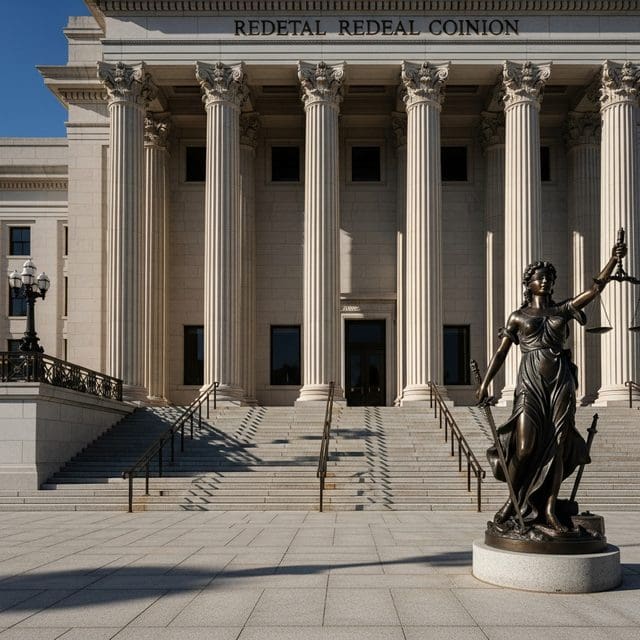
International pushes for judicial oversight and a surge in automated litigation are forcing a rigorous reexamination of the separation of powers and judicial independence.
The integrity of the judicial branch rests upon a singular, foundational principle: the court must remain an independent arbiter, bound by the law rather than political impulse. Recent developments across the globe, from the Federal Court of Australia to the rise of automated litigation in the United States, are testing the structural integrity of this principle. As legislative bodies seek greater oversight of the bench and technology alters the nature of the docket, the legal community is grappling with how to maintain accountability without eroding the constitutional independence required for a free society.
In Australia, the Labor Party faces mounting pressure to fulfill a promise to establish a formal oversight mechanism for federal judges. Advocates argue that the existing system of judicial self-regulation lacks the transparency found in other branches. However, from a principled constitutionalist perspective, any mechanism allowing the executive or legislative branches to discipline the judiciary must be viewed with caution. The risk is not merely administrative; it is the potential for political actors to use oversight as a tool to influence judicial outcomes. A judiciary that answers to the political branches is no longer a check on power, but a tool of it.
Simultaneously, the administrative health of the courts faces a technological threat that challenges the traditional concept of legal standing. Reports indicate a rise in ‘slopsuits’—legal filings generated by artificial intelligence and submitted by individuals without legal counsel. These filings often lack merit, cite non-existent precedents, and overwhelm court dockets. This phenomenon creates a procedural bottleneck that prevents the timely adjudication of legitimate constitutional questions. The court is intended to be a forum for principled dispute and the application of law to fact, not a repository for automated grievances. This surge in AI-driven litigation underscores the necessity of maintaining rigorous standards for legal practice and the importance of human judgment in the rule of law.
In other jurisdictions, the application of statutory mandates continues to define the reach of judicial power. In Puducherry, a judge recently handed down a twenty-year sentence under the Protection of Children from Sexual Offences (POCSO) Act, demonstrating the judiciary’s role in enforcing specific legislative intent. Similarly, in India, political leaders from the BJP are advocating for the establishment of a High Court circuit bench in Shivamogga to increase accessibility. These efforts highlight the logistical challenges of delivering justice across vast jurisdictions while maintaining a centralized legal doctrine.
Closer to home, the American legal landscape remains focused on the boundaries of executive authority. The recent swearing-in of Kevin Warsh as Federal Reserve Chair and the debates over the Department of Justice’s proposed $1.8 billion legal compensation fund illustrate the constant friction between the branches. Senate Republican Leader Mitch McConnell’s criticism of the fund as a ‘slush fund’ highlights the constitutional concern regarding how public money is allocated and the potential for executive overreach in the absence of clear statutory authorization.
Whether addressing AI-driven litigation, the Australian Labor Party’s oversight agenda, or the expansion of circuit benches, the standard for the rule of law remains the same. The judiciary must remain a fixed standard against the shifting winds of political and technological change. To protect liberty, the courts must be accessible and accountable, but they must never be subservient to the branches they are meant to restrain. The Constitution provides the rulebook for power; it is the judge’s duty to follow it without deviation.

Lila Hayes serves as a Staff Writer for Just Right News, where she anchors the “Courts, Law, and Constitutional Order” beat. Her work is defined by a steadfast commitment to the foundational principles of the American republic and a rigorous defense of the legal frameworks that ensure national stability. As a primary voice for the outlet, she provides readers with a clear-eyed analysis of the judiciary, focusing on the importance of originalism and the preservation of the separation of powers.
Lila’s perspective was forged in the American heartland. Raised in St. Louis, Missouri, she grew up in a Hispanic household where the values of hard work, faith, and respect for the law were paramount. Her upbringing instilled in her a deep appreciation for the American Dream and the legal protections that make it possible. This Missouri background remains a cornerstone of her reporting, providing a grounded, common-sense counter-narrative to the often-insular legal circles of the coastal elite. She understands that the decisions made in high-court chambers have real-world consequences for families and small business owners across the country.
At Just Right News, Lila has become widely recognized for her signature feature series, “The Rulebook of Power.” In this ongoing project, she delves into the mechanics of the federal government, examining how administrative overreach and judicial activism can threaten the delicate balance of the Constitution. She approaches her beat with the tenacity of a veteran journalist and the precision of a legal scholar, consistently advocating for a judiciary that interprets the law as written rather than legislating from the bench. For Lila, the Constitution is not a “living” document subject to the whims of modern social trends; it is a fixed standard that ensures the government remains the servant of the people, not their master.
Now based in Philadelphia, Pennsylvania, Lila finds herself at the very epicenter of American constitutional history. Living and working in the city where the Founders drafted the documents she defends daily provides a constant source of inspiration. The historic halls and landmarks of Philadelphia serve as a daily reminder of the high stakes involved in her reporting. Her presence in the city allows her to bridge the gap between the historical intent of the law and its contemporary application, ensuring that the legacy of the Founding Fathers remains central to the national conversation.
Throughout her career, Lila has remained dedicated to the idea that a free society requires an informed citizenry and a transparent legal system. Her reporting is more than just a collection of headlines; it is a defense of the constitutional order that has sustained the nation for over two centuries. By focusing on the “Rulebook of Power,” she ensures that her readers understand not just what is happening in the courtrooms, but why those decisions matter for the future of American liberty. Lila Hayes continues to be a vital voice for those who believe that the law should be a shield for the citizen and a constraint on the state.