

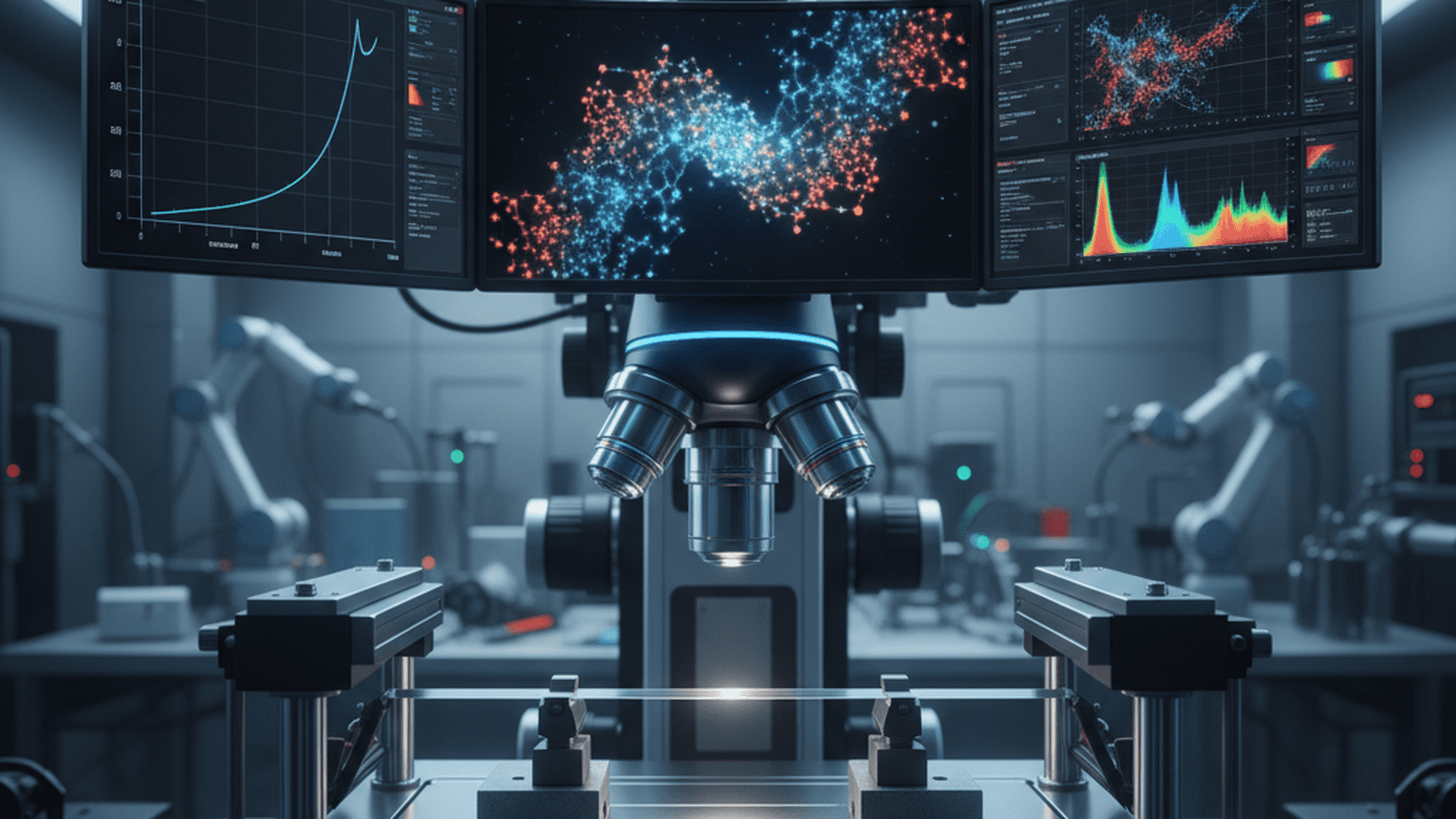
Scientists at the Delft University of Technology have developed a new amorphous version of silicon carbide that exhibits extraordinary tensile strength. This material, which lacks a structured crystalline lattice, can withstand pressures of up to 10 GigaPascals, making it one of the strongest materials ever recorded for its density.
TLDR: A research team led by TU Delft has synthesized amorphous silicon carbide with a tensile strength of 10 GigaPascals, surpassing the resilience of most industrial ceramics. This discovery offers a scalable pathway for creating ultra-strong, lightweight components for micro-electromechanical systems and aerospace sensors.
Researchers at the Delft University of Technology, working alongside an international cohort of scientists, have achieved a landmark breakthrough in materials science: the synthesis of an amorphous form of silicon carbide with unprecedented mechanical properties. This newly developed material exhibits a tensile strength of 10 GigaPascals (GPa), a figure that places it among the most resilient substances ever recorded. While traditional engineering has long favored crystalline structures for high-strength applications, this discovery fundamentally challenges that paradigm, demonstrating that disordered, glass-like atomic arrangements can offer superior durability and resistance to failure. Silicon carbide is already a staple in the semiconductor and power electronics industries, valued for its exceptional thermal stability and hardness. However, creating an amorphous version—where atoms are arranged in a non-repeating, random fashion—that maintains high mechanical integrity has historically been a significant challenge. The Delft team utilized a specialized plasma-enhanced chemical vapor deposition technique to grow thin films of this material. Unlike its crystalline counterpart, which can be brittle due to internal grain boundaries, the amorphous variant lacks these structural weak points, allowing it to distribute mechanical stress more uniformly across its atomic network. To accurately quantify the strength of this new material, the researchers developed a sophisticated microchip-based testing platform. This approach was necessary because traditional macro-scale testing often introduces surface flaws that mask the true intrinsic strength of a material. The team suspended ultra-thin ribbons of the amorphous silicon carbide between silicon anchors on a chip. By applying precise amounts of tension and observing the deformation under an electron microscope, they were able to record the exact point of fracture. The results were staggering: the material withstood 10 GPa of stress, which is roughly ten times the tensile strength of high-strength steel and approaches the resilience of materials like graphene and carbon nanotubes, but in a form that is much easier to manufacture at scale. One of the most compelling aspects of this discovery is the material’s strength-to-weight ratio. Amorphous silicon carbide is significantly less dense than most high-strength metals. In the context of aerospace engineering, where every gram of weight saved translates to massive fuel savings and increased payload capacity, such a material is revolutionary. It offers the possibility of creating structural components and sensors that are both lighter and more durable than those currently in use. Furthermore, because the material is synthesized using standard semiconductor fabrication equipment, it can be grown directly onto silicon wafers, facilitating a seamless transition from the laboratory to industrial production. The international collaboration also leveraged advanced computational modeling to understand the material’s behavior at the atomic level. These simulations revealed that the disordered bonds between silicon and carbon atoms create a complex web that effectively arrests the propagation of cracks. In crystalline materials, a crack often follows the path of least resistance along grain boundaries; in this amorphous structure, the lack of a defined path forces the energy of the crack to dissipate, preventing catastrophic failure. This chemical and thermal resistance makes the material ideal for sensors operating in the harshest environments on Earth and beyond, from the high-pressure depths of the ocean to the extreme temperatures of space. This breakthrough is expected to have an immediate impact on the design of micro-electromechanical systems (MEMS). These devices, which power the sensors in everything from smartphones to autonomous vehicles, require materials that can endure billions of cycles of mechanical stress. Amorphous silicon carbide could significantly extend the operational lifespan of these components. Moving forward, the research team intends to explore how adjusting the ratio of silicon to carbon atoms might further tune the material’s properties, potentially unlocking even higher levels of strength or specialized electronic characteristics.

Mason Reed serves as a Staff Writer for Just Right News, where he spearheads the Future Frontiers & Special Projects desk. In an era defined by rapid technological shifts and evolving social landscapes, Mason provides a steady, principled voice, examining the innovations of tomorrow through the lens of traditional American values. His work is most prominently featured in his signature series, “The Next Horizon,” where he explores the intersection of emerging technology, national sovereignty, and the preservation of individual liberty.
A native of San Diego, California, Mason’s worldview was shaped by the unique culture of his hometown. Growing up in a region defined by its strong military presence and its history of maritime industry, he developed a deep-seated respect for the institutions that provide national stability and the entrepreneurial spirit that drives the American economy. This upbringing instilled in him a belief that true progress is not found in discarding the past, but in building upon a foundation of proven principles. His reporting often reflects this San Diego influence, emphasizing the importance of a robust national defense and the necessity of maintaining a competitive edge in the global marketplace.
Now based in San Francisco, Mason operates from the heart of the world’s technological engine. Living and working in the Bay Area provides him with a front-row seat to the advancements—and the ideological challenges—emanating from Silicon Valley. While many in the region embrace a “move fast and break things” mentality, Mason’s reporting serves as a vital counterweight. He offers Just Right News readers a “boots on the ground” perspective, documenting how radical local policies and the concentration of tech power impact the everyday lives of citizens. His proximity to the industry allows him to cut through the marketing jargon of big tech to uncover the real-world implications for privacy, free speech, and the nuclear family.
In his “Future Frontiers” beat, Mason tackles complex subjects ranging from the ethics of artificial intelligence to the burgeoning private space race. He approaches these topics with a healthy skepticism toward centralized bureaucracy, championing instead the decentralized innovations that empower individuals. Through “The Next Horizon,” he highlights the pioneers and thinkers who are working to ensure that the future remains a place where human dignity and constitutional rights are protected. He believes that the rapid pace of change requires more than just technical expertise; it requires a moral compass rooted in the Western tradition.
Throughout his tenure at Just Right News, Mason has remained committed to the idea that the future is something to be shaped, not merely accepted. His writing is characterized by a rigorous defense of American exceptionalism and a belief that the country’s best days lie ahead, provided it remains true to its founding ideals. Whether he is investigating the impact of automation on the American workforce or profiling the next generation of aerospace engineers, Mason Reed ensures that his readers are equipped with the insights they need to navigate a changing world with confidence and clarity.