

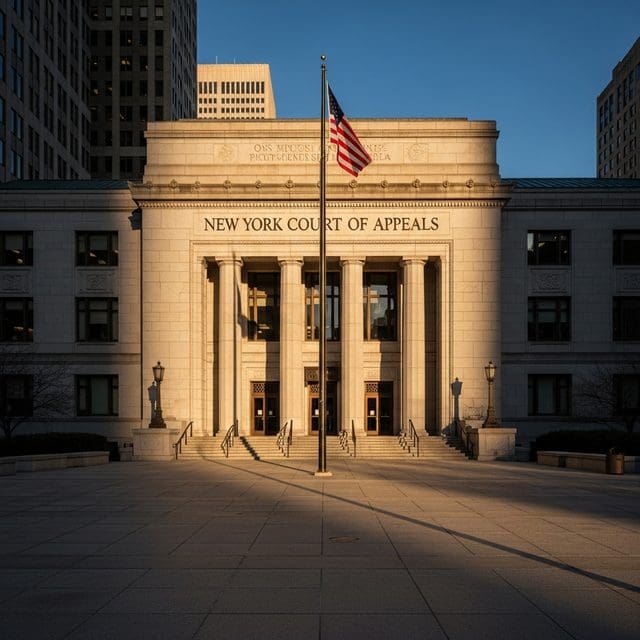
A New York appeals court has struck down the state’s restrictive ‘vampire rule’ on private property carry, marking a pivotal moment in the ongoing struggle between state mandates and constitutional rights.
The laboratories of democracy are currently operating at a fever pitch, but recent judicial interventions suggest that some state experiments have drifted too far from their constitutional moorings. In a landmark decision for the Second Amendment, an appeals court has struck a definitive blow against New York’s controversial ‘vampire rule.’ This legislative maneuver had effectively flipped the script on private property rights by presuming that firearm carry was prohibited on all private land unless a property owner explicitly posted signage welcoming it. By invalidating this rule, the court has restored the traditional presumption of liberty, asserting that the state cannot criminalize the exercise of a fundamental right by default.
This ruling arrives as New York grapples with a series of governance crises that test the efficacy of centralized state control. While the statehouse in Albany has focused on tightening licensing requirements and defining ‘sensitive places’ in the wake of the Supreme Court’s Bruen decision, the reality on the ground remains fractured. For instance, the Long Island Rail Road is currently paralyzed by a strike involving more than a quarter-million commuters who have not received a raise since 2022. Simultaneously, the New York City health system is reeling from a massive data breach affecting 1.8 million people, including the theft of biometric fingerprints. These administrative failures provide a stark contrast to the state’s aggressive pursuit of restrictive social policies that target law-abiding citizens rather than ensuring basic infrastructure and security.
The judicial pushback in New York is not an isolated incident but part of a broader trend across the ‘Fifty Laboratories.’ In California, the 9th Circuit recently declared the state’s broad open-carry ban unconstitutional, a move that affects nearly 95% of residents in major counties. Like New York, California continues to push the envelope with ‘three guns in 30 days’ limits and rigorous background checks, even as its own tax authorities face public scrutiny over high-profile collection disputes involving figures like Brittany Cartwright. These states are discovering that while the Tenth Amendment grants them significant leeway to govern, the federal judiciary remains a necessary check against the erosion of individual sovereignty. The tension is palpable as 130 front desk workers at Mandalay Bay in Las Vegas vote to unionize with Teamsters Local 986, reminding legislators that the workforce is as restless as the legal advocates.
Further south, Florida is demonstrating a different facet of the federalist struggle. The Sunshine State is currently defending its 2025 changes to citizen-led ballot initiatives in federal court. By tightening petition requirements and deadlines, Florida leadership argues they are protecting the sanctity of the state constitution from outside interests, while critics view it as a hurdle to direct democracy. Florida and Texas have also signaled their intent to join federal litigation regarding abortion-pill regulations, showcasing how states are increasingly using the federal court system to export their policy preferences and challenge federal preemption. This occurs as Florida cities are highlighted for their affordability, with fourteen locations identified where retirees can live comfortably on $4,000 a month, proving that fiscal restraint at the state level can yield tangible benefits for the local population.
As the 2026 gubernatorial contests loom in New York, California, Texas, and Florida, these legal battles will serve as the primary theater for defining the limits of state power. Whether it is the Caitlin Clark Foundation opening multi-sport courts in Indianapolis or the Rockefeller Foundation mobilizing $32 billion in capital for global solutions, private and philanthropic initiatives continue to thrive where government overreach is held in check. The invalidation of the ‘vampire rule’ is more than a victory for gun owners; it is a reaffirmation that the state is a servant of the people’s rights, not the grantor of them. The coming months will determine if other states follow this lead or continue to test the patience of the courts through burdensome regulations that stifle the very liberty they were designed to protect.

Dylan Brooks serves as the Senior Correspondent for Statehouses and Local Governance at Just Right News, where he brings a principled, constitutionalist lens to the often-overlooked machinery of state-level politics. As the lead voice behind the acclaimed feature series “Fifty Laboratories of Power,” Dylan has dedicated his career to the idea that the most impactful governance happens closest to home. His reporting consistently champions the Tenth Amendment, exploring how individual states can serve as testing grounds for innovative, conservative policy solutions that prioritize personal liberty and fiscal responsibility.
A native of Des Moines, Iowa, Dylan’s journalistic philosophy was forged in the heart of the American Midwest. Growing up in a community where local school board meetings and town halls were the bedrock of civic life, he developed a deep appreciation for the “retail politics” of the heartland. This upbringing instilled in him a fundamental belief that the American experiment is best preserved when power is decentralized. He carries the values of his Iowa roots into every assignment, maintaining a healthy skepticism of federal overreach and a steadfast commitment to the concerns of everyday citizens over the interests of the administrative state.
Now based in Madison, Wisconsin, Dylan operates from one of the nation’s most pivotal political battlegrounds. His location in a state capital known for its rigorous policy debates allows him to provide Just Right News readers with a front-row seat to the legislative process. From Madison, he tracks the ripple effects of statehouse decisions on local municipalities, ensuring that the connection between high-level policy and community impact is never lost. His work often highlights the success of conservative governors and legislatures in fostering economic growth, protecting parental rights, and securing the integrity of local institutions.
As an African American man in the conservative media landscape, Dylan offers a vital perspective on how limited government and free-market principles empower individuals and families. He frequently reports on how deregulation and school choice initiatives provide new avenues for success in underserved communities, challenging the monolithic narratives often presented by legacy media outlets. Dylan’s work is characterized by a commitment to the facts and a refusal to shy away from the complex realities of modern governance.
Throughout his tenure at Just Right News, Dylan has become a trusted authority for readers who value a rigorous, principled approach to the news. Whether he is dissecting a complex state budget or profiling a local grassroots movement, his goal remains the same: to provide the American public with the information they need to hold their local leaders accountable. By focusing on the “Fifty Laboratories of Power,” Dylan Brooks ensures that the vital work being done in statehouses across the country receives the national attention it deserves, always through a lens that respects the traditions and sovereignty of the American people.