

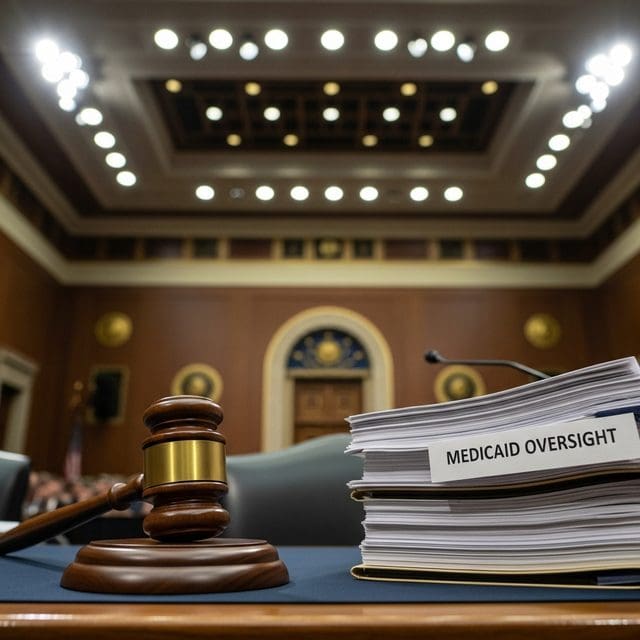
Lawmakers are moving to dismantle a decade of administrative overreach that bypassed Congress to expand Medicaid through executive waivers and creative accounting.
The fundamental principle of the American republic is that the power of the purse belongs exclusively to the people’s representatives in Congress. However, a series of investigative reports and legislative audits suggest that for years, the executive branch has treated this constitutional mandate as a mere suggestion. Recent findings from RealClearInvestigations and other watchdog groups indicate that the Department of Health and Human Services (HHS) effectively doubled Medicaid home- and community-based services spending—amounting to tens of billions of dollars over a decade—by routing unapproved initiatives through state agencies after Congress explicitly rejected the Build Back Better proposal in 2021.
This administrative maneuver was executed through the aggressive use of Section 1115 waivers. By utilizing administrative guidance rather than legislative statute, the Centers for Medicare and Medicaid Services (CMS) greenlit state-level expansions while labeling the costs as “budget neutral.” Critics argue this was a sophisticated accounting fiction, as Congress never enacted the corresponding federal appropriations required to sustain such growth. This pattern of behavior mirrors the earlier SNAP “Thrifty Food Plan” episode, where executive agencies unilaterally increased entitlement spending, raising serious concerns regarding the separation of powers and the Anti-Deficiency Act.
The era of unchecked administrative expansion is now meeting a formidable legislative wall. The 2025 reconciliation law, titled the “One Big Beautiful Bill Act” (HR1), has formally written strict Medicaid Section 1115 “budget neutrality” requirements into federal statute. By shifting what was once a negotiable and often opaque CMS policy into binding law, Congress has significantly constrained the ability of HHS to approve expansionary waivers that lack a clear, legislated funding source. This statutory change serves as a vital check against the “policy by memo” culture that has dominated the federal health bureaucracy.
Fiscal discipline is also being enforced through the top-line budget. According to the KFF 2026 outlook, the current reconciliation law is projected to reduce federal Medicaid financing by an estimated $911 billion over the next ten years. These cuts are not merely abstract numbers; they are already rippling through the system as the federal government tightens rules on provider taxes and increases pressure on state budgets to verify eligibility. For the American taxpayer, this represents a necessary correction to a system that had become untethered from fiscal reality. For states, it marks the end of a period of artificial abundance fueled by administrative creative accounting.
Further oversight is mounting in the House-passed FY2026 HHS appropriations bill. This legislation layers additional policy onto the annual funding fight, targeting specific areas of potential waste and mismanagement. Lawmakers are now focusing on provider enrollment across state lines, stricter eligibility verification for military families, and a thorough re-evaluation of Disproportionate Share Hospital (DSH) payments. These measures ensure that Medicaid remains a focused safety net for the truly needy rather than a laboratory for unilateral executive experimentation.
As the Senate HELP Committee continues its review of the FY2027 budget, the tension between executive agencies and congressional appropriators remains high. Some lawmakers have accused HHS of withholding or redirecting funds that were explicitly appropriated for other purposes, a claim that dovetails with the narrative of administrative overreach. The preservation of the sacred doctor-patient relationship and the long-term sustainability of the healthcare safety net depend on transparent, lawful funding. By reclaiming authority over Medicaid waivers and enforcing strict budget neutrality, Congress is taking a vital step toward restoring the constitutional balance and ensuring that healthcare policy is driven by the people’s representatives, not unelected administrators in Washington.

Susan Carter serves as a Senior Correspondent for Just Right News, where she leads the network’s comprehensive coverage of Health, Medicine, and Public Policy. With a career dedicated to dissecting the complexities of the American healthcare system, Susan brings a principled perspective to the most pressing debates of the day. Her reporting is characterized by a commitment to individual liberty, fiscal responsibility, and a healthy skepticism of government overreach, making her a vital voice for audiences seeking clarity in an increasingly regulated landscape.
Raised in Minneapolis, Minnesota, Susan’s professional outlook is deeply informed by the values of the American heartland. Growing up in the Twin Cities, she witnessed firsthand the importance of community-driven solutions and the resilience of the individual. This Midwestern foundation instilled in her a firm belief that the best answers to public policy challenges often come from local innovation and personal responsibility rather than top-down federal mandates. Her background allows her to translate complex legislative jargon into stories that resonate with families who value common sense and local autonomy.
Now based in Baltimore, Maryland, Susan operates from a unique vantage point at the intersection of medical innovation and urban policy. Living and working in a city renowned for its world-class medical institutions and significant public health challenges, she has a front-row seat to the realities of the modern healthcare landscape. Her proximity to these hubs of research and policy allows her to scrutinize how government intervention affects the quality of care and the freedom of medical professionals. In Baltimore, she sees the tangible results of policy decisions, using the city as a lens through which to examine the broader national health debate and the impact of federal spending on local communities.
As the lead for the acclaimed feature series “The Cost of Care,” Susan dives deep into the economic realities facing patients and providers alike. Her work focuses on the necessity of price transparency, the benefits of market competition, and the preservation of the sacred doctor-patient relationship. She is a staunch advocate for the idea that a well-informed public is the best defense against bureaucratic inefficiency. Through this series, she has exposed the hidden drivers of rising medical expenses, always seeking to empower the individual consumer over the massive institution.
Susan’s reporting on public policy is characterized by a commitment to rigorous inquiry and a focus on constitutional limits. Whether she is analyzing new pharmaceutical regulations, investigating the impact of federal health mandates, or exploring the future of medical technology, her goal remains the same: to provide Just Right News audiences with the facts they need to navigate a complex world. By blending her Midwestern sensibilities with the insights gained from her base in Maryland, Susan Carter has become a trusted authority for those who believe that personal freedom and public health are inextricably linked. Her work continues to challenge the status quo, advocating for a system that respects the taxpayer and prioritizes the patient.