

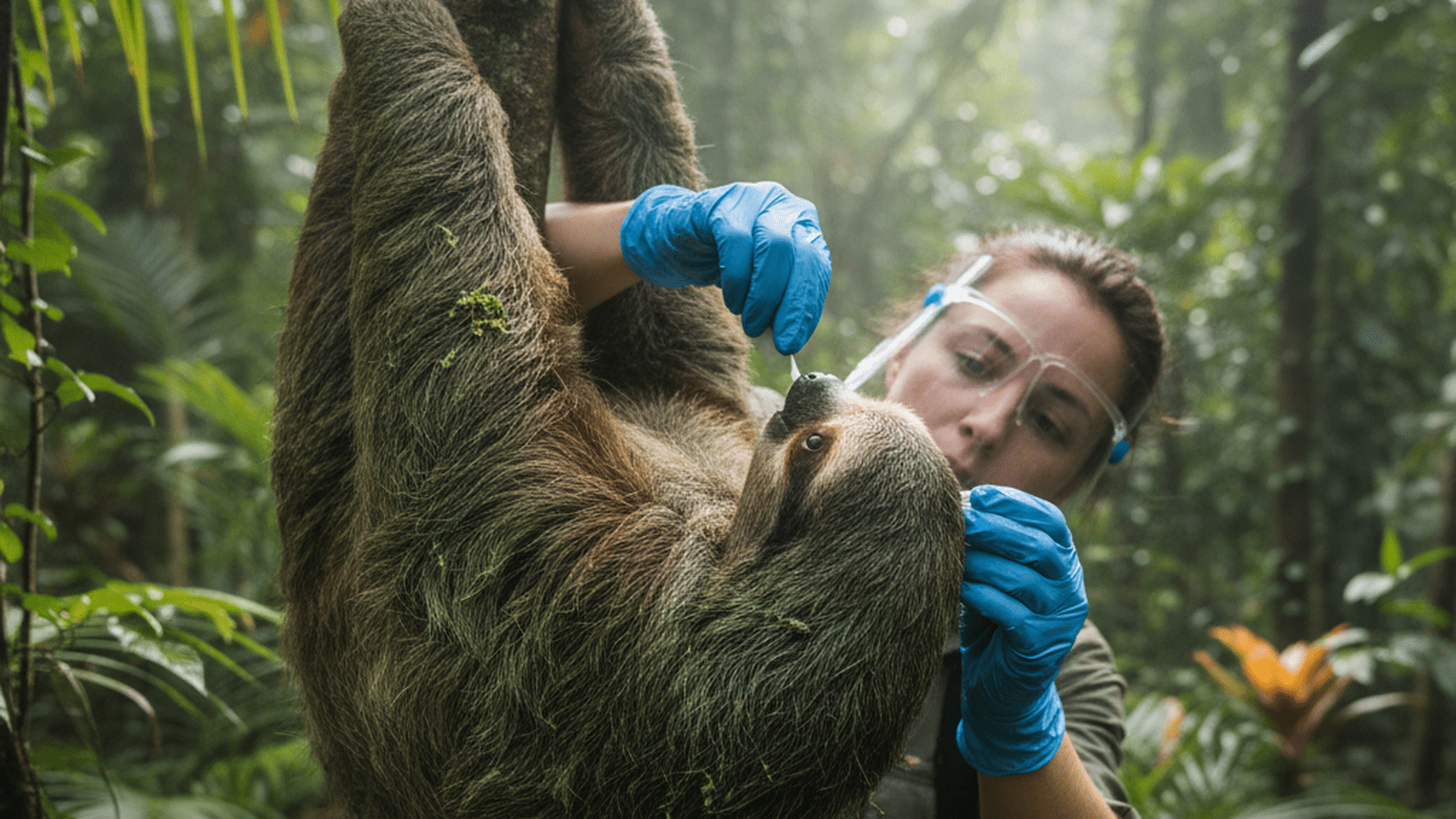
Scientists in Costa Rica have discovered that the dense fur of two-fingered and three-fingered sloths hosts a diverse ecosystem of microbes that produce potent antibiotic compounds. These findings suggest that sloth hair could be a source of new treatments for drug-resistant infections.
TLDR: Researchers at the University of Costa Rica have identified bacteria in sloth fur that produce chemicals capable of killing multi-drug resistant pathogens. This discovery highlights the potential of tropical biodiversity in the global search for new antibiotics to combat the growing threat of superbugs.
Tropical rainforests have long been recognized as the planet’s most prolific reservoirs of biological diversity, yet much of their medicinal potential remains hidden in plain sight. Recent field expeditions led by researchers at the University of Costa Rica have turned their attention to an unlikely source of biomedical innovation: the coarse, greenish fur of the sloth. These slow-moving mammals, native to the dense canopies of Central and South America, carry an entire ecosystem within their multi-layered hair, a discovery that could revolutionize our approach to treating drug-resistant infections.
The study focused on both the two-fingered (Choloepus) and three-fingered (Bradypus) sloths. Because sloths move with legendary lethargy and inhabit high-humidity environments, their fur becomes a permanent substrate for a variety of organisms, including moths, beetles, and green algae. This symbiotic relationship provides the sloth with essential camouflage against predators like harpy eagles. However, the researchers hypothesized that such a dense biological load would also require a sophisticated chemical defense system to prevent the animal’s skin from being overwhelmed by pathogenic fungi or bacteria.
During the field expeditions, scientists carefully captured sloths to take hair and skin swabs before releasing them back into their natural habitats. Back in the laboratory, the team isolated hundreds of bacterial strains from these samples. They specifically targeted Actinobacteria and other microbial groups known for producing secondary metabolites—the chemical precursors to many modern medicines. The researchers then performed rigorous bioassays, pitting the sloth-derived microbes against common human pathogens such as Staphylococcus aureus and Pseudomonas aeruginosa.
The results were striking. Several of the isolated bacteria produced compounds that effectively inhibited the growth of these pathogens. Some strains demonstrated the remarkable ability to break down the cell walls of fungi that are typically resistant to standard clinical treatments. This suggests that the sloth fur microbiome has evolved a unique set of chemical weapons to maintain a healthy balance within its miniature ecosystem, effectively acting as a living pharmacy for the host animal.
This discovery comes at a critical juncture for global health. The World Health Organization has repeatedly warned that the pipeline for new antibiotics is running dry, while the prevalence of multi-drug resistant “superbugs” continues to rise at an alarming rate. Bioprospecting in unique ecological niches, such as the fur of tropical mammals, offers a way to find molecules that have evolved under different selective pressures than those found in traditional soil or marine environments.
The chemical complexity of these sloth-derived compounds is currently being mapped using advanced mass spectrometry and genomic sequencing. By identifying the specific biosynthetic gene clusters responsible for antibiotic production, scientists hope to eventually synthesize these molecules in a laboratory setting. This would allow for large-scale testing and potential drug development without the need for further animal sampling or disturbing the delicate balance of the rainforest.
Beyond the immediate medical implications, the research highlights the intricate interdependencies within tropical ecosystems. The health of the sloth is inextricably linked to the health of its microbial residents, which in turn may hold the key to future human therapies. As climate change and deforestation continue to threaten these habitats, the window for discovering such natural solutions may be closing. The ongoing work at the University of Costa Rica represents a fusion of traditional field biology and cutting-edge pharmacology, proving that the answers to some of our most pressing medical challenges may be clinging to the backs of the world’s slowest animals.

Rachel Vaughn serves as a Senior Correspondent for Just Right News, where she leads the network’s coverage of Global Health, Climate, and Development. With a career defined by intellectual rigor and a commitment to principled reporting, Rachel provides a vital conservative perspective on some of the most complex and high-stakes issues facing the world today. Her work is characterized by a refusal to accept bureaucratic narratives at face value, focusing instead on how international policies impact national sovereignty, individual liberty, and the American taxpayer.
Raised in New Haven, Connecticut, Rachel grew up in an environment dominated by elite academic discourse. This upbringing provided her with a front-row seat to the inner workings of the American establishment, but it also instilled in her a healthy skepticism of the “ivory tower” consensus. She learned early on that while academic theories may sound promising in a lecture hall, they often fail to account for the practical realities of the working class. This background drives her to bridge the gap between high-level policy discussions and the common-sense concerns of everyday citizens, ensuring that her reporting remains grounded and accessible.
Now based in Burlington, Vermont, Rachel operates from a unique vantage point within one of the nation’s most progressive political landscapes. Living and working in a region that often serves as a testing ground for radical social and environmental experiments allows her to witness the real-world consequences of these policies firsthand. From her base in the Green Mountain State, she provides Just Right News readers with essential “boots on the ground” reporting, documenting the friction between local mandates and the constitutional freedoms of the individual. Her presence in Burlington ensures that her critiques of globalist agendas are informed by a direct understanding of how those ideologies manifest at the local level.
In her acclaimed feature series, “Planetary Stakes,” Rachel explores the intersection of international development and environmental stewardship. She rejects the alarmism often found in mainstream media, opting instead for a sober analysis of the economic and geopolitical costs of global climate agreements. Her reporting frequently highlights the importance of market-driven innovation and the role of American leadership in fostering global health without ceding authority to unelected international bodies. Through “Planetary Stakes,” she has become a leading voice for those who believe that true conservation and public health are best achieved through transparency, accountability, and the protection of private property rights.
Throughout her tenure at Just Right News, Rachel has distinguished herself as a journalist who is unafraid to ask difficult questions of global institutions. Whether she is investigating the influence of non-governmental organizations on domestic policy or analyzing the fiscal transparency of international health initiatives, her goal remains the same: to provide her audience with the facts necessary to navigate an increasingly interconnected world. Her blend of East Coast intellectual heritage and her current immersion in the political heart of the Northeast makes her an indispensable asset to the newsroom and a trusted source for readers seeking a principled, conservative take on the issues that define our era.