

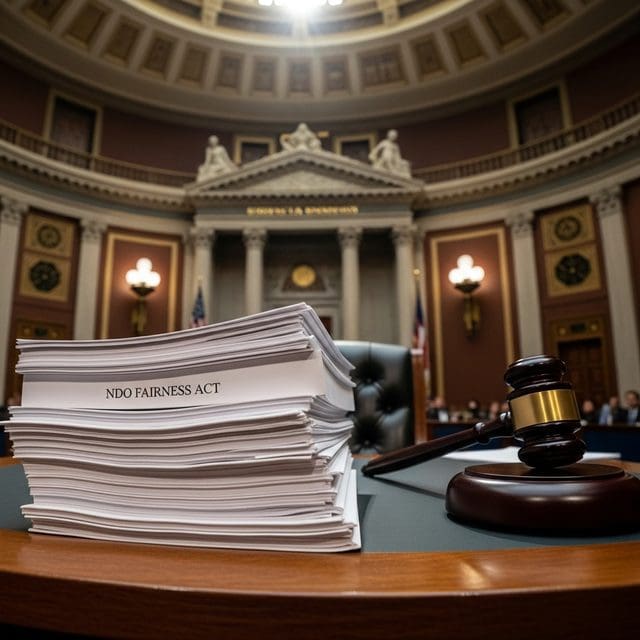
Lawmakers are moving to restrict secret surveillance orders after revelations that federal investigators monitored congressional data without notification during the Arctic Frost probe.
A bipartisan coalition in both the House and Senate is accelerating the NDO Fairness Act, a legislative effort designed to curb the government’s ability to issue secret surveillance orders. The push for reform follows the ‘Arctic Frost’ disclosures, which revealed that former special counsel Jack Smith utilized nondisclosure orders to monitor the communication data of multiple Republican lawmakers without their knowledge. These orders effectively gagged service providers, preventing them from notifying the targets that their records were being harvested by federal investigators. This practice has sparked a broader debate on Capitol Hill regarding the transparency of domestic surveillance and the limits of the administrative state’s reach into the private records of the legislative branch.
The House Judiciary Committee recently advanced the measure via a unanimous voice vote. Representative Jamie Raskin, often a partisan lightning rod, joined his Republican colleagues in supporting the bill, characterizing the reform as a reasonable and bipartisan step toward protecting constitutional liberties. The central aim of the legislation is to ensure that the administrative state cannot operate in the shadows when collecting the private data of American citizens, including elected officials. By requiring a higher threshold for secrecy, the bill seeks to restore a level of accountability that critics argue has been eroded by the frequent and sometimes indefinite use of nondisclosure agreements in federal criminal and counterintelligence probes.
Senator Mike Lee has emerged as a primary advocate for the bill in the upper chamber. Lee argues that the current system allows the government to bypass the Fourth Amendment’s spirit by obtaining ‘gag orders’ as a matter of routine rather than as an extraordinary exception. Under the proposed NDO Fairness Act, the burden of proof would shift to the government. Courts would be required to provide a written justification explaining why a nondisclosure order is strictly necessary to prevent the endangerment of a person or to keep from jeopardizing an active investigation. This would replace the current standard, which many critics argue allows for secrecy without sufficient judicial oversight or a clear expiration date for the gag order.
The legislative momentum was fueled by a Senate hearing on April 21, where Senator Katie Britt raised sharp questions regarding the legality of the Arctic Frost subpoenas. Britt argued that the nondisclosure orders likely violated existing federal law and pointed to records showing that AT&T had at one point refused to comply with a specific subpoena. The records suggest that the special counsel’s office sought to bypass the standard notification protocols that typically accompany the surveillance of members of a coordinate branch of government. This refusal by a major telecommunications provider highlights the tension between federal investigative demands and the statutory privacy protections afforded to consumers and their representatives.
While the debate over domestic surveillance secrecy intensifies in Washington, the drive for document-grounded accountability is also manifesting in local administrative actions across the globe. In Guntur, civic chief K. Mayur Ashok has initiated a special audit of the city’s drinking-water infrastructure. The directive mandates the strict documentation of water-quality test results and a physical audit of pipelines located near drainage channels to mitigate contamination risks. Much like the federal push for surveillance transparency, the Guntur initiative emphasizes that public trust is maintained through rigorous record-keeping and the elimination of administrative blind spots that can lead to public harm.
As the NDO Fairness Act moves toward a full floor vote, it represents a rare moment of alignment between civil libertarians on both sides of the aisle. The bill seeks to ensure that the ‘paper trail’ of government surveillance is eventually made visible to those being watched. By requiring courts to justify the suppression of notice, the act aims to prevent the repeat of the Arctic Frost scenario, where lawmakers only learned of the surveillance of their own data long after the fact through leaked documents and whistleblower disclosures. This legislative effort underscores a fundamental principle of the Just Right News beat: the government must remain answerable to the people, and that answerability begins with the public’s right to know when and why the state is accessing their private information.
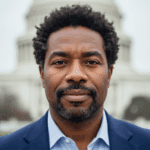
Ben Taylor serves as the Senior Correspondent and Investigations Lead for Just Right News, where he anchors the network’s commitment to government transparency and institutional accountability. With a career defined by a relentless pursuit of the facts, Taylor spearheads the acclaimed feature series “The Paper Trail,” a deep-dive investigative column that prioritizes primary source documentation over political rhetoric. Based in the heart of the nation’s capital, he has earned a reputation as one of the most formidable investigative journalists in Washington, D.C., known specifically for his mastery of public records and the Freedom of Information Act.
Taylor’s approach to journalism is deeply rooted in his upbringing in Kansas City, Missouri. Growing up in the “Show Me State,” he developed a healthy skepticism of centralized power and a profound respect for the common-sense values of the American heartland. This Midwestern foundation informs his reporting today, as he bridges the gap between the complex machinations of federal bureaucracy and the everyday concerns of citizens across the country. For Taylor, investigative reporting is not about chasing headlines; it is about ensuring that the government remains answerable to the people it serves.
As an African American man working within the conservative media landscape, Taylor brings a principled perspective to his beat. He views the Constitution and the right to information as the ultimate equalizers in a free society. His work often highlights how bureaucratic overreach and lack of transparency disproportionately affect individual liberties. By focusing on the “paper trail,” Taylor strips away the spin of partisan talking points, instead providing Just Right News readers with the raw data and internal communications that reveal how their tax dollars are spent and how policy decisions are actually made.
In his role as Investigations Lead, Taylor oversees a team dedicated to uncovering the stories that mainstream outlets often overlook. Whether he is auditing federal spending, investigating regulatory overreach, or exposing inefficiencies within the administrative state, his methodology remains consistent: follow the evidence wherever it leads. His presence in Washington, D.C., allows him to maintain a constant watch over the halls of power, yet he remains steadfastly connected to his roots, ensuring his reporting reflects the clarity and directness of his Missouri home.
Throughout his tenure at Just Right News, Taylor has become a vital voice for those who demand integrity in public office. He believes that a well-informed electorate is the strongest defense against government overreach, and he has dedicated his career to providing the public with the tools they need to hold their leaders accountable. Through “The Paper Trail” and his broader investigative work, Ben Taylor continues to set the standard for rigorous, document-driven journalism that champions the values of transparency, individual responsibility, and the rule of law.