

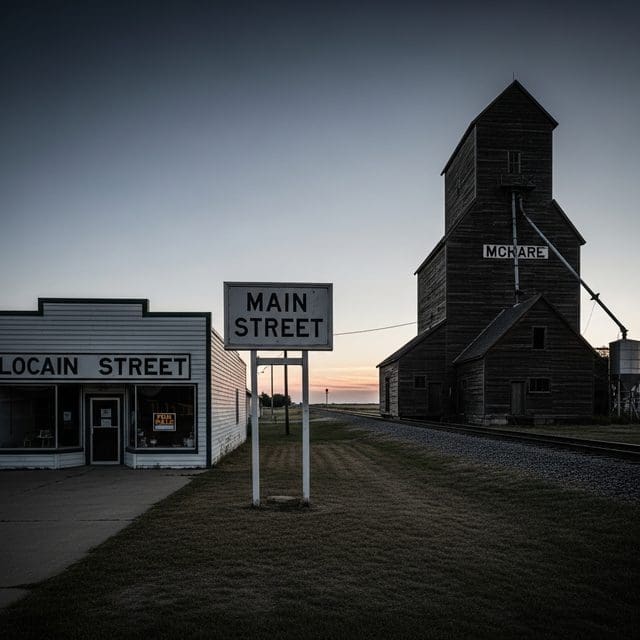
While Washington navigates high-stakes diplomacy with Iran, small-town Americans face a deepening affordability crisis as fuel prices and inflation reach three-year highs.
The quiet of the American farm belt is increasingly interrupted by the hum of calculators as families attempt to balance ledgers that no longer make sense. While Washington remains locked in negotiations over a peace plan with Iran, the secondary effects of global instability manifest in the rising costs of diesel, fertilizer, and daily essentials. For residents of small towns, the geopolitical chess match feels increasingly detached from the kitchen table. The human cost is not found in aggregate data, but in the closing of a family-owned dealership or the difficult choice between a full tank of gas and a full cart of groceries.
Inflation reached a three-year peak in April 2026, a surge driven by energy market volatility. Since the commencement of Operation Epic Fury in late February, gasoline prices have climbed by over $1.50 per gallon. This spike places an immense burden on rural communities where long commutes and heavy machinery are requirements for survival. The strain is visible on Main Streets, where agricultural profit margins are compressing, forcing a contraction that ripples through local equipment cooperatives. When production costs outpace harvest value, the entire community feels the tremor, from the local mechanic to the regional hospital board.
This economic pressure is compounded by a growing sense of institutional erosion. Across the rural landscape, the loss of local banks, hospitals, and colleges has left a void in the social fabric. While the Treasury reports that 500,000 citizens have enrolled in the new Trump Accounts program to secure future investments for their children, the immediate reality is a struggle to meet current obligations. Seven in ten Americans now report difficulty paying for basic housing and healthcare, with out-of-pocket medical expenses rising 33 percent over the last five years. The promise of a million-dollar account for a child at age 28 offers little comfort to a parent facing a 50 percent increase in home heating costs.
The disconnect between the capital and the countryside was punctuated by the President’s dismissal of domestic financial concerns during international negotiations. The statement that he does not prioritize the immediate financial situation of Americans when brokering deals with Tehran has left many feeling like collateral damage. Even as the administration proposes a suspension of the federal gasoline tax to provide relief, many see it as a temporary fix for a systemic problem of centralized volatility. The IMF has already warned that an escalation in the US-Israel-Iran conflict could push the global economy toward a recession, a prospect that weighs heavily on those whose livelihoods depend on stable trade.
In this environment, the legacy of the late John Barbour, who championed the stories of ordinary citizens on his program Real People, feels particularly relevant. Barbour understood that the true pulse of the nation is found in the lived experiences of those far from the corridors of power. Today, that pulse is irregular. Gallup polling indicates a historic gap in job market optimism, with younger workers expressing profound skepticism about their economic mobility. This pessimism is not merely a mood; it is a response to a world where the cost of living has decoupled from wages, and where the safety nets of local community institutions are being pulled thin.
As technology leaders like Nvidia’s Jensen Huang join diplomatic missions and AI experts like Joanna Stern advocate for human control over digital systems, the fundamental needs of the American interior remain grounded in the physical world. While the elite discuss export licenses and the psychological effects of AI, the residents of the heartland are more concerned with the preservation of their local institutions and the self-reliance that has long defined the American spirit. The true benchmarks of a nation’s health are not found in the stock market’s reaction to a peace proposal, but in the stability of the household.

Ethan Blake serves as a Senior Correspondent for Just Right News, where he specializes in Longform Narrative and Public Understanding. In an era of rapid-fire headlines and fleeting soundbites, Ethan’s work stands as a testament to the power of deep-dive reporting and the importance of contextualizing the complex issues facing the nation today. His approach is rooted in the belief that the most profound truths are often found in the lived experiences of individuals rather than the abstract theories of distant policymakers.
Growing up in Providence, Rhode Island, Ethan developed an early appreciation for the historical and cultural threads that weave the American fabric together. Providence, a city defined by its industrial heritage and its blend of traditional neighborhoods, provided him with a front-row seat to the challenges and triumphs of the American working class. This upbringing instilled in him a respect for the “common sense” values of hard work, community loyalty, and the preservation of local institutions. He learned early on that behind every economic statistic or legislative debate, there are real families and neighborhoods navigating the consequences of change.
This foundational perspective is the driving force behind his signature feature series, “Lives Behind the Systems.” Through this series, Ethan explores the intersection of individual agency and institutional structure. Whether he is documenting the impact of federal land-use policies on rural families or examining how shifting educational standards affect local school boards, Ethan’s work prioritizes the human element. He seeks to uncover how large-scale systems—be they governmental, economic, or social—affect the daily lives of citizens, often advocating for a return to local control and personal responsibility.
Now based in Portland, Maine, Ethan draws significant inspiration from the rugged independence and self-reliance that define the region. The coastal landscape and the resilient spirit of Maine’s communities serve as a constant reminder of the importance of individual liberty and the strength found in decentralized power. Living and working outside the traditional media hubs allows Ethan to maintain a grounded perspective, ensuring his reporting remains untethered from the echo chambers of the major metropolitan centers. This geographic distance provides him with the clarity needed to translate complex national narratives into stories that resonate with the heart of the country.
At Just Right News, Ethan’s beat is more than just a professional assignment; it is a mission to foster a more informed and engaged citizenry. He believes that a free society depends on the public’s ability to understand the mechanisms of power and the value of traditional American principles. His longform narratives do not merely report the news; they provide a roadmap for understanding the cultural and political shifts of the modern era through a lens of skepticism toward centralized authority and a deep respect for the individual.
Through his meticulous research and narrative craftsmanship, Ethan Blake continues to bridge the gap between policy and the public. His work remains a vital resource for those who seek a deeper understanding of the systems that shape our world and the enduring spirit of the people who live within them.