

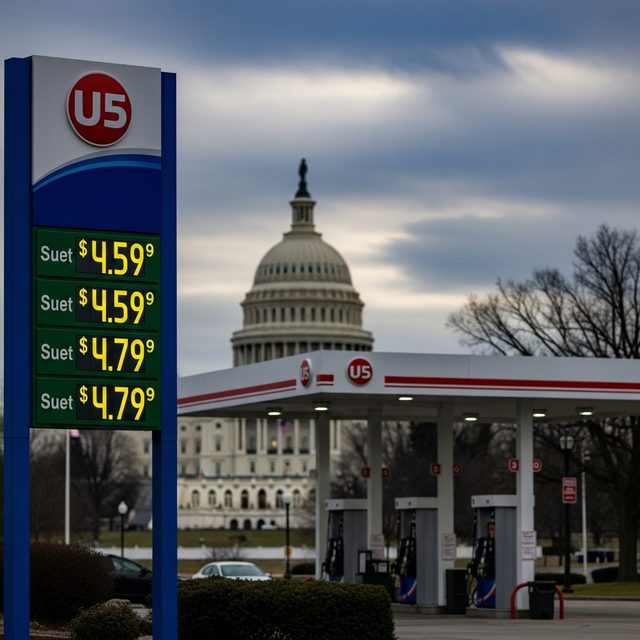
President Trump declared the Iran ceasefire on life support after rejecting a counteroffer from Tehran, as lawmakers propose gas tax suspensions to combat soaring domestic fuel prices.
The White House signaled a significant hardening of its Middle East posture on Monday as President Trump officially rejected a peace proposal from Tehran, describing the current ceasefire as being on “massive life support.” The President characterized the Iranian counteroffer as an unacceptable document, noting he did not even finish reading the text before dismissing it as “unbelievably weak.” The rejection comes as Iran continues to demand war reparations, total sovereignty over the Strait of Hormuz, and a complete end to U.S. sanctions—terms the administration views as non-starters for any lasting regional stability.
This diplomatic stalemate is unfolding against a backdrop of increasing kinetic activity in the Persian Gulf. Reports indicate the United Arab Emirates secretly conducted military strikes on Iran’s Lavan Island refinery as early as April. The Trump administration reportedly welcomed this intervention by Gulf partners, aligning with a broader strategy of encouraging regional allies to take a more active role in neutralizing threats to global commerce. Iranian officials have responded with warnings of retaliation, suggesting that the United States would be “surprised” by the scale of their eventual response if hostilities escalate further.
The economic consequences of this instability are becoming increasingly dire for the global energy market. Saudi Aramco CEO Amin Nasser issued a stark warning on Monday, noting that disruptions in the Strait of Hormuz are resulting in a weekly loss of approximately 100 million barrels of oil. Nasser cautioned that unless shipping lanes are secured and reopened, global supplies of gasoline and jet fuel will reach “critically low levels” by the summer. This supply crunch is already being felt by American families, as national gas prices have soared to an average of more than $4.50 per gallon.
In response to these domestic pressures, Senator Josh Hawley introduced the Gas Tax Suspension Act. The legislation aims to provide immediate relief to the American heartland by suspending the 18.4-cent federal gasoline tax and the 24.4-cent diesel tax for a 90-day period. This legislative push follows the administration’s decision last week to release a record 8.6 million barrels from the Strategic Petroleum Reserve, a move intended to stabilize prices that has yet to yield significant relief at the pump. Critics in the Senate, including Minority Leader Chuck Schumer, have pivoted the conversation toward domestic spending, specifically condemning a $1 billion plan for White House renovations while families struggle with energy costs.
Beyond the Middle East, the administration is managing a complex web of foreign policy challenges. The President is preparing for a high-stakes summit in China with President Xi Jinping, where he will be joined by a delegation of high-profile corporate executives including Elon Musk and Tim Cook. Trump has confirmed that the imprisonment of Jimmy Lai will be a primary talking point, alongside discussions on trade tariffs, artificial intelligence, and arms sales to Taiwan. This summit represents a critical attempt to maintain Western influence while navigating the fallout of the U.S.-Israeli conflict with Iran.
Simultaneously, the administration is addressing domestic logistical and public health concerns. Following the nomination of David Cummins to lead the TSA and the return of Cameron Hamilton to FEMA, the government is also managing the evacuation of 17 Americans from a cruise ship after a passenger tested positive for hantavirus. These overlapping crises—from the battlefields of the Middle East to the regulatory halls of Washington—underscore a period of intense volatility for U.S. foreign and domestic policy as the 2026 midterms approach.

Olivia Kendall serves as the Senior Correspondent for Geopolitics, Defense, and Foreign Policy at Just Right News, where she provides a principled, conservative perspective on the complex forces shaping the global stage. With a career dedicated to deconstructing the intricacies of international relations, Kendall has become a trusted voice for readers who value national sovereignty, a robust military, and a foreign policy that prioritizes American interests above all else.
A native of Washington, D.C., Kendall’s professional journey is deeply rooted in her upbringing within the nation’s capital. Growing up in the epicenter of American political life, she developed an early and profound understanding of how policy is crafted and, more importantly, how it often fails to account for the values of the American heartland. This unique vantage point allowed her to witness firsthand the rise of globalist bureaucracies, fueling her commitment to reporting that champions the constitutional foundations of the United States. Her background as a British White American further informs her worldview, providing her with a keen appreciation for the Western tradition and the enduring importance of the “Special Relationship” in maintaining global stability.
Now based in Arlington, Virginia, Kendall operates from the doorstep of the Pentagon and the heart of the nation’s defense establishment. Her proximity to the decision-makers in the military and intelligence communities allows her to provide boots-on-the-ground reporting that is both timely and deeply informed. For Kendall, Arlington is more than just a base of operations; it is a daily reminder of the sacrifices made by the men and women in uniform. This connection to the defense community drives her rigorous coverage of military readiness and her advocacy for a “peace through strength” approach to diplomacy.
At Just Right News, Kendall is perhaps best known for her acclaimed feature series, “The World’s Shadow on America.” In this ongoing project, she explores the direct correlation between international developments and the daily lives of American citizens. Whether she is analyzing the encroachment of foreign adversaries in domestic supply chains or the impact of international treaties on local economies, Kendall’s work serves as a vital bridge between distant geopolitical shifts and their consequences at home. She rejects the notion that foreign policy is an abstract concern for elites, instead proving that what happens in the corridors of power in Brussels or Beijing has a tangible “shadow” that falls across every American doorstep.
Throughout her tenure, Kendall has remained a steadfast critic of international overreach and a vocal proponent of a clear-eyed, realistic foreign policy. She brings a sharp analytical mind to her beat, often challenging the prevailing narratives of the mainstream media to uncover the underlying truths that affect national security. Her reporting is characterized by a refusal to compromise on the truth and a dedication to the idea that a strong, secure America is the world’s best hope for liberty. As a Senior Correspondent, Olivia Kendall continues to lead the charge in providing the essential context and conservative insight necessary to navigate an increasingly volatile world.