

The American Bankers Association is challenging the Digital Asset Market Clarity Act, alleging that stablecoin yield protocols threaten the traditional deposit base despite industry-negotiated compromises on passive rewards.
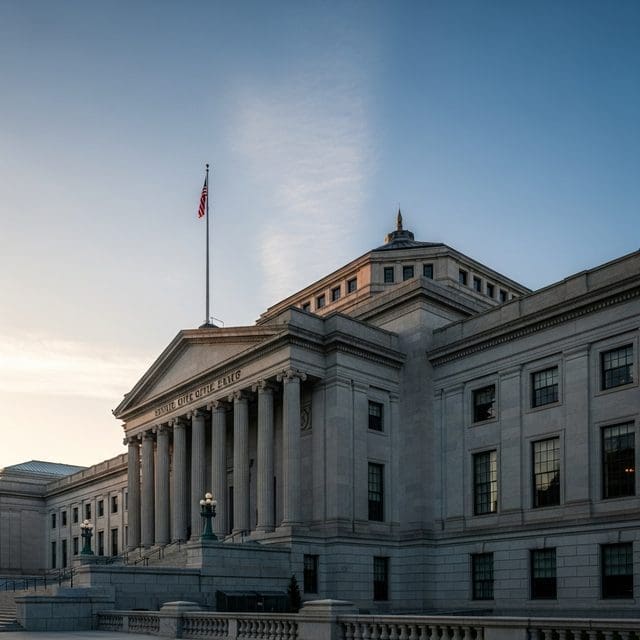
The Senate Banking Committee is set to convene in Dirksen Room 538 on May 14 to mark up the Digital Asset Market Clarity Act, a pivotal piece of legislation intended to codify the technical and regulatory framework for the American digital asset ecosystem. The session follows an emergency weekend mobilization by the American Bankers Association (ABA), which has characterized the bill’s current handling of stablecoin yield as a threat to the stability of the traditional financial system.
At the heart of the dispute is the engineering of yield-bearing protocols. A compromise brokered by Senators Thom Tillis and Angela Alsobrooks seeks to ban passive yield on stablecoin balances while permitting narrowly defined rewards based on user activity. This distinction aims to prevent stablecoins from functioning as unregulated high-yield savings accounts while allowing for the programmatic incentives necessary for decentralized network participation.
Rob Nichols, CEO of the ABA, issued an urgent directive to bank executives on May 11, claiming the current proposal would incentivize the migration of bank deposits into payment stablecoins. Banking trade groups have cited Treasury Department estimates suggesting that permitting yield could lead to $6.6 trillion in deposit outflows. However, this figure is contested by the White House Council of Economic Advisers, which reported in April that a yield ban would only bolster bank lending by a negligible 0.02%.
Industry advocates have criticized the banking lobby’s late-stage intervention as an attempt to stifle technological competition. Coinbase Chief Legal Officer Paul Grewal noted that the banking sector declined invitations to participate in White House-led negotiations where the “idle yield” issue was initially addressed. Grewal argued that the industry has already made significant concessions regarding the cryptographic distribution of rewards to satisfy stability concerns.
Senator Bernie Moreno described the banking industry’s opposition as a reaction to the shifting landscape of financial meritocracy. Moreno indicated he would vote to advance the bill, which already passed the House in July 2025 with a 294-134 bipartisan majority. The legislation aims to resolve jurisdictional friction between the SEC and CFTC, providing a clear roadmap for decentralized engineering and institutional custody.
If the Senate Banking Committee clears the bill, it will require 60 votes on the floor to proceed. The White House has signaled a desire for enactment by July 4, 2026, viewing the establishment of a stable monetary framework for digital assets as a matter of national economic sovereignty. As the markup approaches, the conflict underscores the tension between protected banking interests and the emergence of a more transparent, code-driven financial infrastructure.

Jordan Lee serves as the Senior Correspondent for Wall Street, Finance, and Monetary Systems at Just Right News. Based in the heart of the world’s financial capital, New York City, Lee brings a sharp, principled eye to the complex mechanisms that drive the global economy. His reporting is defined by a commitment to fiscal responsibility, the defense of the free market, and a deep-seated belief that a transparent monetary system is the bedrock of a free society.
Raised in Portland, Oregon, Lee’s perspective was forged in a city that has undergone significant cultural and economic shifts. His upbringing in the Pacific Northwest instilled in him a profound appreciation for the industriousness of small business owners and the importance of local economic stability. Watching the evolution of his hometown’s landscape sparked an early interest in how federal fiscal policy and large-scale financial trends eventually trickle down to the average citizen. This background provides him with a unique vantage point; he understands the growing disconnect between the policy-making elite and the reality of Main Street, a theme that frequently resonates throughout his work.
Now operating from his base in New York City, Lee bridges the gap between the high-stakes trading floors of Manhattan and the households of everyday Americans. He views the financial sector not merely as a collection of numbers and tickers, but as a vital engine of American prosperity that requires constant vigilance and accountability. His reporting often highlights the dangers of centralized financial control and the necessity of maintaining a system that rewards merit, risk-taking, and innovation.
As the creator and lead of the featured series, “The Invisible Economy,” Lee pulls back the curtain on the often-opaque world of monetary systems. He specializes in translating the dense jargon of central banking and international finance into actionable insights for the Just Right News audience. His work explores the “invisible” forces—such as inflationary pressures, regulatory creep, and the expansion of the administrative state—that erode the purchasing power of American families. By focusing on these systemic issues, Lee empowers readers to understand the hidden forces shaping their financial independence.
Lee’s journalistic philosophy is rooted in a steadfast commitment to traditional American values. As an Asian American professional who has navigated the competitive corridors of the financial world, he is a vocal advocate for meritocracy and the preservation of the American Dream. He believes that a stable currency and a predictable regulatory environment are essential for national sovereignty and individual liberty. His reporting frequently warns against the risks of government overreach in the private sector, arguing that the most effective solutions to economic challenges arise from competition and individual enterprise rather than bureaucratic mandates.
At Just Right News, Jordan Lee remains dedicated to providing a clear-eyed defense of the taxpayer. Whether he is analyzing market volatility or investigating the long-term implications of national debt, his mission is to provide the truth about where the money is going and what it means for the future of the country. Through his rigorous analysis and principled stance, Lee has become a trusted voice for those who value a strong, sovereign, and fiscally sound America.