

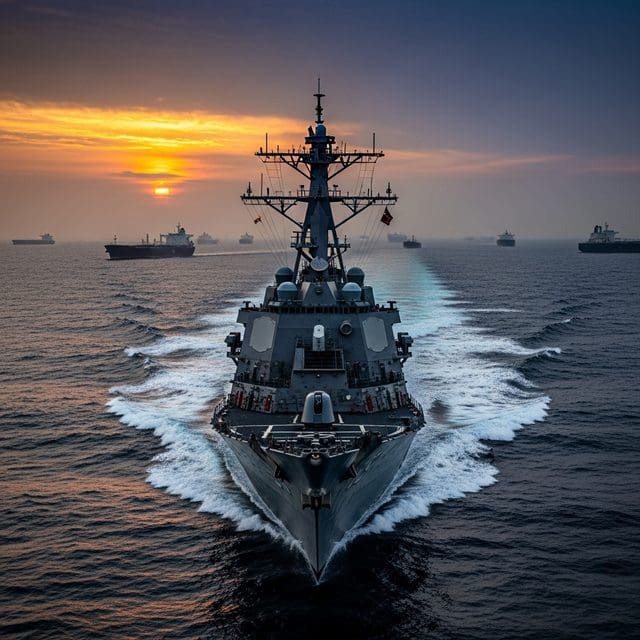
The Trump administration faces a diplomatic impasse as Iran rejects peace terms, demanding war reparations and full control of the Strait of Hormuz while Russia signals a potential end to the Ukraine conflict.
The delicate balance of global power shifted again this week as the Trump administration’s efforts to secure a comprehensive peace deal with Iran met stiff resistance from Tehran. Following a military exchange in the Strait of Hormuz on May 7, the Iranian government officially rejected U.S. proposals on May 10, characterizing its own counter-demands as generous. Tehran is currently holding firm on requirements for war reparations, full control over the Strait of Hormuz, and the immediate release of frozen assets, while refusing to dismantle its nuclear infrastructure.
President Trump labeled the Iranian response totally unacceptable, signaling a potential return to the kinetic engagement seen earlier this month. The stakes for American energy security remain high; while the administration suspended escort operations in the Strait on May 5 citing diplomatic progress, the subsequent exchange of fire and the current impasse have left approximately 1,600 commercial vessels trapped in the Persian Gulf. U.S. forces have already intercepted or disabled dozens of ships for non-compliance with maritime directives.
In Eastern Europe, the geopolitical landscape appears more fluid. A three-day ceasefire and prisoner swap between Russia and Ukraine commenced on Saturday, providing a brief reprieve in the protracted conflict. Over the weekend, Russian President Vladimir Putin suggested the war is coming to an end and expressed a willingness to discuss new security arrangements for Europe. This shift comes as the U.S. and its allies face increasing pressure from China, which warned of imported inflation risks as Middle Eastern instability continues to drive up global commodity prices.
The economic consequences of these dual-front tensions are manifesting in real-time. Wall Street saw a decline as hopes for a swift resolution in the Middle East faded, and oil futures climbed in response to the rejected peace proposal. Analysts suggest that even if a deal were reached immediately, American consumers would likely see elevated gas prices through the upcoming midterm elections due to the lag in global supply chain stabilization.
As the UK and France host defense ministers to discuss restoring trade flows in the Persian Gulf, the White House remains focused on a realist doctrine of peace through strength. The administration continues to apply domestic pressure as well, moving to denaturalize individuals linked to terrorism and criminal activity, reinforcing a policy of national sovereignty. For now, the path to a broader regional settlement remains blocked by Tehran’s refusal to concede on uranium enrichment and maritime control.

Olivia Kendall serves as the Senior Correspondent for Geopolitics, Defense, and Foreign Policy at Just Right News, where she provides a principled, conservative perspective on the complex forces shaping the global stage. With a career dedicated to deconstructing the intricacies of international relations, Kendall has become a trusted voice for readers who value national sovereignty, a robust military, and a foreign policy that prioritizes American interests above all else.
A native of Washington, D.C., Kendall’s professional journey is deeply rooted in her upbringing within the nation’s capital. Growing up in the epicenter of American political life, she developed an early and profound understanding of how policy is crafted and, more importantly, how it often fails to account for the values of the American heartland. This unique vantage point allowed her to witness firsthand the rise of globalist bureaucracies, fueling her commitment to reporting that champions the constitutional foundations of the United States. Her background as a British White American further informs her worldview, providing her with a keen appreciation for the Western tradition and the enduring importance of the “Special Relationship” in maintaining global stability.
Now based in Arlington, Virginia, Kendall operates from the doorstep of the Pentagon and the heart of the nation’s defense establishment. Her proximity to the decision-makers in the military and intelligence communities allows her to provide boots-on-the-ground reporting that is both timely and deeply informed. For Kendall, Arlington is more than just a base of operations; it is a daily reminder of the sacrifices made by the men and women in uniform. This connection to the defense community drives her rigorous coverage of military readiness and her advocacy for a “peace through strength” approach to diplomacy.
At Just Right News, Kendall is perhaps best known for her acclaimed feature series, “The World’s Shadow on America.” In this ongoing project, she explores the direct correlation between international developments and the daily lives of American citizens. Whether she is analyzing the encroachment of foreign adversaries in domestic supply chains or the impact of international treaties on local economies, Kendall’s work serves as a vital bridge between distant geopolitical shifts and their consequences at home. She rejects the notion that foreign policy is an abstract concern for elites, instead proving that what happens in the corridors of power in Brussels or Beijing has a tangible “shadow” that falls across every American doorstep.
Throughout her tenure, Kendall has remained a steadfast critic of international overreach and a vocal proponent of a clear-eyed, realistic foreign policy. She brings a sharp analytical mind to her beat, often challenging the prevailing narratives of the mainstream media to uncover the underlying truths that affect national security. Her reporting is characterized by a refusal to compromise on the truth and a dedication to the idea that a strong, secure America is the world’s best hope for liberty. As a Senior Correspondent, Olivia Kendall continues to lead the charge in providing the essential context and conservative insight necessary to navigate an increasingly volatile world.