

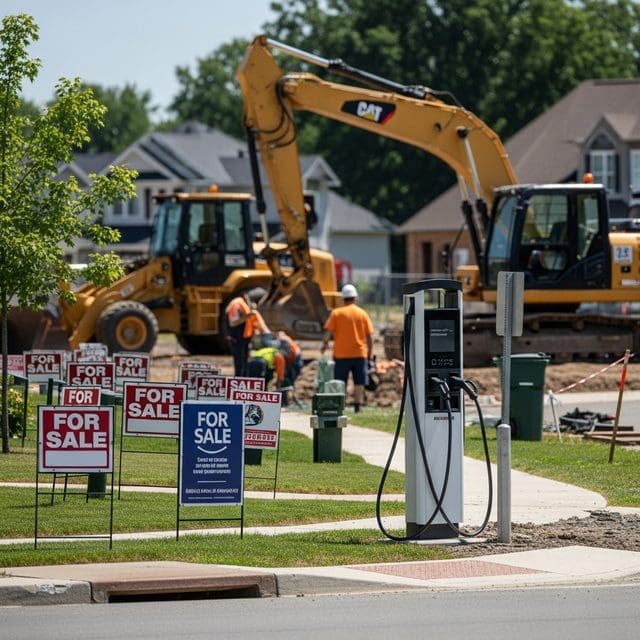
A 10-million-unit housing shortage and volatile energy markets are squeezing American households as federal and state governments prioritize electric vehicle infrastructure over residential supply.
The American dream of homeownership is facing a structural crisis as new data reveals a staggering deficit in the nation’s housing supply. According to a recent White House report, the United States requires an additional 10 million homes to meet current demand. This supply-side failure has transformed a cornerstone of middle-class stability into an unreachable luxury for many workers, as the scarcity of inventory continues to exert upward pressure on both home prices and rental rates. For the average taxpayer, the reality of the market is increasingly defined by competition for a dwindling pool of affordable options, while mortgage rates remain high enough to sideline first-time buyers.
While the federal government acknowledges the housing gap, fiscal priorities at the state level remain focused on long-term technological transitions rather than immediate residential relief. In Texas, the Transportation Commission has moved forward with Phase II of the National Electric Vehicle Infrastructure (NEVI) program. The commission authorized approximately $250 million in funding to install at least 588 new public EV chargers across the state. While these projects are intended to modernize the transit landscape, they represent a significant allocation of public resources at a time when many residents are struggling to find stable, affordable places to live.
The squeeze on the American household is further intensified by global instability, which is beginning to impact the domestic wallet through energy and market volatility. Following President Trump’s rejection of Iran’s latest peace proposal as “totally unacceptable” on May 11, U.S. stock futures fell and oil prices surged. This geopolitical friction has immediate consequences for the cost of living, as higher fuel prices trickle down into the cost of goods and services. The International Monetary Fund issued a stern warning on May 12, noting that an escalation in the conflict could push the global economy toward a recession, causing lasting damage to consumer purchasing power and further complicating the housing recovery.
Local housing stability is also under threat from the expiration of emergency support systems. In Los Angeles, a Department of Angels survey released on May 12 indicates that nearly half of wildfire survivors are set to lose their housing assistance within a year or less. This looming cliff highlights the fragility of the current safety net and the lack of permanent, market-driven housing solutions for those displaced by disasters. When thousands of citizens face the loss of support without a robust private housing market to catch them, the burden often falls back on the taxpayer through increased social services and homelessness management.
Corporate shifts are also reflecting a changing economic landscape where automation and artificial intelligence are prioritized over traditional workforce stability. Cisco recently announced job cuts to fund AI investments, even as its stock approached record levels. This trend suggests that while the tech sector and infrastructure companies like Badger Infrastructure Solutions—which recently closed a C$300 million offering—continue to find capital, the average worker faces a more precarious employment and housing environment. The disconnect between corporate prosperity and household affordability remains a central challenge for policymakers.
As the White House and local municipalities grapple with these overlapping crises, the path forward remains obscured by bureaucratic hurdles and the high cost of capital. For the American taxpayer, the combination of a 10-million-unit housing shortage, rising energy costs, and the redirection of infrastructure funds toward niche technologies represents a significant erosion of financial independence. Addressing these challenges will require a disciplined focus on increasing housing supply and ensuring that infrastructure spending provides a direct, tangible return to the citizens who fund it. Without a pivot toward cost-of-living-first policies, the gap between the American dream and American reality will only continue to widen.

Deborah Cole serves as a Senior Correspondent for Just Right News, where she spearheads the network’s coverage of Housing, Infrastructure, and Mobility. With a career defined by a commitment to rigorous reporting and a focus on the fundamental pillars of American community life, Deborah brings a principled perspective to the complex issues that dictate how and where we live. Her work is grounded in the belief that sound policy, fiscal responsibility, and respect for private property are the essential foundations of a prosperous society.
Originally from Boston, Massachusetts, Deborah’s upbringing in one of the nation’s oldest and most historically significant cities deeply influenced her professional trajectory. Growing up amidst the architectural legacy and dense urban planning of New England, she developed an early appreciation for the importance of durable infrastructure and the role of local tradition in shaping neighborhoods. Her perspective is informed by the classic American values of her hometown—hard work, community cohesion, and a healthy skepticism of top-down bureaucratic mandates that often overlook the unique needs of individual citizens.
Today, Deborah operates from her base in Austin, Texas, a city that serves as a primary laboratory for her reporting. Austin’s rapid expansion and its status as a hub for innovation and migration provide her with a front-row seat to the most pressing challenges in modern infrastructure and housing. From the Lone Star State, she chronicles the tensions between rapid growth and the preservation of the American Dream, often highlighting how market-driven solutions and deregulation can address the housing shortages that plague many of the country’s metropolitan areas.
At Just Right News, Deborah is perhaps best known for her signature feature series, “Where We Live.” Through this platform, she explores the intersection of public policy and private life, moving beyond mere statistics to tell the stories of families, small business owners, and local developers. Her reporting frequently highlights the importance of mobility—not just in terms of transportation and transit, but as a vehicle for economic opportunity and social stability. She remains a staunch advocate for the taxpayer, consistently scrutinizing government spending on large-scale projects and advocating for transparency in how infrastructure dollars are allocated.
Deborah’s beat is more than just a collection of policy topics; it is an investigation into the physical and legal structures that allow families to flourish. Whether she is reporting on the impact of zoning laws on suburban development or the necessity of maintaining the nation’s highway systems, her work is characterized by a dedication to the facts and a respect for the constitutional principles that protect the rights of homeowners.
As a Senior Correspondent, Deborah Cole continues to be a vital voice for Just Right News, providing the audience with the clarity and context needed to navigate an ever-changing landscape. Her reporting ensures that the values of individual liberty and local sovereignty remain at the forefront of the national conversation regarding the future of our cities and towns. Through her tireless efforts, she remains committed to informing the public on the issues that hit closest to home.