


Stalled budget negotiations in New York and escalating friction between House and Senate Republicans threaten to derail key legislative priorities as the administration pivots toward high-stakes international summits.
The disconnect between executive pronouncements and legislative reality is widening as May 11 marks another day of stalled budget negotiations in New York. Despite Governor Kathy Hochul’s May 7 announcement of a “handshake” agreement on a $268 billion spending plan, the state budget remains in limbo. Assembly Speaker Carl Heastie has publicly disputed the finality of the deal, particularly regarding unresolved details of a proposed tax on second homes in New York City. This administrative impasse has forced New York City Mayor Zohran Mamdani to delay his executive budget release to May 12, as the city awaits clarity on state aid to bridge a $5.4 billion gap.
On the federal level, the “show me” approach to governance reveals a deepening rift between House and Senate Republicans. While the Virginia Supreme Court’s 4-3 ruling on May 8 upheld a 6-5 congressional map—a significant victory for House GOP seat retention—it has not unified the party’s legislative front. Tensions have escalated over the Farm Bill, FISA renewal, and housing policy. Specifically, the Senate’s ROAD Act stands in direct opposition to House housing priorities, creating a bottleneck for the GOP’s pre-midterm agenda. This internal friction is compounded by the recent passing of former Representative Bill Posey, a veteran voice of the Florida delegation who served until 2025.
International policy is moving forward with a focus on resource security and geopolitical stabilization, even as domestic legislative machinery grinds slowly. The White House is currently facilitating over $100 billion in potential U.S. oil investments in Venezuela. By easing sanctions, the administration is pursuing a model of indefinite U.S. control over sales and revenues, with Chevron serving as a primary coordinator. This move toward energy pragmatism coincides with the Trump administration’s launch of Moms.gov, a platform designed to provide resources for families facing unexpected pregnancies, signaling a dual-track focus on economic infrastructure and social policy.
Looking toward the May 14-15 summit in Beijing, the administration faces a complex diplomatic landscape. President Trump and President Xi Jinping are slated to discuss an $11 billion Taiwan arms package and the ongoing conflict in Iran. While Prime Minister Benjamin Netanyahu stated on May 10 that the war is “not over,” Iran has submitted a formal response to U.S. peace proposals via the Islamic Republic News Agency. The upcoming summit will test whether the administration can leverage economic incentives to maintain U.S.-Taiwan ties while managing the fallout of the Middle East conflict. For the American taxpayer, the primary concern remains whether these high-level negotiations and domestic budget battles will result in transparent, fiscally responsible outcomes or further bureaucratic delays.
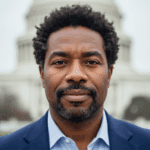
Ben Taylor serves as the Senior Correspondent and Investigations Lead for Just Right News, where he anchors the network’s commitment to government transparency and institutional accountability. With a career defined by a relentless pursuit of the facts, Taylor spearheads the acclaimed feature series “The Paper Trail,” a deep-dive investigative column that prioritizes primary source documentation over political rhetoric. Based in the heart of the nation’s capital, he has earned a reputation as one of the most formidable investigative journalists in Washington, D.C., known specifically for his mastery of public records and the Freedom of Information Act.
Taylor’s approach to journalism is deeply rooted in his upbringing in Kansas City, Missouri. Growing up in the “Show Me State,” he developed a healthy skepticism of centralized power and a profound respect for the common-sense values of the American heartland. This Midwestern foundation informs his reporting today, as he bridges the gap between the complex machinations of federal bureaucracy and the everyday concerns of citizens across the country. For Taylor, investigative reporting is not about chasing headlines; it is about ensuring that the government remains answerable to the people it serves.
As an African American man working within the conservative media landscape, Taylor brings a principled perspective to his beat. He views the Constitution and the right to information as the ultimate equalizers in a free society. His work often highlights how bureaucratic overreach and lack of transparency disproportionately affect individual liberties. By focusing on the “paper trail,” Taylor strips away the spin of partisan talking points, instead providing Just Right News readers with the raw data and internal communications that reveal how their tax dollars are spent and how policy decisions are actually made.
In his role as Investigations Lead, Taylor oversees a team dedicated to uncovering the stories that mainstream outlets often overlook. Whether he is auditing federal spending, investigating regulatory overreach, or exposing inefficiencies within the administrative state, his methodology remains consistent: follow the evidence wherever it leads. His presence in Washington, D.C., allows him to maintain a constant watch over the halls of power, yet he remains steadfastly connected to his roots, ensuring his reporting reflects the clarity and directness of his Missouri home.
Throughout his tenure at Just Right News, Taylor has become a vital voice for those who demand integrity in public office. He believes that a well-informed electorate is the strongest defense against government overreach, and he has dedicated his career to providing the public with the tools they need to hold their leaders accountable. Through “The Paper Trail” and his broader investigative work, Ben Taylor continues to set the standard for rigorous, document-driven journalism that champions the values of transparency, individual responsibility, and the rule of law.