

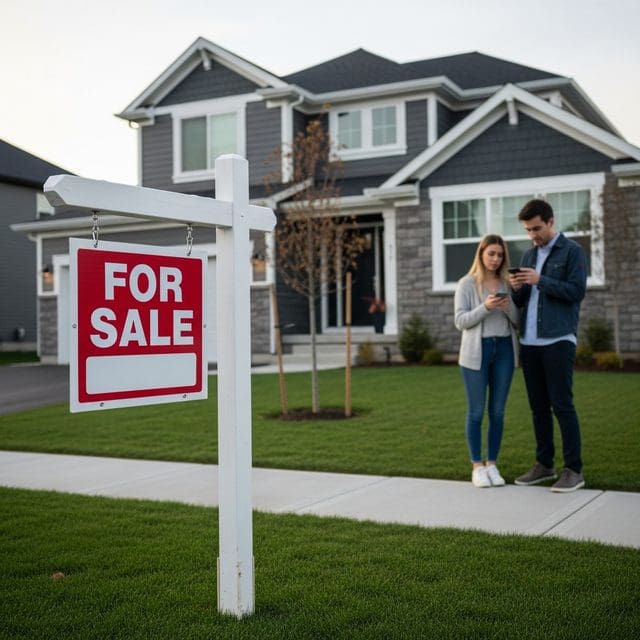
American households face a tightening squeeze as mortgage rates remain elevated and housing costs consume over one-third of median budgets.
The American dream of homeownership is facing a multi-generational stress test as volatile mortgage rates and persistent inflation reshape the domestic landscape. As of May 9, 2026, U.S. mortgage rates reached 6.37%, a figure that continues to dictate the mobility of the American workforce and the financial stability of the middle class. While rates saw a slight dip to 6.25% in some surveys by the following day, the long-term trend remains a significant barrier to entry for those without existing equity.
Recent data from Investopedia highlights a widening divide in how different age groups navigate the current market. Baby Boomers, aged 61 to 79, currently comprise 42% of all buyers. This demographic often bypasses the hurdles of high interest rates by leveraging existing equity to make cash purchases, effectively insulating themselves from the borrowing costs that plague younger cohorts. In contrast, the median age for first-time buyers has climbed to 40, reflecting the increasing difficulty for younger families to enter a market defined by high entry costs and limited inventory.
Millennials are bearing the heaviest burden of this fiscal environment. This cohort holds the highest average mortgage balance at $320,027, followed by Generation X at $286,574. With housing now accounting for an average of 33.4% of household budgets, many families are exceeding the traditional 30% affordability benchmark. Renters under the age of 35 face the most acute pressure, as relative costs continue to outpace wage growth in many metropolitan hubs, often forcing a choice between proximity to work and financial solvency.
The broader economic climate offers little immediate relief for the average taxpayer. While the White House is currently engaged in high-level negotiations to resolve conflicts in the Middle East—including meetings between Secretary of State Marco Rubio and Qatari officials—energy prices are expected to remain elevated. Retail gas prices will likely stay above pre-war levels through the upcoming midterm elections, further straining the disposable income that families would otherwise use for down payments or property maintenance. This convergence of high energy costs and high borrowing costs creates a pincer movement on the American wallet.
Infrastructure and transit decisions also loom large as local governments grapple with the consequences of these price signals. As the cost of living rises, the demand for efficient transit and sensible zoning becomes a matter of economic survival rather than mere urban planning. For the American taxpayer, the intersection of federal monetary policy and local property rights remains the primary battlefield for personal liberty and financial independence. Bureaucratic overreach in zoning often exacerbates the supply crisis, making it even harder for the private market to provide the housing necessary to bring prices back to earth.
As the nation moves toward the midterms, the focus on ‘where we live’ has never been more critical. The ability of the private sector to innovate, free from excessive regulatory drag, will determine whether the current housing squeeze is a temporary hurdle or a permanent fixture of the American economy. For now, the combination of 6% mortgage rates and high energy costs ensures that the cost of living remains the top priority for voters and policymakers alike.

Deborah Cole serves as a Senior Correspondent for Just Right News, where she spearheads the network’s coverage of Housing, Infrastructure, and Mobility. With a career defined by a commitment to rigorous reporting and a focus on the fundamental pillars of American community life, Deborah brings a principled perspective to the complex issues that dictate how and where we live. Her work is grounded in the belief that sound policy, fiscal responsibility, and respect for private property are the essential foundations of a prosperous society.
Originally from Boston, Massachusetts, Deborah’s upbringing in one of the nation’s oldest and most historically significant cities deeply influenced her professional trajectory. Growing up amidst the architectural legacy and dense urban planning of New England, she developed an early appreciation for the importance of durable infrastructure and the role of local tradition in shaping neighborhoods. Her perspective is informed by the classic American values of her hometown—hard work, community cohesion, and a healthy skepticism of top-down bureaucratic mandates that often overlook the unique needs of individual citizens.
Today, Deborah operates from her base in Austin, Texas, a city that serves as a primary laboratory for her reporting. Austin’s rapid expansion and its status as a hub for innovation and migration provide her with a front-row seat to the most pressing challenges in modern infrastructure and housing. From the Lone Star State, she chronicles the tensions between rapid growth and the preservation of the American Dream, often highlighting how market-driven solutions and deregulation can address the housing shortages that plague many of the country’s metropolitan areas.
At Just Right News, Deborah is perhaps best known for her signature feature series, “Where We Live.” Through this platform, she explores the intersection of public policy and private life, moving beyond mere statistics to tell the stories of families, small business owners, and local developers. Her reporting frequently highlights the importance of mobility—not just in terms of transportation and transit, but as a vehicle for economic opportunity and social stability. She remains a staunch advocate for the taxpayer, consistently scrutinizing government spending on large-scale projects and advocating for transparency in how infrastructure dollars are allocated.
Deborah’s beat is more than just a collection of policy topics; it is an investigation into the physical and legal structures that allow families to flourish. Whether she is reporting on the impact of zoning laws on suburban development or the necessity of maintaining the nation’s highway systems, her work is characterized by a dedication to the facts and a respect for the constitutional principles that protect the rights of homeowners.
As a Senior Correspondent, Deborah Cole continues to be a vital voice for Just Right News, providing the audience with the clarity and context needed to navigate an ever-changing landscape. Her reporting ensures that the values of individual liberty and local sovereignty remain at the forefront of the national conversation regarding the future of our cities and towns. Through her tireless efforts, she remains committed to informing the public on the issues that hit closest to home.