

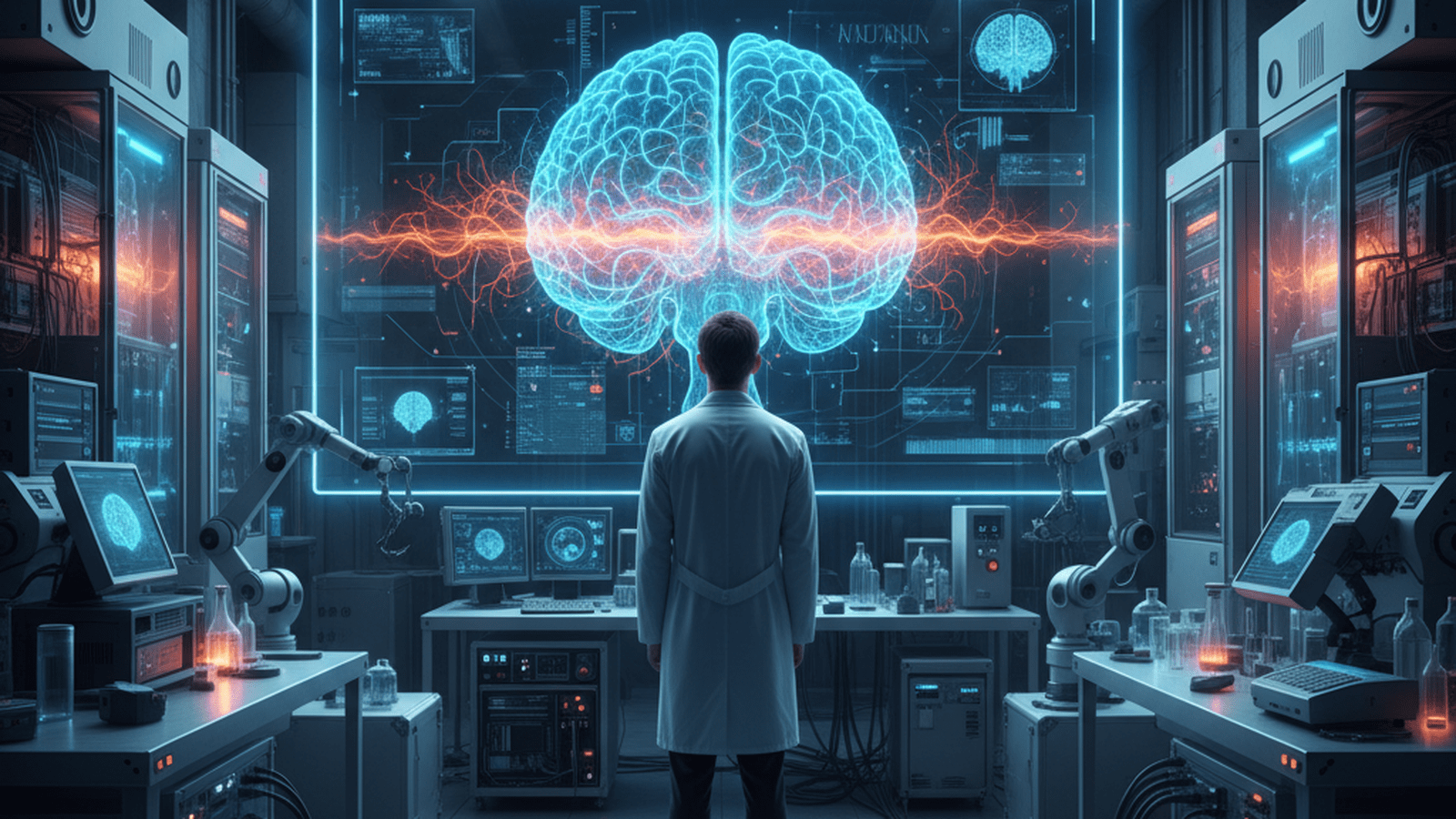
Scientists have identified specific neurons in the human brain, known as ‘time cells,’ that act as a chronological filing system for memories. These cells, located in the hippocampus, allow the brain to organize events in the correct sequence, providing a fundamental understanding of how human experience is structured over time.
TLDR: Researchers at Cedars-Sinai have discovered ‘time cells’ in the human hippocampus that track the sequence of events. These neurons fire at specific moments during a task, creating a temporal map that allows the brain to assemble memories in chronological order, offering new insights into Alzheimer’s and memory disorders.
Neuroscientists at Cedars-Sinai Medical Center have identified a specific class of neurons in the human brain that are responsible for tracking the passage of time and the sequence of events. These “time cells,” located in the hippocampus, act as a chronological filing system, allowing the brain to organize memories into a coherent narrative. The discovery, published in the journal Nature Neuroscience, provides a long-sought answer to how the human mind distinguishes between the order of past experiences.
The research team, led by Dr. Ueli Rutishauser, Professor of Neurosurgery, Neurology, and Biomedical Sciences, conducted the study using a unique clinical opportunity. They worked with patients undergoing surgery for epilepsy who already had deep-brain electrodes implanted to locate the source of their seizures. This allowed the scientists to monitor the activity of individual neurons in real-time as the participants performed complex memory tasks. During the experiments, patients were shown a series of images and asked to recall the order in which they appeared, as well as the duration between them.
Data revealed that specific neurons fired at very precise moments, regardless of the visual content being shown. These cells appeared to be tracking time itself, providing a temporal “timestamp” for each event. When the brain records a new memory, these time cells create a sequence that links different pieces of information together. Without this mechanism, memories would exist as isolated fragments without any context of when they occurred relative to one another. The researchers observed that the firing patterns remained stable even when the patients were not actively trying to remember, suggesting an autonomous internal metronome.
The study identified two distinct types of time-related neurons within the medial temporal lobe. One group, referred to as “sequence-sensitive” cells, tracked the relative order of events, while “duration-sensitive” cells focused on the specific gaps of time between stimuli. This dual-layer system allows the brain to maintain both a general sense of the narrative flow and a granular record of specific intervals. The researchers noted that the activity of these cells was remarkably consistent across different subjects, suggesting a universal biological architecture for temporal processing in humans.
This breakthrough has significant implications for the study of neurodegenerative diseases. In conditions such as Alzheimer’s disease, patients often struggle with “temporal disorientation,” or the inability to place events in the correct order. By understanding the fundamental biology of time cells, researchers may be able to develop new diagnostic tools or therapies aimed at preserving the chronological integrity of memory. The loss of these cells or their synchronization could be an early indicator of cognitive decline, potentially allowing for intervention years before more severe symptoms appear.
Furthermore, the discovery opens new avenues for artificial intelligence research. Current AI models often struggle with long-term temporal consistency and the nuances of human-like memory sequencing. Engineers may look to the biological architecture of time cells to create more sophisticated neural networks that can better understand the flow of time and the relationship between sequential data points. This could lead to AI that learns more like a human, prioritizing the order of operations and historical context.
Future research will focus on how these time cells interact with “place cells,” which track spatial location. Scientists believe that the combination of time and space data creates the “episodic memory” that defines the human experience. By mapping the intersection of these two systems, the team hopes to build a complete model of how the brain constructs the reality of our past. The next phase of the study will involve investigating how emotional intensity affects the firing rate of time cells, potentially explaining why some moments feel like they last forever while others seem to pass in an instant.

Mason Reed serves as a Staff Writer for Just Right News, where he spearheads the Future Frontiers & Special Projects desk. In an era defined by rapid technological shifts and evolving social landscapes, Mason provides a steady, principled voice, examining the innovations of tomorrow through the lens of traditional American values. His work is most prominently featured in his signature series, “The Next Horizon,” where he explores the intersection of emerging technology, national sovereignty, and the preservation of individual liberty.
A native of San Diego, California, Mason’s worldview was shaped by the unique culture of his hometown. Growing up in a region defined by its strong military presence and its history of maritime industry, he developed a deep-seated respect for the institutions that provide national stability and the entrepreneurial spirit that drives the American economy. This upbringing instilled in him a belief that true progress is not found in discarding the past, but in building upon a foundation of proven principles. His reporting often reflects this San Diego influence, emphasizing the importance of a robust national defense and the necessity of maintaining a competitive edge in the global marketplace.
Now based in San Francisco, Mason operates from the heart of the world’s technological engine. Living and working in the Bay Area provides him with a front-row seat to the advancements—and the ideological challenges—emanating from Silicon Valley. While many in the region embrace a “move fast and break things” mentality, Mason’s reporting serves as a vital counterweight. He offers Just Right News readers a “boots on the ground” perspective, documenting how radical local policies and the concentration of tech power impact the everyday lives of citizens. His proximity to the industry allows him to cut through the marketing jargon of big tech to uncover the real-world implications for privacy, free speech, and the nuclear family.
In his “Future Frontiers” beat, Mason tackles complex subjects ranging from the ethics of artificial intelligence to the burgeoning private space race. He approaches these topics with a healthy skepticism toward centralized bureaucracy, championing instead the decentralized innovations that empower individuals. Through “The Next Horizon,” he highlights the pioneers and thinkers who are working to ensure that the future remains a place where human dignity and constitutional rights are protected. He believes that the rapid pace of change requires more than just technical expertise; it requires a moral compass rooted in the Western tradition.
Throughout his tenure at Just Right News, Mason has remained committed to the idea that the future is something to be shaped, not merely accepted. His writing is characterized by a rigorous defense of American exceptionalism and a belief that the country’s best days lie ahead, provided it remains true to its founding ideals. Whether he is investigating the impact of automation on the American workforce or profiling the next generation of aerospace engineers, Mason Reed ensures that his readers are equipped with the insights they need to navigate a changing world with confidence and clarity.