

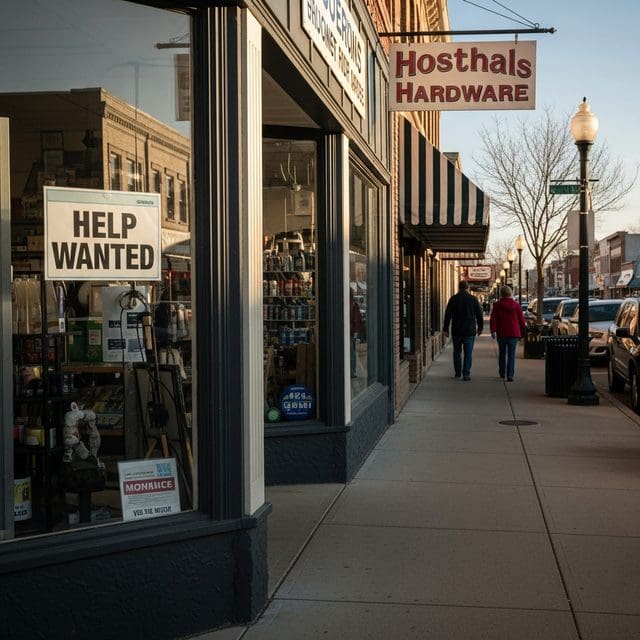
National SNAP participation fell by over four million people in early 2026 as states implemented stricter work requirements and nutrition-focused reforms aimed at promoting economic independence.
The landscape of the American safety net is undergoing a significant contraction as federal and state-level reforms prioritize workforce participation over long-term government assistance. New data indicates that enrollment in the Supplemental Nutrition Assistance Program (SNAP) fell to 38.55 million in January 2026, marking a 10% year-over-year decline. This reduction of 4.3 million participants follows the implementation of the OBBBA work requirements, which seek to transition able-bodied adults from dependency to the private labor market.
Arizona has emerged as the vanguard of this shift. Following a series of state-level reforms, the number of SNAP recipients in the Grand Canyon State plummeted by 47% over a seven-month period. This decline represents 424,000 individuals, including 181,000 children, who have exited the program. While critics express concern over the speed of the transition, proponents argue that these measures restore the program’s original intent as a temporary springboard rather than a permanent fixture of household income.
Beyond eligibility, the nature of the benefit itself is changing. As of early 2026, states representing 31% of the SNAP-using population, including Texas and Florida, have rolled out nutrition-based restrictions. These policies limit the purchase of soda and candy, reflecting a growing legislative consensus that taxpayer-funded assistance should prioritize public health and essential nutrition. This move toward paternalistic fiscal discipline coincides with new federal pressure on state governments; beginning in October 2027, states will face mandatory cost-sharing if their administrative error rates remain at or above 6%.
The tightening of the safety net occurs against a backdrop of rising costs for those remaining at the bottom of the economic ladder. The Department of Health and Human Services (HHS) adjusted the 2026 poverty guidelines upward to $15,960 for an individual and $33,000 for a family of four. Despite these adjustments, the 2026 World Inequality Report highlights a persistent wealth gap, noting that the bottom 50% of the global population holds just 2% of total wealth, while the top 10% commands 75%.
Market stability may provide some relief for low-income households. Following the announcement of a ceasefire in the Middle East and the reopening of the Strait of Hormuz, oil prices dropped over 10% on April 17, 2026. Lower energy costs often provide an immediate, albeit indirect, boost to the purchasing power of working families. However, the long-term trajectory for mobility remains tied to domestic policy. While current tax structures are projected to widen the inequality gap, the emphasis on work-based solutions suggests a fundamental bet on the dignity of labor as the primary engine for closing it.
As the nation navigates these structural changes, the focus remains on whether local community institutions and the private sector can absorb those transitioning off public rolls. The success of these reforms will likely be measured not just by the reduction in government spending, but by the ability of former recipients to find stable, meaningful employment that offers a path toward true self-sufficiency.

James Foster serves as the Senior Correspondent for Inequality and the Social Safety Net at Just Right News, where he brings a principled and nuanced perspective to the most pressing economic challenges facing the nation. With a career dedicated to exploring the intersection of policy and personal responsibility, Foster has become a leading voice in documenting how government programs and economic shifts impact the American family. His reporting is characterized by a commitment to the “human element,” moving beyond cold statistics to highlight the stories of resilience, work, and community that define the modern American experience.
Foster’s perspective is deeply rooted in his upbringing in Birmingham, Alabama. Growing up in a city with a rich industrial heritage and a history of economic transformation, he witnessed firsthand the importance of the dignity of work and the strength of local institutions. In Birmingham, he saw how the most effective safety nets were often those woven by neighbors, faith-based organizations, and local civic groups. This background instilled in him a lifelong skepticism of “one-size-fits-all” solutions from distant bureaucracies, favoring instead the localized, community-driven support systems that he frequently champions in his writing.
Now based in Atlanta, Georgia, Foster operates from one of the most dynamic and rapidly evolving metropolitan hubs in the South. His location provides a front-row seat to the stark contrasts of the modern economy. From the gleaming towers of Atlanta’s financial districts to the struggling neighborhoods on the city’s periphery, Foster finds the stories that illustrate the complexities of upward mobility. His reporting from the Sun Belt serves as a microcosm for the national debate on poverty, highlighting how inflation, housing costs, and labor market shifts affect the working class in real-time.
As the lead for the acclaimed feature series “America’s Balancing Act,” Foster explores the delicate tension between providing a necessary hand up and fostering long-term independence. The series has become a cornerstone of Just Right News, offering a deep dive into the unintended consequences of social welfare policies. Foster’s work often focuses on the “cliff effect” and other systemic hurdles that can inadvertently discourage employment, arguing that true compassion is measured by how many people are empowered to leave the safety net, rather than how many are added to it.
Throughout his tenure, Foster has remained dedicated to the mission of Just Right News, providing a clear-eyed, conservative analysis of social issues. He believes that a free society thrives when individuals are empowered and the private sector is allowed to innovate. Whether he is interviewing small business owners about the challenges of a changing workforce or documenting the success of private charitable initiatives, Foster’s goal is to provide readers with the truth about the state of the American Dream. His work serves as a vital reminder that while the challenges of inequality are great, the solutions are often found in the strength of the American spirit and the preservation of traditional values.