


A new Senate push aims to block lawmakers and staff from using prediction market platforms following suspicious betting activity linked to sensitive military operations.
The United States Senate is advancing a legislative ban on the use of prediction market platforms by members of Congress and their staff. This move comes in direct response to recent market volatility and suspicious betting patterns that surfaced immediately preceding a U.S. military strike on Iran. The legislation aims to close what critics describe as a loophole in existing insider trading laws, specifically targeting platforms where users wager on the outcomes of political and geopolitical events.
While the STOCK Act of 2012 theoretically prohibits lawmakers from using non-public information for private profit in the securities and commodities markets, the rise of decentralized and offshore prediction markets has created a new frontier for potential ethical breaches. Congressional investigators began scrutinizing these platforms after high-volume bets on military escalation were placed shortly before official announcements were made to the public. The proposed ban would extend to all congressional employees, reflecting concerns that sensitive briefings could be leveraged for financial gain on these speculative exchanges.
In a separate and equally significant development regarding international transparency, a group of 30 House Democrats, led by Representative Joaquin Castro, has formally requested that Secretary of State Marco Rubio provide public acknowledgment of Israel’s undeclared nuclear weapons program. This request marks a significant departure from the long-standing ‘strategic ambiguity’ policy established by the 1969 agreement between President Richard Nixon and Prime Minister Golda Meir. The lawmakers argue that public records and regional stability require a shift toward transparency, challenging decades of bipartisan silence on the matter.
Simultaneously, the Senate’s latest $70 billion immigration enforcement package has drawn scrutiny for a specific $1 billion allocation designated for the renovation of the White House East Wing ballroom. Despite previous administration claims that the project would be funded through private donations, the text of the bill reveals a direct appropriation of taxpayer funds. This discrepancy highlights the ongoing tension between public messaging and the actual contents of omnibus spending bills, where large-scale projects are often embedded within unrelated national security or enforcement legislation.
As the 2026 midterm elections approach, these legislative maneuvers are occurring against a backdrop of significant shifts in the Republican party. In Indiana, five GOP state senators who opposed a Trump-backed redistricting plan were unseated by challengers in high-spending primary races. Furthermore, Vivek Ramaswamy’s victory in the Ohio GOP gubernatorial primary signals a continued trend of populist alignment within the party. With the Senate majority currently hanging in a delicate balance, the legislative priorities set in the coming months will likely define the primary battlegrounds for the next election cycle. These developments underscore the persistent friction between the administrative state’s desire for discretion and the public’s right to clear, document-driven accountability in federal spending and policy.
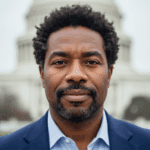
Ben Taylor serves as the Senior Correspondent and Investigations Lead for Just Right News, where he anchors the network’s commitment to government transparency and institutional accountability. With a career defined by a relentless pursuit of the facts, Taylor spearheads the acclaimed feature series “The Paper Trail,” a deep-dive investigative column that prioritizes primary source documentation over political rhetoric. Based in the heart of the nation’s capital, he has earned a reputation as one of the most formidable investigative journalists in Washington, D.C., known specifically for his mastery of public records and the Freedom of Information Act.
Taylor’s approach to journalism is deeply rooted in his upbringing in Kansas City, Missouri. Growing up in the “Show Me State,” he developed a healthy skepticism of centralized power and a profound respect for the common-sense values of the American heartland. This Midwestern foundation informs his reporting today, as he bridges the gap between the complex machinations of federal bureaucracy and the everyday concerns of citizens across the country. For Taylor, investigative reporting is not about chasing headlines; it is about ensuring that the government remains answerable to the people it serves.
As an African American man working within the conservative media landscape, Taylor brings a principled perspective to his beat. He views the Constitution and the right to information as the ultimate equalizers in a free society. His work often highlights how bureaucratic overreach and lack of transparency disproportionately affect individual liberties. By focusing on the “paper trail,” Taylor strips away the spin of partisan talking points, instead providing Just Right News readers with the raw data and internal communications that reveal how their tax dollars are spent and how policy decisions are actually made.
In his role as Investigations Lead, Taylor oversees a team dedicated to uncovering the stories that mainstream outlets often overlook. Whether he is auditing federal spending, investigating regulatory overreach, or exposing inefficiencies within the administrative state, his methodology remains consistent: follow the evidence wherever it leads. His presence in Washington, D.C., allows him to maintain a constant watch over the halls of power, yet he remains steadfastly connected to his roots, ensuring his reporting reflects the clarity and directness of his Missouri home.
Throughout his tenure at Just Right News, Taylor has become a vital voice for those who demand integrity in public office. He believes that a well-informed electorate is the strongest defense against government overreach, and he has dedicated his career to providing the public with the tools they need to hold their leaders accountable. Through “The Paper Trail” and his broader investigative work, Ben Taylor continues to set the standard for rigorous, document-driven journalism that champions the values of transparency, individual responsibility, and the rule of law.