


Federal prosecutors reveal how Russian authorities shield cybercriminal monopolies from taxes and military service in exchange for illicit data access.
The Department of Justice has unveiled new evidence detailing the symbiotic relationship between the Russian government and elite ransomware syndicates, characterizing these criminal organizations as state-sanctioned monopolies. On May 4, 2026, federal prosecutors secured an 8.5-year prison sentence for Deniss Zolotarjovs, a high-level negotiator for a Russian-based gang responsible for extorting more than 50 firms of approximately $56 million.
The investigation reveals that these cybercriminal entities do not operate in a vacuum of lawlessness but rather within a structured system of state protection. According to DOJ filings, the Russian government has allowed gang leaders to evade national taxes and dodge military conscription. In exchange, the Kremlin gains access to vast troves of stolen data, including sensitive children’s health records used as leverage in extortion schemes.
This consolidation of cyber-power under the wing of the Russian state represents a significant threat to market stability and corporate security. By providing a safe haven for these actors, the Russian government effectively subsidizes a criminal industry that targets Western infrastructure. The DOJ noted that the group’s activities even led to the temporary shutdown of emergency 911 services, demonstrating the high human cost of allowing such concentrated criminal power to operate with impunity.
The sentencing of Zolotarjovs, who earned a 10% commission on ransoms converted into rubles, highlights the financial machinery behind these operations. While the DOJ continues to pursue individual actors, the broader challenge remains the institutionalized corruption that prevents competitive security measures from taking hold in the global digital marketplace.
As the DOJ grapples with these international threats, the agency itself is facing internal pressures. Reports indicate the Department has begun offering $25,000 signing bonuses to attract legal talent amid a period of significant administrative upheaval. The ability of the U.S. government to maintain its enforcement edge against global monopolies—both corporate and criminal—depends heavily on its capacity to retain experienced prosecutors capable of untangling complex international financial webs.
This struggle for institutional stability comes at a time when other sectors are seeing similar shifts in power. While the DOJ targets foreign criminal monopolies, domestic labor movements are challenging corporate concentration at home. Recently, Pepsi-Cola workers in Georgia and Smithfield Foods employees in Virginia successfully organized under the Teamsters to demand fair wages, signaling a broader pushback against the leverage held by massive industrial employers. Whether in the digital realm or the factory floor, the fight against unchecked power remains the defining challenge of the current era.
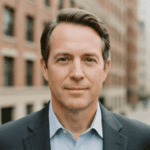
Greg Sanders serves as the Senior Correspondent for Corporate Power and Antitrust at Just Right News, where he brings a principled, conservative perspective to the complex intersection of big business, government regulation, and the American consumer. With a career dedicated to investigative depth and economic clarity, Greg has become a leading voice in examining how the consolidation of industry power impacts the foundational values of the free market and individual liberty.
Raised in Denver, Colorado, Greg’s reporting is deeply informed by the Western spirit of independence and a healthy skepticism of centralized authority. Growing up in the shadows of the Rockies, he witnessed firsthand the importance of local entrepreneurship and the vital role that small-medium enterprises play in sustaining vibrant communities. This upbringing instilled in him a belief that the American Dream is best preserved when the playing field remains level and when competition—rather than backroom deals between corporate lobbyists and federal regulators—dictates success. For Greg, the rugged individualism of his home state serves as a constant reminder that the economy should serve the people, not the other way around.
Now based in Chicago, Illinois, Greg operates from the heart of the nation’s industrial and financial crossroads. His location in the Midwest provides him with a unique vantage point to observe the real-world consequences of corporate overreach. From the boardrooms of the Loop to the manufacturing hubs that define the region, he tracks the movement of capital and the shifting tides of market influence. Chicago’s history as a center of trade and labor offers a rich backdrop for his work, allowing him to bridge the gap between high-level economic theory and the lived experiences of hardworking Americans who feel the squeeze of monopolistic practices.
At Just Right News, Greg’s beat focuses on the “new monopolies” and the rise of “woke” corporate culture. He argues that when corporations become too large, they often abandon their fiduciary duties to shareholders in favor of social engineering and political posturing. His reporting seeks to hold these “Titans” accountable, ensuring that the power of the purse is not used to silence dissent or bypass the democratic process. He is a firm advocate for the idea that true conservatism requires a vigilant defense of competition, preventing any single entity—public or private—from exerting undue control over the lives of citizens.
This mission is most clearly seen in his acclaimed feature series, “The Titans and the Toll.” In this ongoing project, Greg explores the human cost of market consolidation, from the erosion of consumer choice to the decline of local economies. Through rigorous analysis and boots-on-the-ground reporting, he documents how the concentration of power in sectors like tech, agriculture, and finance creates a “toll” paid by the average family.
Greg Sanders remains committed to the idea that a transparent, competitive market is the greatest engine for prosperity ever devised. Through his work at Just Right News, he continues to provide the essential oversight necessary to protect that engine from the encroaching influence of corporate giants and the bureaucratic structures that enable them.