

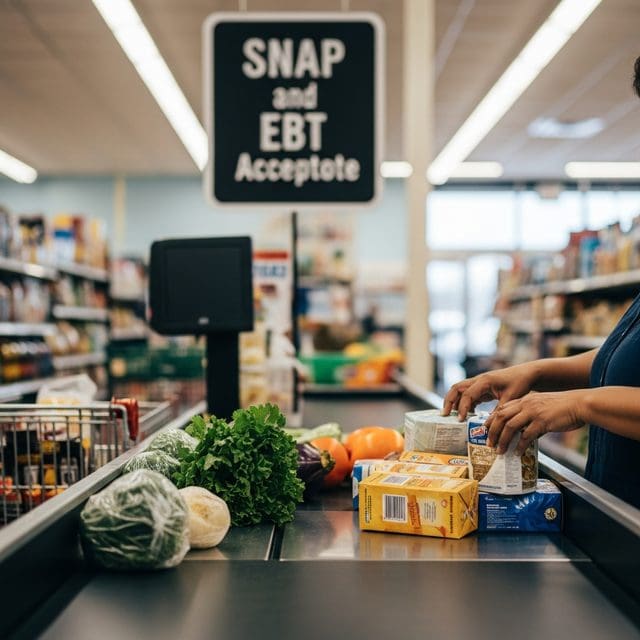
Recent federal data shows millions of Americans exiting SNAP rolls as states implement stricter eligibility rules designed to prioritize fiscal discipline and workforce participation.
The American social safety net is undergoing its most significant structural realignment in years as state and federal authorities move to tighten eligibility for the Supplemental Nutrition Assistance Program (SNAP). According to recent data, more than 4.3 million Americans stopped receiving benefits between January 2025 and January 2026. This shift reflects a broader policy movement toward work-based solutions and the restoration of pre-pandemic oversight standards.
In early May, reports indicated that over 3 million individuals lost federal food aid specifically due to the implementation of eligibility rules established during the Trump administration. These changes prioritize the principle that government assistance should serve as a temporary bridge rather than a permanent fixture. The Congressional Budget Office projects that these tightening criteria could result in a $186 billion reduction in federal spending over the next decade, a move proponents argue is necessary for long-term fiscal sustainability.
Integrity audits have also played a role in the shrinking rolls. In Massachusetts and Maine, spring audits conducted by the Foundation for Government Accountability exposed millions of dollars in welfare fraud, underscoring the need for rigorous local oversight to ensure resources reach those truly in need. These findings bolster the argument that top-down federal programs often suffer from administrative bloat and insufficient verification processes.
Despite the reduction in total enrollment, the landscape for those remaining on the program is evolving through private-sector innovation. A new partnership between Kroger and DoorDash has enabled SNAP delivery at 2,700 locations across the United States. This development suggests that local commerce and technological integration can improve food access more efficiently than bureaucratic expansion, allowing recipients to utilize benefits within the existing market infrastructure.
While the national trend points toward contraction, the data on outcomes remains nuanced. New Mexico recently led the nation in child poverty reduction according to Census data, proving that targeted state-level initiatives can move the needle on mobility. Conversely, north of the border, Statistics Canada reports that the poverty rate remains steady at 11%, stubbornly higher than 2020 levels, highlighting the persistent challenges of inflation and economic stagnation.
The current trajectory suggests a return to a more disciplined welfare model that emphasizes individual agency and community resilience. As the SNAP rolls continue to adjust, the focus shifts to whether these reforms will successfully transition able-bodied adults back into the workforce, thereby strengthening the social fabric through the dignity of earned success.

James Foster serves as the Senior Correspondent for Inequality and the Social Safety Net at Just Right News, where he brings a principled and nuanced perspective to the most pressing economic challenges facing the nation. With a career dedicated to exploring the intersection of policy and personal responsibility, Foster has become a leading voice in documenting how government programs and economic shifts impact the American family. His reporting is characterized by a commitment to the “human element,” moving beyond cold statistics to highlight the stories of resilience, work, and community that define the modern American experience.
Foster’s perspective is deeply rooted in his upbringing in Birmingham, Alabama. Growing up in a city with a rich industrial heritage and a history of economic transformation, he witnessed firsthand the importance of the dignity of work and the strength of local institutions. In Birmingham, he saw how the most effective safety nets were often those woven by neighbors, faith-based organizations, and local civic groups. This background instilled in him a lifelong skepticism of “one-size-fits-all” solutions from distant bureaucracies, favoring instead the localized, community-driven support systems that he frequently champions in his writing.
Now based in Atlanta, Georgia, Foster operates from one of the most dynamic and rapidly evolving metropolitan hubs in the South. His location provides a front-row seat to the stark contrasts of the modern economy. From the gleaming towers of Atlanta’s financial districts to the struggling neighborhoods on the city’s periphery, Foster finds the stories that illustrate the complexities of upward mobility. His reporting from the Sun Belt serves as a microcosm for the national debate on poverty, highlighting how inflation, housing costs, and labor market shifts affect the working class in real-time.
As the lead for the acclaimed feature series “America’s Balancing Act,” Foster explores the delicate tension between providing a necessary hand up and fostering long-term independence. The series has become a cornerstone of Just Right News, offering a deep dive into the unintended consequences of social welfare policies. Foster’s work often focuses on the “cliff effect” and other systemic hurdles that can inadvertently discourage employment, arguing that true compassion is measured by how many people are empowered to leave the safety net, rather than how many are added to it.
Throughout his tenure, Foster has remained dedicated to the mission of Just Right News, providing a clear-eyed, conservative analysis of social issues. He believes that a free society thrives when individuals are empowered and the private sector is allowed to innovate. Whether he is interviewing small business owners about the challenges of a changing workforce or documenting the success of private charitable initiatives, Foster’s goal is to provide readers with the truth about the state of the American Dream. His work serves as a vital reminder that while the challenges of inequality are great, the solutions are often found in the strength of the American spirit and the preservation of traditional values.