

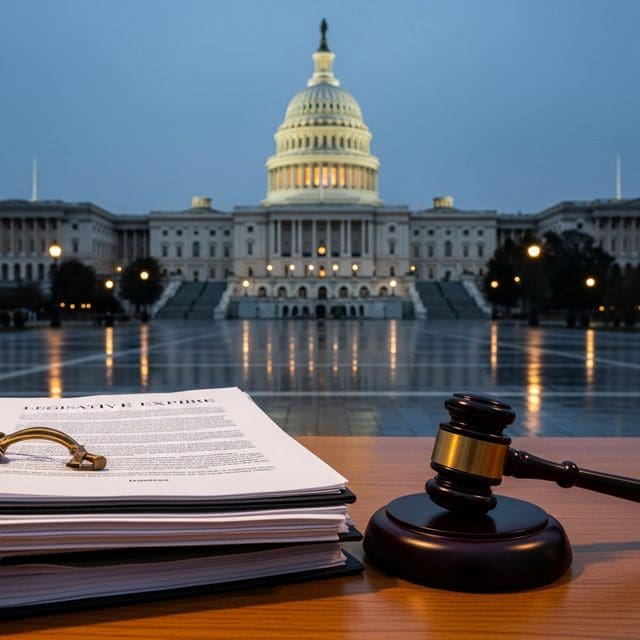
The expiration of Section 702 surveillance powers and a high-stakes reshuffling of the Justice Department mark a pivotal shift in federal oversight and national security policy.
The landscape of federal law enforcement and national security shifted this weekend as key surveillance authorities lapsed and the White House moved to install new leadership in the nation’s most prominent prosecutorial office. On June 13, 2026, Section 702 of the Foreign Intelligence Surveillance Act (FISA) officially expired. The sunsetting of these powers followed a failure by House and Senate Republicans to secure an extension, terminating the government’s authority to conduct warrantless surveillance on foreign targets whose communications transit through U.S. service providers. This legislative deadlock leaves the administrative state without a primary tool for foreign intelligence gathering.
This shift coincides with a major personnel reshuffle at the Department of Justice. President Trump nominated James McDonald, a veteran prosecutor and member of his recent legal defense team, to serve as the U.S. Attorney for the Southern District of New York. McDonald replaces Jay Clayton, who was tapped to lead the Office of the Director of National Intelligence. A key question remains whether the administration will seek a formal Senate confirmation for McDonald or install him in an acting capacity. McDonald’s background as a regulator and his work appealing the president’s criminal convictions suggest a strategic alignment between the White House and the Manhattan-based federal office.
While the administration solidifies its legal flank, it faces internal resistance regarding fiscal policy. On June 12, Senate Republicans broke from the White House, opposing a demand to utilize budget reconciliation a third time to provide $350 billion in additional Pentagon funding. This friction suggests a limit to executive influence over the power of the purse. The refusal to use reconciliation, which allows for a simple majority vote, forces the administration to seek bipartisan support for defense priorities in an increasingly polarized Congress.
In the cultural sphere, the Kennedy Center complied with a federal judge’s order on June 13 to remove President Trump’s name from the building’s facade. While the removal was executed overnight, the long-term status of the institution’s branding remains subject to legal scrutiny. Meanwhile, the Department of Justice approved the merger between Paramount and Warner Bros. The deal continues to face potential challenges from California regulators who may still sue to block the consolidation on antitrust grounds.
On the technological front, the administration tightened export controls on artificial intelligence. New federal orders barred foreign nationals from accessing Anthropic’s Fable 5 and Mythos 5 models. These restrictions are treated as broad export-control actions rather than simple account blocks, prompted by concerns that the models could be “jailbroken” by foreign entities. In response, Anthropic disabled the models globally to ensure compliance, sparking debate over the balance between innovation and security.
Politically, focus shifts to Georgia’s June 16 Republican Senate runoff. President Trump endorsed Representative Mike Collins, placing him at odds with Governor Brian Kemp, who backs Derek Dooley. The contest serves as a proxy battle for control over the state’s Republican infrastructure. Similarly, in Florida’s 20th Congressional District, four Black candidates are competing in a manner that may consolidate support for incumbent Debbie Wasserman Schultz by splitting the district’s historically Black voting base.
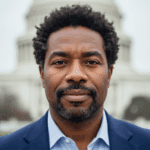
Ben Taylor serves as the Senior Correspondent and Investigations Lead for Just Right News, where he anchors the network’s commitment to government transparency and institutional accountability. With a career defined by a relentless pursuit of the facts, Taylor spearheads the acclaimed feature series “The Paper Trail,” a deep-dive investigative column that prioritizes primary source documentation over political rhetoric. Based in the heart of the nation’s capital, he has earned a reputation as one of the most formidable investigative journalists in Washington, D.C., known specifically for his mastery of public records and the Freedom of Information Act.
Taylor’s approach to journalism is deeply rooted in his upbringing in Kansas City, Missouri. Growing up in the “Show Me State,” he developed a healthy skepticism of centralized power and a profound respect for the common-sense values of the American heartland. This Midwestern foundation informs his reporting today, as he bridges the gap between the complex machinations of federal bureaucracy and the everyday concerns of citizens across the country. For Taylor, investigative reporting is not about chasing headlines; it is about ensuring that the government remains answerable to the people it serves.
As an African American man working within the conservative media landscape, Taylor brings a principled perspective to his beat. He views the Constitution and the right to information as the ultimate equalizers in a free society. His work often highlights how bureaucratic overreach and lack of transparency disproportionately affect individual liberties. By focusing on the “paper trail,” Taylor strips away the spin of partisan talking points, instead providing Just Right News readers with the raw data and internal communications that reveal how their tax dollars are spent and how policy decisions are actually made.
In his role as Investigations Lead, Taylor oversees a team dedicated to uncovering the stories that mainstream outlets often overlook. Whether he is auditing federal spending, investigating regulatory overreach, or exposing inefficiencies within the administrative state, his methodology remains consistent: follow the evidence wherever it leads. His presence in Washington, D.C., allows him to maintain a constant watch over the halls of power, yet he remains steadfastly connected to his roots, ensuring his reporting reflects the clarity and directness of his Missouri home.
Throughout his tenure at Just Right News, Taylor has become a vital voice for those who demand integrity in public office. He believes that a well-informed electorate is the strongest defense against government overreach, and he has dedicated his career to providing the public with the tools they need to hold their leaders accountable. Through “The Paper Trail” and his broader investigative work, Ben Taylor continues to set the standard for rigorous, document-driven journalism that champions the values of transparency, individual responsibility, and the rule of law.