

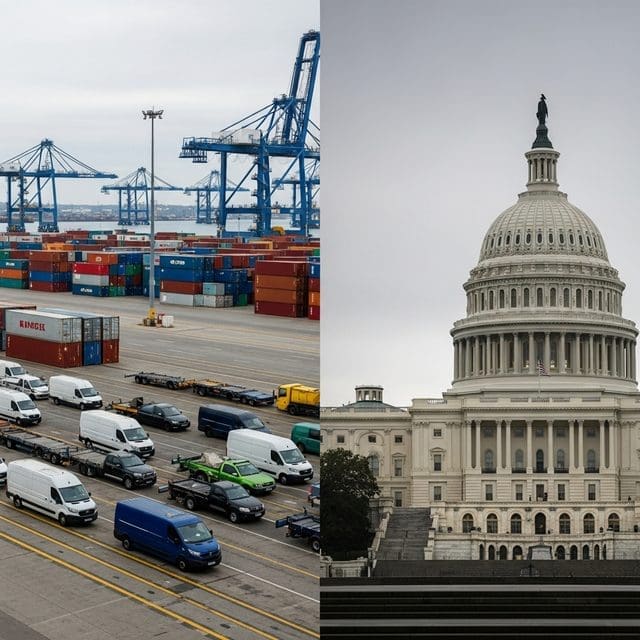
President Trump rejected an Iranian peace proposal while announcing new 25 percent tariffs on European vehicles, as security footage from the White House Correspondents’ Dinner shooting raises questions about Secret Service protocols.
The first of May brought a series of rapid shifts in both foreign and domestic policy as the Trump administration rejected a peace proposal from Tehran and signaled a potential expansion of Operation Epic Fury. Despite a recent Washington Post-ABC News-Ipsos survey indicating that 61 percent of Americans believe the administration erred in launching the conflict, the President is reportedly reviewing options for infrastructure strikes and control of the Strait of Hormuz. This strategic pivot comes amid a dispute over the war’s financial toll; while the Pentagon maintains a lower estimate, Iranian Foreign Minister Abbas Araghchi claims the cost has reached $100 billion.
On the trade front, the administration announced a 25 percent tariff on cars and trucks imported from the European Union, effective next week. The White House cited non-compliance with existing trade agreements as the catalyst for the move, though U.S.-made vehicles remain exempt. This protectionist shift coincides with a diplomatic thaw elsewhere, as the President recently lifted tariffs on Scotch whisky following a state visit from King Charles III.
Domestic security concerns intensified Friday with the release of five minutes of surveillance footage from the White House Correspondents’ Dinner. The video depicts suspect Cole Allen breaching security with a shotgun and bypassing metal detectors, an incident that has prompted sharp criticism of the Secret Service. This security failure occurs just as the Department of Homeland Security begins to stabilize following the signature of a funding bill on April 30, which ended the longest agency shutdown in U.S. history.
The 2026 midterm landscape also shifted significantly this week. Maine Governor Janet Mills withdrew from the U.S. Senate race, citing a lack of financial resources. Her exit narrows the field as the Cook Political Report identifies 11 competitive Senate races, with North Carolina and Georgia trending toward Democrats. Republicans are currently tasked with defending 23 of the 35 seats up for election.
In the judicial branch, a federal judge in Massachusetts ruled against the administration’s halt on processing immigration applications for citizens from travel-ban countries, declaring the policy unlawful. Meanwhile, Nebraska has become the first state to implement Medicaid work requirements under the One Big Beautiful Bill Act, moving eight months ahead of the federal deadline. These developments highlight a period of significant administrative activity across multiple sectors of the federal government.
Amidst these geopolitical and legislative shifts, cultural and social narratives continue to emerge. Authors Aziz Abu Sarah and Maoz Inon appeared on PBS to discuss their book, “The Future is Peace,” which explores reconciliation in the wake of the October 7 attacks. Simultaneously, the public is being introduced to new perspectives on domestic history through a series exploring the history of American Muslims, providing a broader context to the ongoing debates over immigration and national identity.
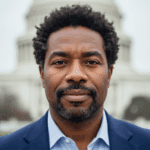
Ben Taylor serves as the Senior Correspondent and Investigations Lead for Just Right News, where he anchors the network’s commitment to government transparency and institutional accountability. With a career defined by a relentless pursuit of the facts, Taylor spearheads the acclaimed feature series “The Paper Trail,” a deep-dive investigative column that prioritizes primary source documentation over political rhetoric. Based in the heart of the nation’s capital, he has earned a reputation as one of the most formidable investigative journalists in Washington, D.C., known specifically for his mastery of public records and the Freedom of Information Act.
Taylor’s approach to journalism is deeply rooted in his upbringing in Kansas City, Missouri. Growing up in the “Show Me State,” he developed a healthy skepticism of centralized power and a profound respect for the common-sense values of the American heartland. This Midwestern foundation informs his reporting today, as he bridges the gap between the complex machinations of federal bureaucracy and the everyday concerns of citizens across the country. For Taylor, investigative reporting is not about chasing headlines; it is about ensuring that the government remains answerable to the people it serves.
As an African American man working within the conservative media landscape, Taylor brings a principled perspective to his beat. He views the Constitution and the right to information as the ultimate equalizers in a free society. His work often highlights how bureaucratic overreach and lack of transparency disproportionately affect individual liberties. By focusing on the “paper trail,” Taylor strips away the spin of partisan talking points, instead providing Just Right News readers with the raw data and internal communications that reveal how their tax dollars are spent and how policy decisions are actually made.
In his role as Investigations Lead, Taylor oversees a team dedicated to uncovering the stories that mainstream outlets often overlook. Whether he is auditing federal spending, investigating regulatory overreach, or exposing inefficiencies within the administrative state, his methodology remains consistent: follow the evidence wherever it leads. His presence in Washington, D.C., allows him to maintain a constant watch over the halls of power, yet he remains steadfastly connected to his roots, ensuring his reporting reflects the clarity and directness of his Missouri home.
Throughout his tenure at Just Right News, Taylor has become a vital voice for those who demand integrity in public office. He believes that a well-informed electorate is the strongest defense against government overreach, and he has dedicated his career to providing the public with the tools they need to hold their leaders accountable. Through “The Paper Trail” and his broader investigative work, Ben Taylor continues to set the standard for rigorous, document-driven journalism that champions the values of transparency, individual responsibility, and the rule of law.