

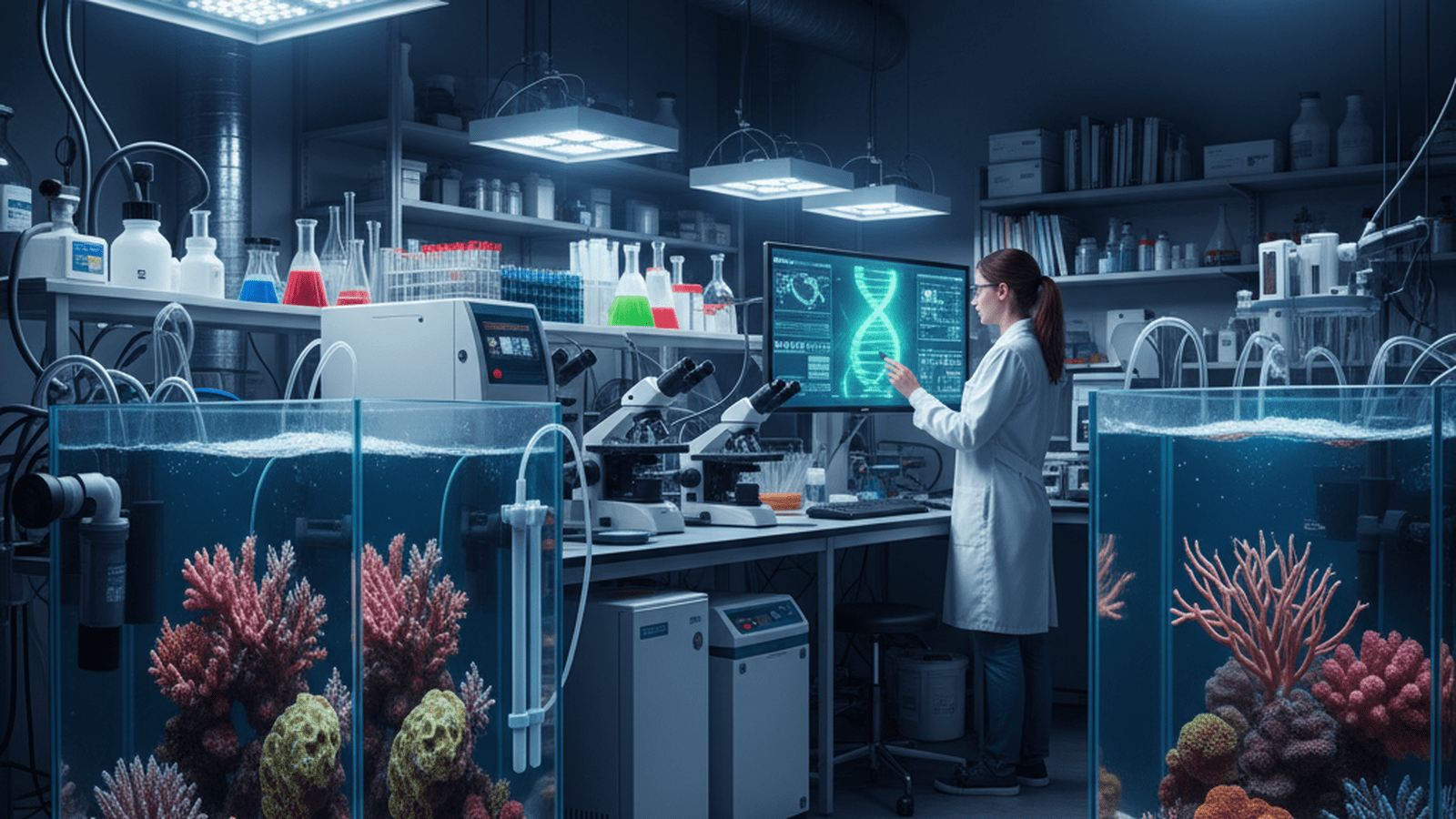
A study from the University of Miami has uncovered how certain coral species survive rising ocean temperatures by swapping their symbiotic algae for more heat-tolerant varieties. This symbiont shuffling process allows reefs to endure thermal stress that would otherwise cause fatal bleaching.
TLDR: Researchers at the University of Miami have identified a critical survival mechanism in corals known as symbiont shuffling. By hosting specific heat-resistant algae, some coral colonies can withstand extreme temperature spikes. This discovery offers new hope for reef restoration efforts as global ocean temperatures continue to reach record highs.
Researchers at the University of Miami’s Rosenstiel School of Marine, Atmospheric, and Earth Science have published a landmark study detailing the specific biological mechanisms that allow certain coral species to survive extreme thermal stress. As global ocean temperatures continue to break historical records, the phenomenon of coral bleaching has become a primary threat to marine biodiversity. This new research identifies a resilient subset of corals that utilize a process known as symbiont shuffling to adapt to rapidly changing environments.
The study centered on the symbiotic relationship between coral polyps and the microscopic algae, known as zooxanthellae, that live within their tissues. These algae provide corals with essential nutrients through photosynthesis in exchange for protection and access to sunlight. When water temperatures rise too high, this relationship typically breaks down, leading the coral to expel the algae and turn white, a process that often results in the death of the colony.
By conducting long-term experiments in controlled laboratory settings, the Miami team observed that some corals do not simply lose their algae. Instead, they strategically shift the composition of their algal communities. The researchers found that corals can increase the abundance of heat-tolerant algae, specifically from the genus Durusdinium, while reducing the presence of more sensitive species. This internal reorganization allows the coral to maintain its metabolic functions even as surrounding waters reach temperatures that would be lethal to other reefs.
To reach these conclusions, the scientists utilized advanced genomic sequencing and high-resolution imaging within the university’s specialized stress-tank facilities. These tanks allow researchers to simulate precise climate change scenarios, including the frequency and intensity of marine heatwaves. By monitoring the genetic expression of both the coral and its symbionts, the team was able to pinpoint the exact moment the shuffling occurs and identify the genetic markers associated with this resilience.
The implications of this discovery are significant for the field of reef restoration. Current conservation efforts often struggle with high mortality rates among transplanted corals. By identifying resilient genotypes that are naturally predisposed to symbiont shuffling, scientists can prioritize these colonies for restoration projects. This data-driven approach ensures that the corals being outplanted onto degraded reefs have a higher probability of surviving future warming events.
Furthermore, the study highlights the importance of protecting refugia, which are areas where these heat-tolerant corals naturally congregate. These locations could serve as vital genetic reservoirs, providing the larvae necessary to repopulate damaged reefs across the globe. The research team noted that while symbiont shuffling is a powerful tool for survival, it is not a universal solution, as the process can sometimes come at the cost of slower coral growth rates.
Looking forward, the University of Miami researchers plan to investigate whether this heat tolerance can be passed down to future generations of coral. They are currently exploring the possibility of assisted evolution, where scientists encourage the uptake of heat-resistant symbionts in juvenile corals before they are placed back into the ocean. This proactive strategy represents a shift in marine conservation, moving from passive protection to active biological intervention.
As the international community grapples with the escalating impacts of climate change, understanding the nuances of marine resilience is more critical than ever. This study provides a glimmer of hope for the world’s coral reefs, suggesting that some species possess an innate ability to fight back against the warming tide. Continued research into the molecular foundations of this resilience will be essential for preserving these vital ecosystems for the next century.

Rachel Vaughn serves as a Senior Correspondent for Just Right News, where she leads the network’s coverage of Global Health, Climate, and Development. With a career defined by intellectual rigor and a commitment to principled reporting, Rachel provides a vital conservative perspective on some of the most complex and high-stakes issues facing the world today. Her work is characterized by a refusal to accept bureaucratic narratives at face value, focusing instead on how international policies impact national sovereignty, individual liberty, and the American taxpayer.
Raised in New Haven, Connecticut, Rachel grew up in an environment dominated by elite academic discourse. This upbringing provided her with a front-row seat to the inner workings of the American establishment, but it also instilled in her a healthy skepticism of the “ivory tower” consensus. She learned early on that while academic theories may sound promising in a lecture hall, they often fail to account for the practical realities of the working class. This background drives her to bridge the gap between high-level policy discussions and the common-sense concerns of everyday citizens, ensuring that her reporting remains grounded and accessible.
Now based in Burlington, Vermont, Rachel operates from a unique vantage point within one of the nation’s most progressive political landscapes. Living and working in a region that often serves as a testing ground for radical social and environmental experiments allows her to witness the real-world consequences of these policies firsthand. From her base in the Green Mountain State, she provides Just Right News readers with essential “boots on the ground” reporting, documenting the friction between local mandates and the constitutional freedoms of the individual. Her presence in Burlington ensures that her critiques of globalist agendas are informed by a direct understanding of how those ideologies manifest at the local level.
In her acclaimed feature series, “Planetary Stakes,” Rachel explores the intersection of international development and environmental stewardship. She rejects the alarmism often found in mainstream media, opting instead for a sober analysis of the economic and geopolitical costs of global climate agreements. Her reporting frequently highlights the importance of market-driven innovation and the role of American leadership in fostering global health without ceding authority to unelected international bodies. Through “Planetary Stakes,” she has become a leading voice for those who believe that true conservation and public health are best achieved through transparency, accountability, and the protection of private property rights.
Throughout her tenure at Just Right News, Rachel has distinguished herself as a journalist who is unafraid to ask difficult questions of global institutions. Whether she is investigating the influence of non-governmental organizations on domestic policy or analyzing the fiscal transparency of international health initiatives, her goal remains the same: to provide her audience with the facts necessary to navigate an increasingly interconnected world. Her blend of East Coast intellectual heritage and her current immersion in the political heart of the Northeast makes her an indispensable asset to the newsroom and a trusted source for readers seeking a principled, conservative take on the issues that define our era.