

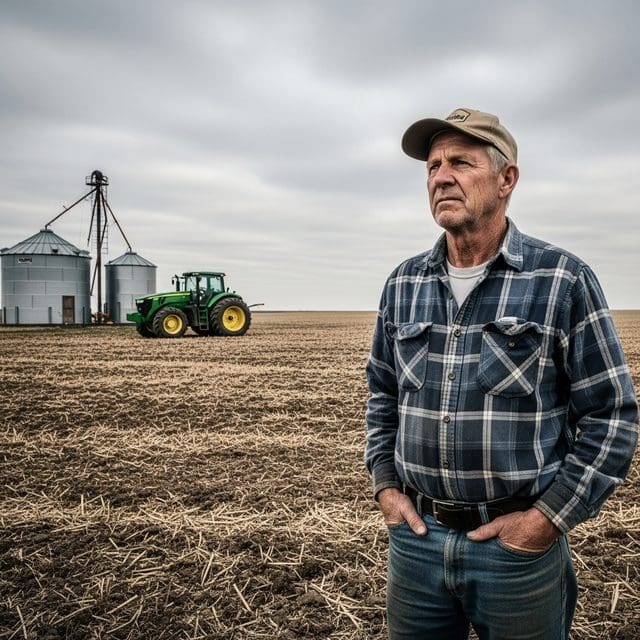
As Washington bickers over the Farm Bill, agricultural producers in the Midwest face declining net incomes and a regulatory environment that prioritizes partisan spending over practical infrastructure and food security.
The American agricultural heartland is entering a period of forced austerity as federal policy remains mired in partisan disputes. In Missouri, net farm income is projected to drop 6% to $4.84 billion this year, even as operating expenses remain stubbornly flat at over $12.24 billion. This tightening vice has led agricultural lenders in the northwest region of the state to advise a defensive mindset, urging producers to prioritize immediate return on investment over long-term expansion.
While farmers on the ground manage razor-thin margins, the legislative machinery in Washington D.C. appears disconnected from these operational realities. During a recent Agricultural and Food Law Policy Briefing hosted by the National Agricultural Law Center and the National Association of State Departments of Agriculture, industry experts and congressional aides highlighted the growing friction surrounding the upcoming Farm Bill. Representative Angie Craig of Minnesota has voiced sharp criticism of the current trajectory, warning that the coalition supporting the bill is being fractured by proposed cuts to nutrition programs and a reliance on reconciliation maneuvers.
Representative Craig emphasized that the aging demographic of the American farmer is no longer a distant concern but a present crisis. With the average age of producers rising, the lack of a stable, long-term federal policy makes it increasingly difficult for beginning farmers to secure the capital necessary for land and equipment. Minnesota has attempted to bridge this gap with state-level Beginning Farmer Grants, offering between $1,000 and $10,000 for infrastructure, but these local efforts are small compared to the scale of federal volatility.
Environmental and biological factors are adding further complexity to the 2026 season. Heather Kelly, a plant pathologist with the University of Tennessee Extension, noted that while recent rains and cooler temperatures have provided some balance to crop cycles, the long-term resilience of the food supply depends on consistent management. The Tennessee AgrAbility Project remains a vital resource for farmers with disabilities through April 2026, yet the sustainability of such programs hinges on the stalled federal budget.
The disconnect between regulatory ambition and practical stewardship is most evident in the debate over infrastructure. While federal agencies focus on broad environmental mandates, local producers are left to navigate the rising costs of custom farm services and the physical realities of water management. The shift toward a defensive farming strategy is a rational response to a government that has prioritized political leverage over the stability of the domestic food supply.
As Senate markups for the Farm Bill are expected to begin in late May, the agricultural community remains skeptical. The primary concern is no longer just the content of the regulations, but the reliability of the institutions tasked with overseeing them. Without a shift toward common-sense policy that respects private-sector innovation and local sovereignty, the burden of feeding the nation will continue to fall on a shrinking pool of producers forced to do more with less.

Eric Nolan serves as the Senior Correspondent for Food, Water, and Environmental Health at Just Right News, where he brings a principled, common-sense perspective to the most fundamental issues facing the American public. With a career dedicated to uncovering the truth behind the policies that govern our natural resources, Eric has become a trusted voice for readers who value traditional stewardship over bureaucratic overreach. His reporting is defined by a commitment to the idea that true environmentalism is rooted in the protection of the American family and the preservation of the nation’s agricultural heritage.
Raised in Fresno, California, Eric’s worldview was shaped in the heart of the San Joaquin Valley. Growing up in one of the world’s most productive agricultural hubs, he witnessed firsthand the vital connection between the land, the water, and the dinner table. In Fresno, he saw the resilience of farmers and the devastating impact that distant, top-down regulations can have on local communities. This upbringing instilled in him a deep respect for the producers who feed the country and a lifelong skepticism toward the alarmist narratives often pushed by mainstream media. For Eric, environmental health is not an abstract political talking point; it is a matter of ensuring that the people who work the land have the freedom and the resources to do so effectively.
Now based in Eugene, Oregon, Eric operates from a unique vantage point in the Pacific Northwest. Living in a region often defined by intense environmental debate, he provides a necessary counter-narrative to the prevailing trends of the area. From his base in Eugene, he monitors the shifting tides of federal and state policies, ensuring that the voices of rural citizens and property owners are not drowned out by urban activism. His reporting often bridges the gap between the rugged realities of the outdoors and the legislative halls where decisions are made, offering a grounded perspective that prioritizes local sovereignty and practical solutions.
As the lead for the acclaimed feature series “Earth on the Table,” Eric explores the intricate journey of the American food supply. He tackles critical issues such as water rights, soil health, and food security through a lens of national stability and individual liberty. He believes that a healthy environment and a thriving economy are not mutually exclusive, but rather two sides of the same coin of national prosperity. His work consistently highlights how innovation and private-sector ingenuity are the most effective tools for ensuring clean water and a safe food supply, rather than the expansion of the administrative state.
At Just Right News, Eric’s reporting serves as a vital resource for those who seek accountability and transparency. Whether he is investigating the impact of federal land management on local economies or examining the safety of the national food infrastructure, his work remains anchored in the values of heritage and hard work. Eric Nolan continues to be a leading voice in environmental journalism, championing the belief that the best way to protect our natural resources is to empower the people who live and work closest to them.