

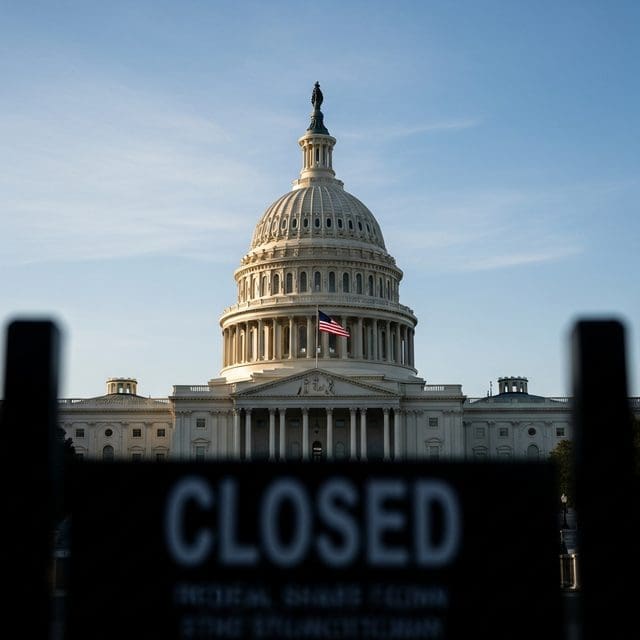
Lawmakers return to Washington facing a seventy-day DHS shutdown and expiring surveillance authorities as King Charles III addresses a joint session of Congress.
The halls of the U.S. Capitol are currently the site of a complex legislative logjam as lawmakers return from recess to face a seventy-day Department of Homeland Security shutdown. While the administrative state remains partially paralyzed, the legislative calendar is dominated by a mix of high-level diplomacy and urgent statutory deadlines. The arrival of King Charles III for a joint session of Congress on April 28 serves as a formal backdrop to deep-seated tensions regarding U.S. strategy in the Middle East, specifically concerning Iran.
Beneath the ceremonial surface, the ‘Paper Trail’ reveals a scramble to address the looming expiration of Section 702 of the Foreign Intelligence Surveillance Act. After a series of chaotic votes in both chambers, the surveillance authority was granted a temporary extension only until April 30. This leaves leadership with a narrow window to secure a full renewal or risk a total lapse in programs the intelligence community deems essential, despite ongoing concerns from civil liberties advocates about the scope of domestic data collection.
Fiscal priorities are also shifting in the wake of the April 26 shooting at a media dinner. House Republicans have introduced legislation to provide federal funding for a proposed ballroom at the White House, a project championed by the Trump administration. This move adds a new layer of complexity to the ongoing appropriations debate, as the Senate Appropriations and Armed Services committees convene to hammer out the details of the next spending cycle. The hearings come as Representative Adam Smith publicly characterized the current administration’s Iran strategy as a failure, setting the stage for a contentious testimony from Pete Hegseth later this week.
Personnel shifts also continue to reshape the federal landscape. The Senate recently moved forward with the confirmation of Robert Cekada as ATF Director, following a 54-37 cloture vote on April 27. While the executive branch fills these vacancies, the long-term composition of the House remains in flux due to a significant Virginia redistricting decision. Analysts suggest the new maps could shift the state’s delegation from a 6-5 split to a 10-1 Democratic advantage, a change that would fundamentally alter the balance of power in future sessions.
For the average citizen, the primary concern remains the functional status of the DHS. With the shutdown exceeding ten weeks, the pressure to reach a compromise is mounting. However, the legislative text currently under review suggests that any resolution will likely be bundled with the Section 702 renewal and the new ballroom funding, forcing members to vote on a massive, multi-faceted package rather than individual policy merits. This ‘all-or-nothing’ approach to governance continues to be the standard operating procedure as the April 30 deadline approaches.

Ben Taylor serves as the Senior Correspondent and Investigations Lead for Just Right News, where he anchors the network’s commitment to government transparency and institutional accountability. With a career defined by a relentless pursuit of the facts, Taylor spearheads the acclaimed feature series “The Paper Trail,” a deep-dive investigative column that prioritizes primary source documentation over political rhetoric. Based in the heart of the nation’s capital, he has earned a reputation as one of the most formidable investigative journalists in Washington, D.C., known specifically for his mastery of public records and the Freedom of Information Act.
Taylor’s approach to journalism is deeply rooted in his upbringing in Kansas City, Missouri. Growing up in the “Show Me State,” he developed a healthy skepticism of centralized power and a profound respect for the common-sense values of the American heartland. This Midwestern foundation informs his reporting today, as he bridges the gap between the complex machinations of federal bureaucracy and the everyday concerns of citizens across the country. For Taylor, investigative reporting is not about chasing headlines; it is about ensuring that the government remains answerable to the people it serves.
As an African American man working within the conservative media landscape, Taylor brings a principled perspective to his beat. He views the Constitution and the right to information as the ultimate equalizers in a free society. His work often highlights how bureaucratic overreach and lack of transparency disproportionately affect individual liberties. By focusing on the “paper trail,” Taylor strips away the spin of partisan talking points, instead providing Just Right News readers with the raw data and internal communications that reveal how their tax dollars are spent and how policy decisions are actually made.
In his role as Investigations Lead, Taylor oversees a team dedicated to uncovering the stories that mainstream outlets often overlook. Whether he is auditing federal spending, investigating regulatory overreach, or exposing inefficiencies within the administrative state, his methodology remains consistent: follow the evidence wherever it leads. His presence in Washington, D.C., allows him to maintain a constant watch over the halls of power, yet he remains steadfastly connected to his roots, ensuring his reporting reflects the clarity and directness of his Missouri home.
Throughout his tenure at Just Right News, Taylor has become a vital voice for those who demand integrity in public office. He believes that a well-informed electorate is the strongest defense against government overreach, and he has dedicated his career to providing the public with the tools they need to hold their leaders accountable. Through “The Paper Trail” and his broader investigative work, Ben Taylor continues to set the standard for rigorous, document-driven journalism that champions the values of transparency, individual responsibility, and the rule of law.