

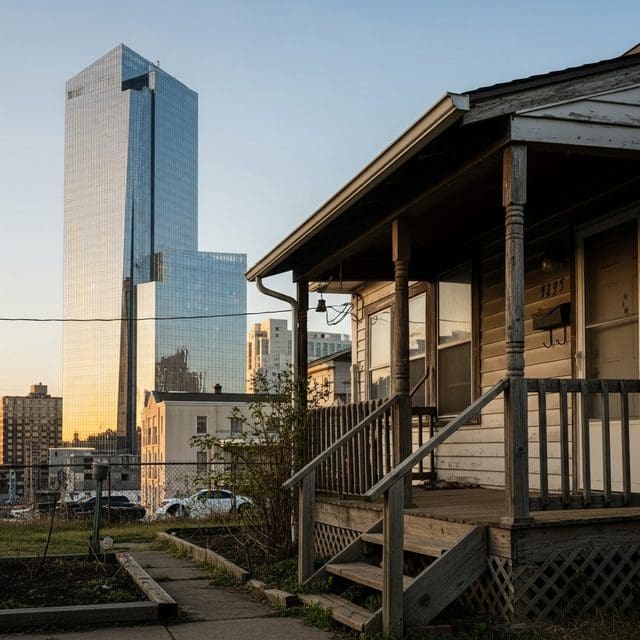
While high-end consumer spending surges, international supply chain disruptions and complex Social Security regulations present new hurdles for low-income Americans and vulnerable retirees.
The American economy is currently operating as a tale of two distinct realities. On one side, the high-end consumer remains undeterred by global volatility. American Express reported a 15 percent jump in first-quarter net income to $2.97 billion, with cardmember spending growing by 9 percent. This surge in premium spending suggests that for those at the top of the economic ladder, the ladder remains sturdy and the view is clear.
However, for those closer to the ground, the landscape is increasingly treacherous. The United Nations Development Programme (UNDP) has issued a stark warning regarding the closure of the Strait of Hormuz. UNDP chief Alexander De Croo noted that fertilizer shortages resulting from the blockade have already slashed agricultural productivity, erasing nearly 0.8 percent of global GDP in just eight weeks. This disruption is not merely a line item on a balance sheet; it is a direct threat to food security that could push an additional 30 million people into poverty globally, with ripple effects likely to hit American grocery prices and the efficacy of the SNAP program.
This global instability coincides with a domestic struggle for individual dignity and financial security among America’s aging population. While the Social Security Administration issued $17 billion in retroactive payments to over 3 million beneficiaries by July 2025, the system remains a labyrinth for the grieving. Non-disabled widowers currently receive average survivor benefits exceeding $1,800 per month, yet many fail to maximize these resources due to complex filing rules. These administrative hurdles often prevent the social safety net from functioning as the temporary springboard it was intended to be, instead becoming a source of confusion for those who have spent a lifetime working.
Religious and civic leaders are increasingly stepping into the gap where government bureaucracy falters. Pope Leo XIV recently concluded a ten-day journey through four African nations, where he criticized the widening wealth gap and urged leaders to prioritize human dignity over institutional corruption. His message resonates in the American South and beyond, where local civic institutions are frequently the first line of defense against the inequality gap that top-down federal programs often fail to bridge.
As the nation looks toward the latter half of 2026, the contrast between record corporate profits and the rising cost of basic survival highlights the need for a safety net that rewards work and protects the vulnerable without stifling economic mobility. The Amo-Welch bill, which proposes raising the Social Security lump-sum death benefit from a stagnant $255 to $2,900, represents one such effort to modernize the system for a new era of fiscal reality. For the American worker, the goal remains a system that offers a hand up, ensuring that global shocks do not become permanent domestic setbacks.
Ultimately, the resilience of the American community depends on more than just federal outlays; it requires a stable environment where hard work translates into security. When international conflicts disrupt the flow of essential goods like fertilizer, the burden falls heaviest on those with the least margin for error. Strengthening the domestic safety net through work-based solutions and local support systems is essential to ensuring that the next generation can climb the ladder of mobility, regardless of the volatility in the global market.

James Foster serves as the Senior Correspondent for Inequality and the Social Safety Net at Just Right News, where he brings a principled and nuanced perspective to the most pressing economic challenges facing the nation. With a career dedicated to exploring the intersection of policy and personal responsibility, Foster has become a leading voice in documenting how government programs and economic shifts impact the American family. His reporting is characterized by a commitment to the “human element,” moving beyond cold statistics to highlight the stories of resilience, work, and community that define the modern American experience.
Foster’s perspective is deeply rooted in his upbringing in Birmingham, Alabama. Growing up in a city with a rich industrial heritage and a history of economic transformation, he witnessed firsthand the importance of the dignity of work and the strength of local institutions. In Birmingham, he saw how the most effective safety nets were often those woven by neighbors, faith-based organizations, and local civic groups. This background instilled in him a lifelong skepticism of “one-size-fits-all” solutions from distant bureaucracies, favoring instead the localized, community-driven support systems that he frequently champions in his writing.
Now based in Atlanta, Georgia, Foster operates from one of the most dynamic and rapidly evolving metropolitan hubs in the South. His location provides a front-row seat to the stark contrasts of the modern economy. From the gleaming towers of Atlanta’s financial districts to the struggling neighborhoods on the city’s periphery, Foster finds the stories that illustrate the complexities of upward mobility. His reporting from the Sun Belt serves as a microcosm for the national debate on poverty, highlighting how inflation, housing costs, and labor market shifts affect the working class in real-time.
As the lead for the acclaimed feature series “America’s Balancing Act,” Foster explores the delicate tension between providing a necessary hand up and fostering long-term independence. The series has become a cornerstone of Just Right News, offering a deep dive into the unintended consequences of social welfare policies. Foster’s work often focuses on the “cliff effect” and other systemic hurdles that can inadvertently discourage employment, arguing that true compassion is measured by how many people are empowered to leave the safety net, rather than how many are added to it.
Throughout his tenure, Foster has remained dedicated to the mission of Just Right News, providing a clear-eyed, conservative analysis of social issues. He believes that a free society thrives when individuals are empowered and the private sector is allowed to innovate. Whether he is interviewing small business owners about the challenges of a changing workforce or documenting the success of private charitable initiatives, Foster’s goal is to provide readers with the truth about the state of the American Dream. His work serves as a vital reminder that while the challenges of inequality are great, the solutions are often found in the strength of the American spirit and the preservation of traditional values.