

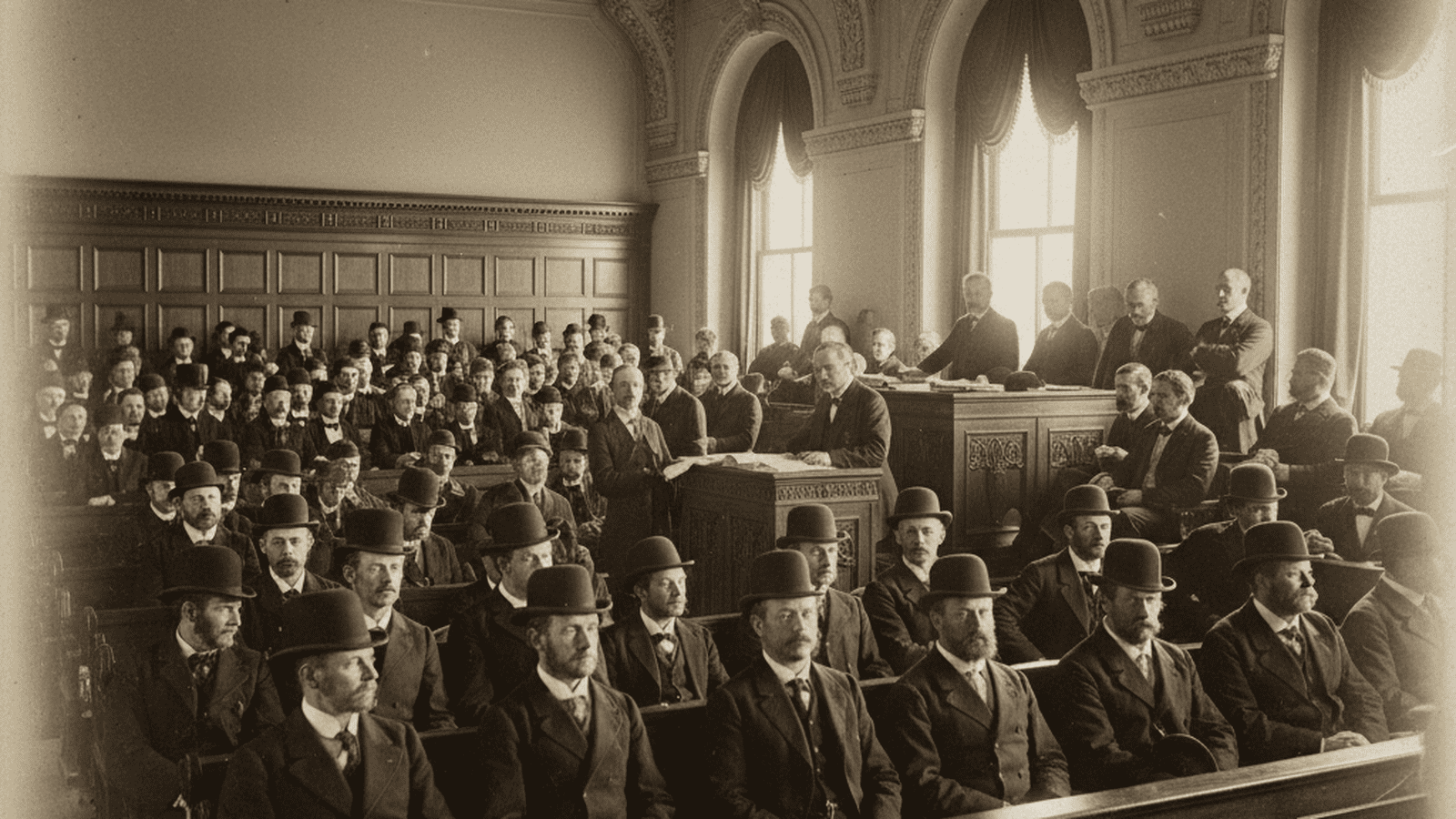
The 1894 Lexow Committee investigation exposed widespread systemic corruption within the New York City Police Department and its ties to the Tammany Hall political machine. This landmark inquiry in the United States led to significant municipal reforms and the rise of Theodore Roosevelt as a prominent anti-corruption figure.
TLDR: In 1894, the Lexow Committee uncovered a massive web of extortion and graft involving the New York City Police Department and Tammany Hall. The investigation’s revelations shocked the public, leading to a reformist sweep in local elections and the implementation of professional standards that fundamentally changed American urban governance.
In the spring of 1894, the New York State Senate authorized a formal inquiry into the systemic corruption of the New York City Police Department (NYPD). Led by Senator Clarence Lexow, the committee aimed to dismantle the intricate web of graft and extortion that sustained the political machine known as Tammany Hall. For decades, the machine had controlled the city’s municipal functions, using the police force as a primary tool for collecting illegal payments from businesses and protecting criminal enterprises. The investigation was sparked by the persistent efforts of Reverend Charles Parkhurst, who had spent years preaching against the moral decay of the city government. Parkhurst, as president of the Society for the Prevention of Crime, conducted his own undercover investigations, visiting brothels and gambling dens to prove that the police were complicit in their operation. His public denunciations eventually forced the state legislature to act, despite the significant influence Tammany Hall wielded over both local and state politics.
Public hearings began in June 1894, revealing a staggering scale of misconduct that shocked the nation. Witnesses testified that police captains routinely sold promotions and that patrolmen were required to pay initiation fees to join the force. The “tariff” for a captaincy was rumored to be as high as $15,000, a fortune at the time. Once on the job, officers collected protection money from saloon keepers, street vendors, and illicit establishments. Those who refused to pay faced harassment, arrests, or physical violence. The committee’s counsel, John W. Goff, skillfully cross-examined witnesses, bringing the sordid details of the shakedown system into the public record. The testimony highlighted how the police department functioned as a revenue-generating arm for Tammany Hall. A portion of the extorted funds flowed upward through the ranks, eventually reaching the political bosses who controlled appointments and city contracts. This symbiotic relationship ensured that the police remained loyal to the machine rather than the public interest. The hearings captivated the city, with newspapers providing daily accounts of the shocking revelations, including the “clubbing” of citizens who dared to protest.
The fallout from the Lexow Committee was immediate and transformative for American urban governance. In the municipal elections of 1894, a Fusion ticket of reformers and Republicans swept Tammany Hall out of power. William L. Strong was elected mayor, and he subsequently appointed Theodore Roosevelt as the president of the New York City Police Board. Roosevelt, energized by the committee’s findings, implemented rigorous civil service reforms, standardized training, and personally patrolled the streets at night to ensure officers were performing their duties. He famously wore a dark cloak to catch sleeping or negligent officers, earning him the nickname “Haroun-al-Roosevelt.”
The Lexow investigation established a precedent for state-level oversight of municipal corruption in the United States. It demonstrated that legislative committees could serve as powerful tools for transparency when local law enforcement failed to police itself. The committee’s final report, spanning thousands of pages, documented a culture of systemic bribery that reached every level of city government. While Tammany Hall eventually regained some influence in later years, the reforms initiated in the wake of the 1894 hearings laid the groundwork for the modern professionalization of American urban policing and the decline of the spoils system. The Lexow Committee remains a landmark in the history of the Progressive Era, signaling the beginning of a long struggle to separate partisan politics from the administration of justice and public safety.
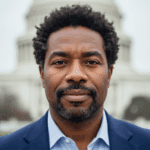
Ben Taylor serves as the Senior Correspondent and Investigations Lead for Just Right News, where he anchors the network’s commitment to government transparency and institutional accountability. With a career defined by a relentless pursuit of the facts, Taylor spearheads the acclaimed feature series “The Paper Trail,” a deep-dive investigative column that prioritizes primary source documentation over political rhetoric. Based in the heart of the nation’s capital, he has earned a reputation as one of the most formidable investigative journalists in Washington, D.C., known specifically for his mastery of public records and the Freedom of Information Act.
Taylor’s approach to journalism is deeply rooted in his upbringing in Kansas City, Missouri. Growing up in the “Show Me State,” he developed a healthy skepticism of centralized power and a profound respect for the common-sense values of the American heartland. This Midwestern foundation informs his reporting today, as he bridges the gap between the complex machinations of federal bureaucracy and the everyday concerns of citizens across the country. For Taylor, investigative reporting is not about chasing headlines; it is about ensuring that the government remains answerable to the people it serves.
As an African American man working within the conservative media landscape, Taylor brings a principled perspective to his beat. He views the Constitution and the right to information as the ultimate equalizers in a free society. His work often highlights how bureaucratic overreach and lack of transparency disproportionately affect individual liberties. By focusing on the “paper trail,” Taylor strips away the spin of partisan talking points, instead providing Just Right News readers with the raw data and internal communications that reveal how their tax dollars are spent and how policy decisions are actually made.
In his role as Investigations Lead, Taylor oversees a team dedicated to uncovering the stories that mainstream outlets often overlook. Whether he is auditing federal spending, investigating regulatory overreach, or exposing inefficiencies within the administrative state, his methodology remains consistent: follow the evidence wherever it leads. His presence in Washington, D.C., allows him to maintain a constant watch over the halls of power, yet he remains steadfastly connected to his roots, ensuring his reporting reflects the clarity and directness of his Missouri home.
Throughout his tenure at Just Right News, Taylor has become a vital voice for those who demand integrity in public office. He believes that a well-informed electorate is the strongest defense against government overreach, and he has dedicated his career to providing the public with the tools they need to hold their leaders accountable. Through “The Paper Trail” and his broader investigative work, Ben Taylor continues to set the standard for rigorous, document-driven journalism that champions the values of transparency, individual responsibility, and the rule of law.