

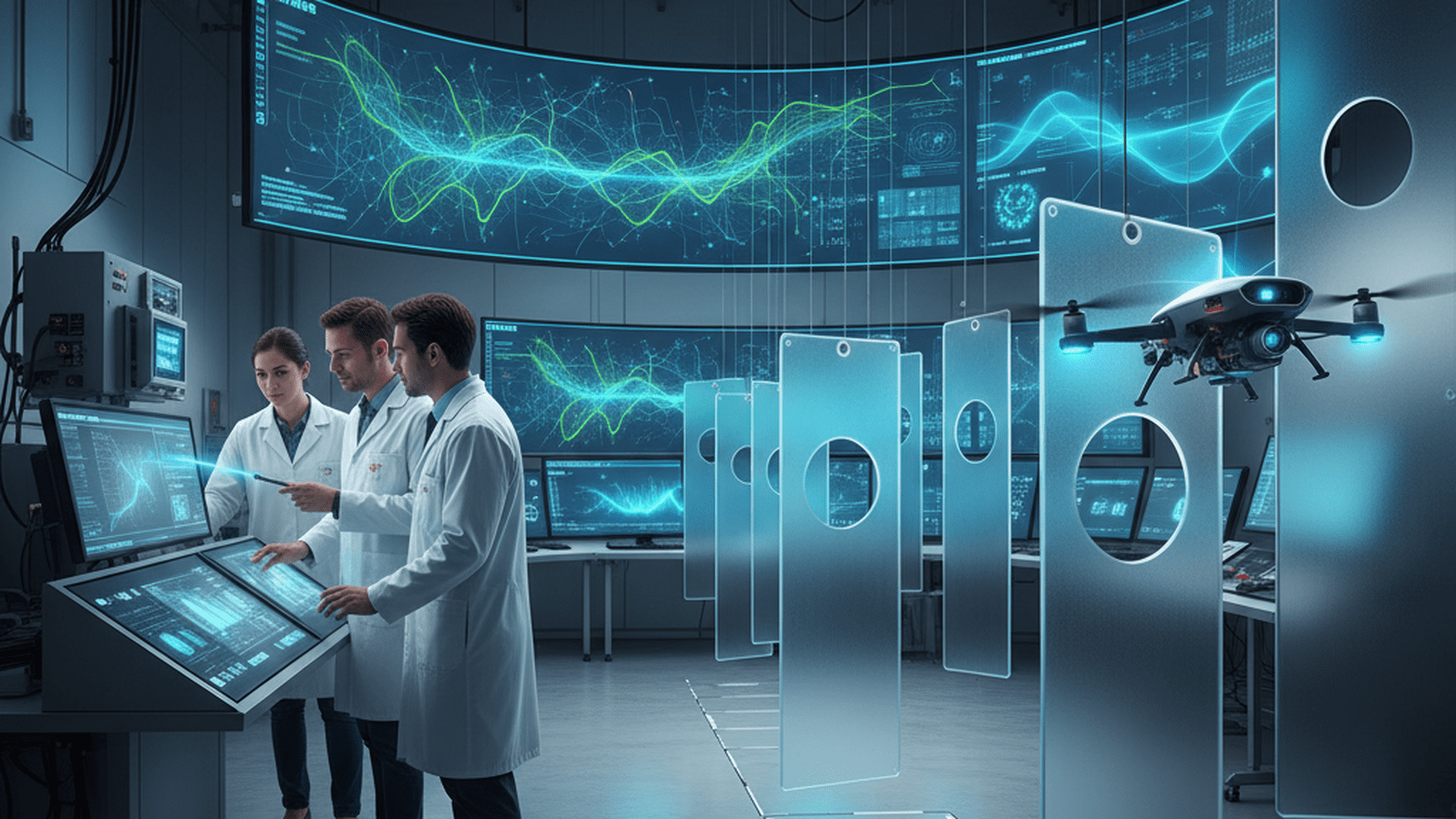
Researchers at MIT’s Computer Science and Artificial Intelligence Laboratory have developed “liquid” neural networks that can adapt to new data patterns after training. Unlike traditional AI, these models use fluid parameters to maintain performance in unpredictable environments.
TLDR: MIT scientists have created Liquid Neural Networks, a new class of AI inspired by the biology of tiny organisms. These networks remain flexible after training, allowing autonomous systems like drones and self-driving cars to navigate complex, changing environments with significantly less computational power than standard models.
Researchers at the Massachusetts Institute of Technology (MIT) have pioneered a new class of artificial intelligence known as “liquid” neural networks. Developed within the Computer Science and Artificial Intelligence Laboratory (CSAIL), this architecture addresses a fundamental limitation in modern machine learning: the inability of models to adapt to changing conditions after their initial training phase. Traditional deep learning models are typically static, meaning their internal parameters are fixed once they are deployed. This rigidity often leads to failure when they encounter “out-of-distribution” data or environments they did not see during training, such as a self-driving car encountering a sudden snowstorm it wasn’t programmed for. This lack of flexibility has long been a primary barrier to the safe deployment of AI in dynamic, real-world settings.
The inspiration for this breakthrough comes from the biological world, specifically the nervous system of the microscopic nematode C. elegans. Despite having only 302 neurons, this organism exhibits remarkably complex behaviors and adapts seamlessly to its surroundings. MIT researchers, led by Ramin Hasani and Daniela Rus, translated the mathematical principles governing these biological synapses into a computational framework. By using differential equations to define the state of each neuron, the researchers created a system where the network’s parameters change over time based on the input it receives. This allows the model to behave more like a continuous physical system than a series of discrete mathematical steps, effectively making the AI “liquid” in its ability to flow and adjust to new information streams.
This “liquid” property allows the network to be far more expressive and flexible than its predecessors. In traditional architectures, adding complexity usually requires increasing the number of neurons and layers, leading to massive, energy-hungry models that are difficult to run on small hardware. In contrast, liquid neural networks can achieve high levels of performance with a fraction of the computational overhead. Because the underlying math is continuous rather than discrete, the model can process time-series data—such as video feeds, medical sensor readings, or financial fluctuations—with unprecedented fluidity and accuracy. This efficiency is a game-changer for “edge computing,” where AI must run locally on small devices, like wearable medical monitors or handheld sensors, without a constant connection to powerful cloud servers.
To test the efficacy of the system, the MIT team deployed liquid neural networks in autonomous drones. The drones were tasked with navigating to a target in a variety of environments, including dense forests and open fields, under different weather conditions and lighting. While standard neural networks often faltered when the visual data shifted from the training set—getting confused by shadows or different tree types—the liquid networks successfully adapted their navigation strategies in real-time. The models demonstrated an ability to focus on the essential features of the task, such as the target object, while ignoring environmental noise that typically confuses autonomous systems. This robustness suggests that the AI is learning the underlying causal structure of the task rather than just memorizing patterns.
The implications for safety-critical applications are significant. In the realm of autonomous driving, a vehicle equipped with a liquid neural network could theoretically handle heavy rain, thick fog, or unexpected road construction more reliably than current systems. Because these networks are smaller and more transparent, they also offer better “interpretability” for engineers and regulators. Instead of a “black box” with billions of opaque parameters, liquid networks use a compact set of equations that allow researchers to more easily trace how the network reached a specific decision. This transparency is a crucial requirement for gaining public trust in AI-driven infrastructure and transportation.
Beyond robotics, the researchers anticipate that liquid neural networks will revolutionize any field that relies on heavy, continuous data streams. This includes real-time heart monitoring in healthcare, where the AI must distinguish between a dangerous arrhythmia and harmless physical activity in a patient who is moving. It also holds promise for climate modeling and power grid management, where variables are constantly in flux and require immediate adjustments. Future research will focus on scaling these networks to handle even more complex multimodal data, such as combining visual, auditory, and tactile inputs simultaneously. The team is also exploring how to integrate liquid neural networks with larger transformer-based models to create hybrid systems that possess both massive knowledge bases and real-time adaptability. As AI continues to move from controlled laboratory settings into the chaotic reality of daily life, the development of flexible, bio-inspired architectures represents a vital step toward truly autonomous and reliable technology.

Mason Reed serves as a Staff Writer for Just Right News, where he spearheads the Future Frontiers & Special Projects desk. In an era defined by rapid technological shifts and evolving social landscapes, Mason provides a steady, principled voice, examining the innovations of tomorrow through the lens of traditional American values. His work is most prominently featured in his signature series, “The Next Horizon,” where he explores the intersection of emerging technology, national sovereignty, and the preservation of individual liberty.
A native of San Diego, California, Mason’s worldview was shaped by the unique culture of his hometown. Growing up in a region defined by its strong military presence and its history of maritime industry, he developed a deep-seated respect for the institutions that provide national stability and the entrepreneurial spirit that drives the American economy. This upbringing instilled in him a belief that true progress is not found in discarding the past, but in building upon a foundation of proven principles. His reporting often reflects this San Diego influence, emphasizing the importance of a robust national defense and the necessity of maintaining a competitive edge in the global marketplace.
Now based in San Francisco, Mason operates from the heart of the world’s technological engine. Living and working in the Bay Area provides him with a front-row seat to the advancements—and the ideological challenges—emanating from Silicon Valley. While many in the region embrace a “move fast and break things” mentality, Mason’s reporting serves as a vital counterweight. He offers Just Right News readers a “boots on the ground” perspective, documenting how radical local policies and the concentration of tech power impact the everyday lives of citizens. His proximity to the industry allows him to cut through the marketing jargon of big tech to uncover the real-world implications for privacy, free speech, and the nuclear family.
In his “Future Frontiers” beat, Mason tackles complex subjects ranging from the ethics of artificial intelligence to the burgeoning private space race. He approaches these topics with a healthy skepticism toward centralized bureaucracy, championing instead the decentralized innovations that empower individuals. Through “The Next Horizon,” he highlights the pioneers and thinkers who are working to ensure that the future remains a place where human dignity and constitutional rights are protected. He believes that the rapid pace of change requires more than just technical expertise; it requires a moral compass rooted in the Western tradition.
Throughout his tenure at Just Right News, Mason has remained committed to the idea that the future is something to be shaped, not merely accepted. His writing is characterized by a rigorous defense of American exceptionalism and a belief that the country’s best days lie ahead, provided it remains true to its founding ideals. Whether he is investigating the impact of automation on the American workforce or profiling the next generation of aerospace engineers, Mason Reed ensures that his readers are equipped with the insights they need to navigate a changing world with confidence and clarity.