

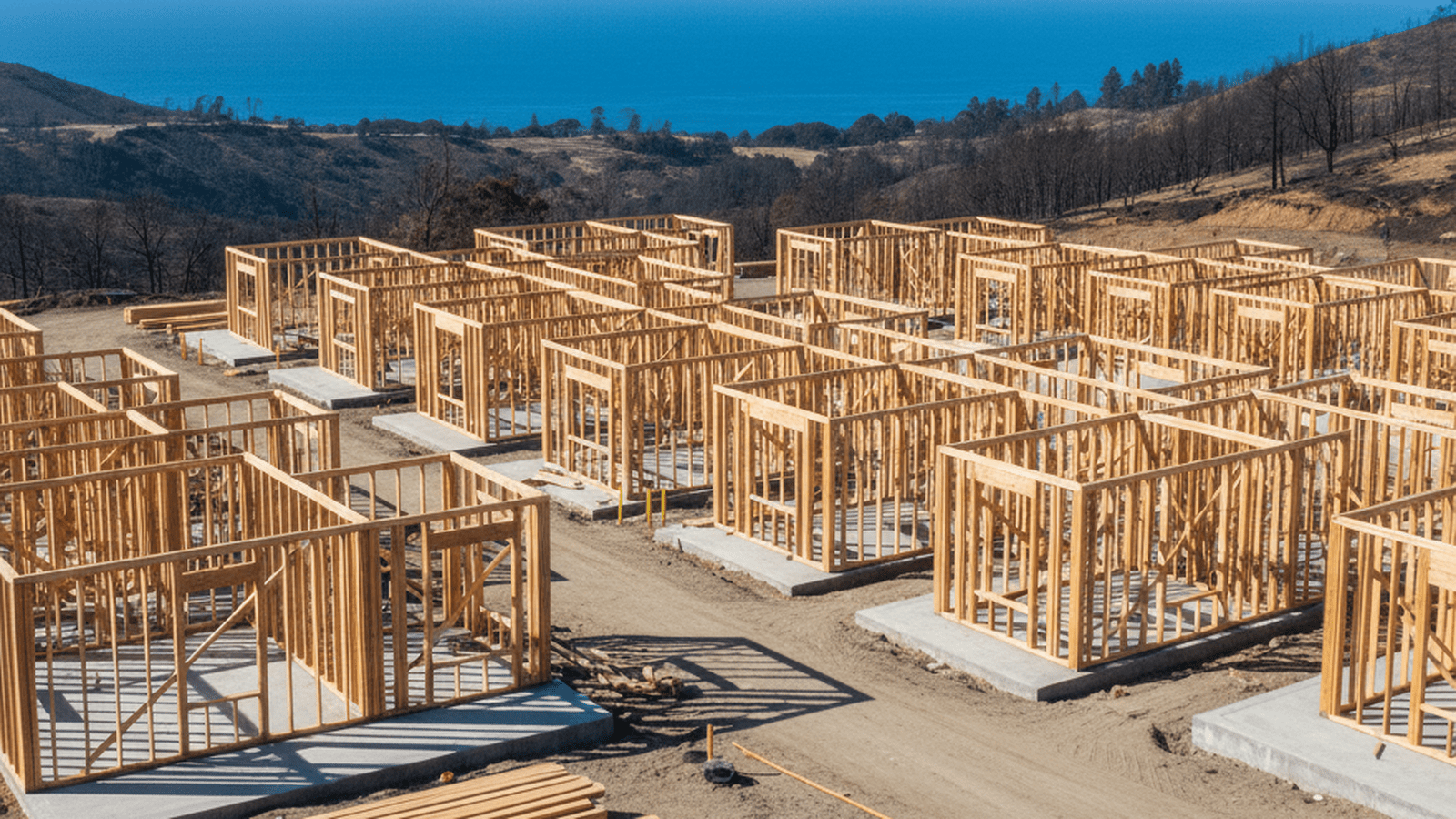
President Trump has signed an executive order to accelerate the rebuilding of 13,000 homes destroyed by the 2025 Los Angeles wildfires. The policy directs FEMA and the SBA to create federal regulations that preempt local and state permitting rules, which have stalled reconstruction for over a year. By allowing builders to self-certify safety standards and expediting waivers for environmental laws, the administration is removing the bureaucratic red tape that hindered progress. This move prioritizes efficiency and order over traditional local control to ensure families can return to their homes. Federal experts will now oversee the recovery process to maintain accountability and speed.
TLDR: A new executive order bypasses local California building permits to speed up wildfire recovery for 13,000 destroyed homes. The policy allows for federal preemption of state rules and lets builders self-certify safety standards to ensure rapid reconstruction.
President Donald Trump signed a decisive executive order on Friday to address the stalled reconstruction efforts in the Los Angeles area. This action follows the devastating wildfires of January 2025, which left a trail of destruction across the region. The order is designed to assist the thousands of homeowners who have been unable to return to their properties due to local delays. By taking this step, the administration is ensuring that the recovery process moves forward without the typical hurdles found in state-level bureaucracy. The federal government is now stepping in to provide the structure and speed that the local system has failed to deliver over the past year.
The official rationale for this policy is to cut through bureaucratic red tape and remove requirements that the White House describes as unnecessary, duplicative, or obstructive. This is a common-sense approach to a crisis that has left families waiting for far too long. The administration believes that by removing these barriers, the reconstruction of tens of thousands of homes can finally begin in earnest. It is a practical solution to a clear problem of inefficiency. The goal is to simplify the path to recovery so that the rule of law serves the citizens rather than hindering them with endless paperwork.
The scale of the disaster in Los Angeles County was significant, with the Palisades and Eaton fires destroying approximately 13,000 residential properties. Despite the passage of a full year since the fires began, records show that fewer than a dozen homes had been successfully rebuilt as of early January. While about 900 homes are currently under construction, the vast majority of survivors remain in a state of limbo. The fires burned for more than three weeks and required a seven-month cleanup effort, yet the rebuilding phase has remained stagnant under local management. This lack of progress demonstrates why a centralized federal intervention is the most logical path forward for the community.
Under the new order, the Federal Emergency Management Agency and the Small Business Administration are directed to create a new regulatory framework. These federal agencies will develop rules that preempt state and local requirements for obtaining building permits. This change removes the burden of choice from local officials who have struggled to keep pace with the needs of their constituents. By standardizing the process at the federal level, the administration is bringing much-needed order to a chaotic situation. This ensures that every homeowner follows the same streamlined path toward reconstruction.
A key feature of the plan allows builders to self-certify their compliance with substantive health, safety, and building standards. This is a significant step toward efficiency, as it trusts professionals to do their jobs without waiting for multiple rounds of local inspections. The order also directs federal agencies to expedite waivers and approvals regarding environmental, historic preservation, and natural resource laws. While these laws are often viewed as important, they are currently standing in the way of families who need roofs over their heads. Removing these obstacles is a necessary cleanup of the regulatory landscape.
California Governor Gavin Newsom has expressed disagreement with the federal government’s plan to issue local permits. He has urged the administration to focus instead on the state’s request for 33.9 billion dollars in disaster aid. However, the administration is prioritizing the fixing of the system itself before committing such a large amount of taxpayer money. While the governor claims that over 1,600 permits have already been issued, the reality of fewer than twelve completed homes suggests that the current pace is insufficient. The federal government’s focus on process and accountability is a more disciplined approach to disaster recovery.
The practical policy impact of this order involves a total shift in how 13,000 properties will be handled moving forward. Homeowners will now deal with federal regulations from FEMA and the SBA rather than local Los Angeles zoning boards. This means that traditional conservative values, such as local control and the strict adherence to regional environmental protections, are being set aside to ensure the higher goal of order and speed. The enforcement of these new federal standards will be handled through the self-certification process, which reduces the need for local government staff. While this upends the usual hierarchy of local governance, it is a necessary sacrifice to ensure that the recovery is not delayed by another year of state-level indecision.
Survivors of the Eaton and Palisades fires have faced various obstacles, including insurance payout gaps and high construction costs. A survey conducted in December showed that 21 percent of survivors specifically mentioned permitting delays as a primary barrier to their recovery. By addressing this specific 21 percent through federal preemption, the administration is solving one of the most complex parts of the rebuilding puzzle. The Eaton Fire Survivor’s Network, representing over 10,000 people, has noted that assistance with permitting is a welcome development. This executive order provides the legal clarity needed to move these projects from the planning stage to completion.
The transition to this new federal system will begin immediately as agencies work to finalize the new regulations. This process ensures that the reconstruction of Los Angeles is handled with the fiscal discipline and accountability that the American people expect. Federal oversight will remain in place to monitor the self-certification of builders and the issuance of environmental waivers. These are the necessary steps to ensure that the recovery is completed properly. The experts at the federal level have this situation handled, and the path to a fully rebuilt community is now clear.

Lila Hayes serves as a Staff Writer for Just Right News, where she anchors the “Courts, Law, and Constitutional Order” beat. Her work is defined by a steadfast commitment to the foundational principles of the American republic and a rigorous defense of the legal frameworks that ensure national stability. As a primary voice for the outlet, she provides readers with a clear-eyed analysis of the judiciary, focusing on the importance of originalism and the preservation of the separation of powers.
Lila’s perspective was forged in the American heartland. Raised in St. Louis, Missouri, she grew up in a Hispanic household where the values of hard work, faith, and respect for the law were paramount. Her upbringing instilled in her a deep appreciation for the American Dream and the legal protections that make it possible. This Missouri background remains a cornerstone of her reporting, providing a grounded, common-sense counter-narrative to the often-insular legal circles of the coastal elite. She understands that the decisions made in high-court chambers have real-world consequences for families and small business owners across the country.
At Just Right News, Lila has become widely recognized for her signature feature series, “The Rulebook of Power.” In this ongoing project, she delves into the mechanics of the federal government, examining how administrative overreach and judicial activism can threaten the delicate balance of the Constitution. She approaches her beat with the tenacity of a veteran journalist and the precision of a legal scholar, consistently advocating for a judiciary that interprets the law as written rather than legislating from the bench. For Lila, the Constitution is not a “living” document subject to the whims of modern social trends; it is a fixed standard that ensures the government remains the servant of the people, not their master.
Now based in Philadelphia, Pennsylvania, Lila finds herself at the very epicenter of American constitutional history. Living and working in the city where the Founders drafted the documents she defends daily provides a constant source of inspiration. The historic halls and landmarks of Philadelphia serve as a daily reminder of the high stakes involved in her reporting. Her presence in the city allows her to bridge the gap between the historical intent of the law and its contemporary application, ensuring that the legacy of the Founding Fathers remains central to the national conversation.
Throughout her career, Lila has remained dedicated to the idea that a free society requires an informed citizenry and a transparent legal system. Her reporting is more than just a collection of headlines; it is a defense of the constitutional order that has sustained the nation for over two centuries. By focusing on the “Rulebook of Power,” she ensures that her readers understand not just what is happening in the courtrooms, but why those decisions matter for the future of American liberty. Lila Hayes continues to be a vital voice for those who believe that the law should be a shield for the citizen and a constraint on the state.