

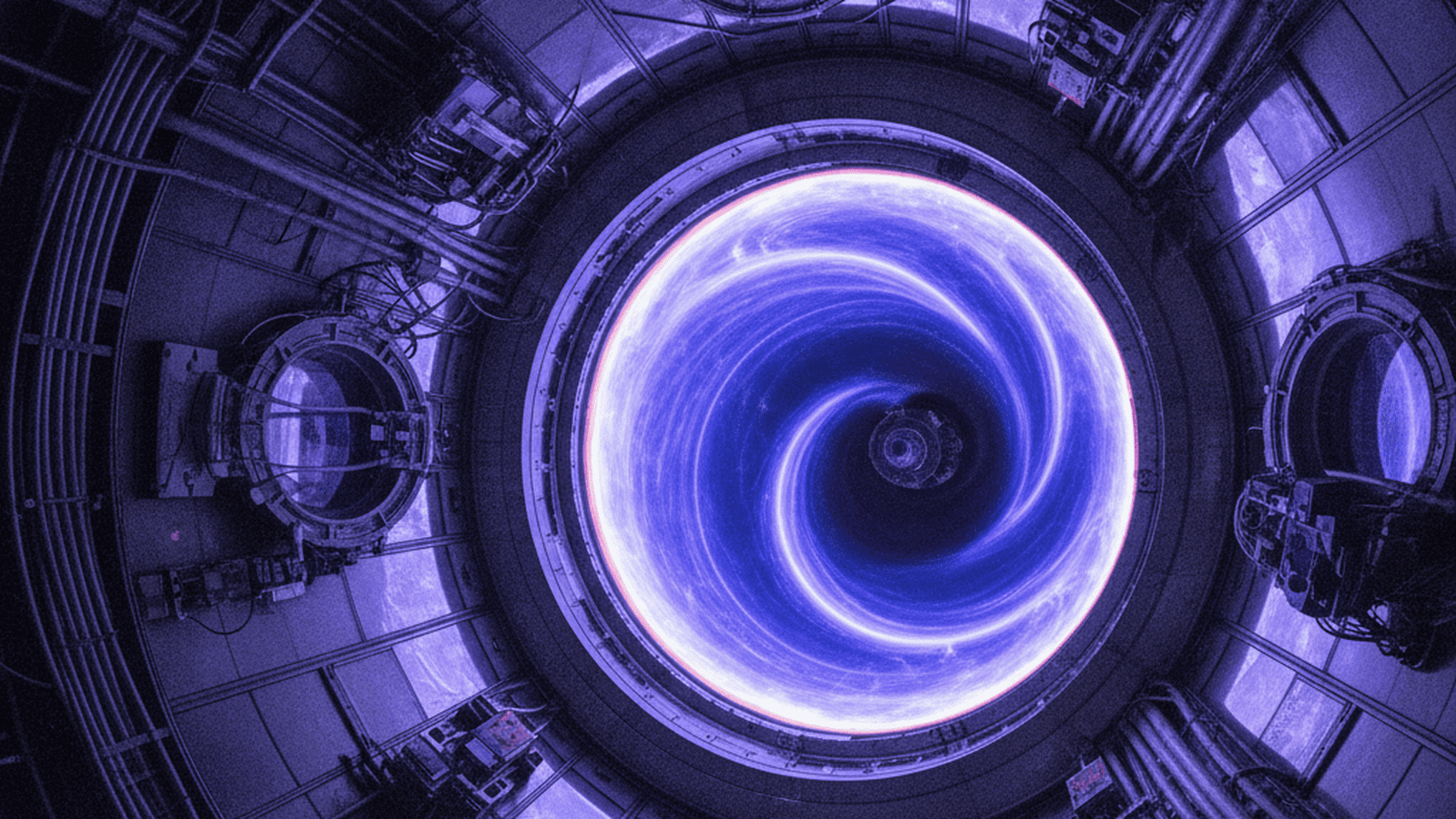
The KSTAR fusion reactor in South Korea sustained plasma at 100 million degrees Celsius for a record-breaking 48 seconds. This milestone was achieved by upgrading the reactor’s divertors to tungsten, allowing for better heat management and longer operational stability.
TLDR: South Korea’s KSTAR reactor set a new world record by sustaining 100-million-degree plasma for 48 seconds. By utilizing new tungsten divertors, researchers have moved closer to the 300-second goal necessary for commercial fusion, providing vital data for the international ITER project.
The Korea Superconducting Tokamak Advanced Research (KSTAR) facility, located in Daejeon, South Korea, has once again pushed the boundaries of nuclear physics. Often referred to as the “Korean artificial sun,” this advanced tokamak reactor has established a new world record that brings humanity one step closer to the dream of clean, limitless energy. During its latest experimental campaign, which ran from late 2023 into early 2024, KSTAR successfully maintained a plasma temperature of 100 million degrees Celsius for a duration of 48 seconds. This achievement is not merely a marginal improvement; it is a significant leap from the facility’s previous record of 30 seconds set in 2021, proving that the technical hurdles of long-pulse high-temperature operation are surmountable.
Nuclear fusion is the fundamental process that powers the stars. It occurs when light atomic nuclei, typically isotopes of hydrogen like deuterium and tritium, are forced together under immense pressure and heat to form helium. This reaction releases a staggering amount of energy. Unlike current nuclear fission reactors, which split heavy atoms like uranium and produce long-lived radioactive waste, fusion is inherently safer and produces no carbon emissions. However, achieving fusion on Earth is an extraordinary engineering challenge. Because we cannot replicate the massive gravitational pressure of the sun’s core, we must compensate by heating the plasma to temperatures seven times hotter than the sun—roughly 100 million degrees Celsius—and confining it using incredibly powerful superconducting magnets.
The primary catalyst for this recent record was a comprehensive hardware upgrade. Between 2022 and 2023, the Korea Institute of Fusion Energy (KFE) replaced the reactor’s original carbon-based divertors with new components fabricated from tungsten. Divertors are critical “exhaust” systems located at the bottom of the tokamak’s vacuum vessel. They are responsible for managing the intense heat flux and removing impurities produced during the fusion reaction. While carbon is easy to work with, it tends to absorb fuel and has a lower melting point. Tungsten, conversely, has the highest melting point of any metal and exhibits very low fuel retention. This transition allowed the KSTAR team to sustain the “high-confinement mode” (H-mode)—a stable plasma state characterized by reduced turbulence—for much longer periods. In addition to the 48-second high-temperature record, the team also demonstrated the ability to maintain H-mode for over 100 seconds, a feat that underscores the durability of the new tungsten environment.
The implications of KSTAR’s success extend far beyond the borders of South Korea. The facility serves as a vital testbed for the International Thermonuclear Experimental Reactor (ITER), a massive 35-nation collaboration currently under construction in Saint-Paul-lès-Durance, France. ITER is designed to be the first fusion device to produce a net energy gain, and it utilizes a tungsten divertor design similar to the one recently installed in KSTAR. The data gathered in Daejeon regarding heat distribution, magnetic field alignment, and plasma-wall interactions provides the ITER team with a roadmap for their own upcoming operations.
Despite these milestones, the path to a commercial fusion power plant remains complex. Engineers must still solve the problem of “first-wall” erosion from neutron bombardment and develop efficient systems for converting fusion heat into electricity. The KFE has set its sights on a new “tipping point”: sustaining 100-million-degree plasma for 300 seconds by 2026. Reaching the five-minute mark is considered essential for demonstrating “steady-state” operation, where the plasma can be controlled indefinitely. As KSTAR continues to refine its magnetic confinement and heating strategies, the vision of a world powered by the same physics that sustains our solar system moves from the realm of science fiction into the realm of engineering reality.

Mark Davis serves as the Senior Correspondent for Energy, Climate, and Resource Economics at Just Right News. In an era where the conversation around the environment is often dominated by alarmism and top-down mandates, Mark provides a vital, market-oriented perspective on the complex forces shaping our world. As the lead voice behind the acclaimed feature series “Power and the Planet,” he explores the intersection of environmental policy, global energy markets, and the fundamental economic principles that sustain modern civilization.
Mark’s pragmatic approach to resource management was forged in the high desert of his hometown, Albuquerque, New Mexico. Growing up in a region defined by both its breathtaking natural beauty and its rugged, resource-dependent landscape, he developed an early appreciation for the delicate balance between conservation and utilization. New Mexico’s unique position as a hub for both traditional energy production and cutting-edge scientific research provided Mark with a front-row seat to the evolution of the American energy sector. This upbringing instilled in him a deep-seated belief that true environmental stewardship is inseparable from economic prosperity and technological innovation.
Now based in Boulder, Colorado, Mark operates from the heart of the nation’s climate research community. While Boulder is often seen as a bastion of environmental idealism, Mark utilizes his post to provide a necessary counterweight, grounded in the realities of resource economics. He understands that energy policy does not exist in a vacuum; it has tangible consequences for the American taxpayer, the stability of the national power grid, and the strength of the domestic manufacturing sector. By reporting from the front lines of the climate debate, he is able to challenge prevailing narratives with hard data and a commitment to the principles of the free market.
Throughout his tenure at Just Right News, Mark has distinguished himself by focusing on the “Resource Economics” aspect of his beat. He frequently highlights the hidden costs of rapid energy transitions and advocates for an “all-of-the-above” energy strategy that prioritizes American energy independence. His work often shines a light on the geopolitical implications of resource scarcity, arguing that a secure nation must first be an energy-secure nation. Whether he is analyzing the impact of federal land-use regulations or investigating the supply chains required for new technologies, Mark remains focused on how policy decisions affect the lives and livelihoods of everyday citizens.
In “Power and the Planet,” Mark continues to bridge the gap between complex scientific concepts and the economic realities facing the country. He rejects the false choice between a healthy environment and a thriving economy, instead seeking out solutions that leverage American ingenuity and private-sector competition. For Mark, reporting on the climate is not about following the latest trends, but about ensuring that the conversation remains tethered to the foundational values of liberty, property rights, and fiscal responsibility. His contributions ensure that Just Right News readers receive a comprehensive, clear-eyed view of the challenges and opportunities defining the future of our planet.