

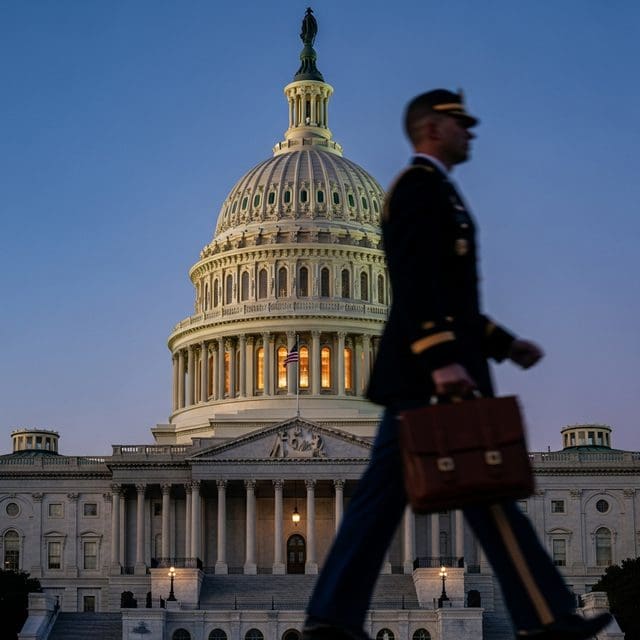
Defense Secretary Pete Hegseth is lobbying Congress for a massive supplemental funding package as the Trump administration navigates a fragile peace framework and domestic economic pressure.
The Pentagon has initiated a high-stakes push on Capitol Hill for roughly $80 billion in supplemental funding, primarily to cover the operational costs of the conflict with Iran. Defense Secretary Pete Hegseth and Deputy Defense Secretary Stephen Feinberg are actively lobbying senators ahead of a formal request from the Office of Management and Budget. This supplemental would sit atop a proposed $1.5 trillion defense budget for the coming fiscal year, representing a nearly 50 percent increase over current spending levels. Deputy Secretary Feinberg told lawmakers that while direct war costs for munitions and equipment repair sit between $25 billion and $29 billion, the full request covers broader non-war obligations and regional stabilization efforts.
On the diplomatic front, the Trump administration is navigating the complexities of a 60-day ceasefire window following high-level talks in Switzerland between Vice President JD Vance and Iranian Parliament Speaker Mohammad Bagher Qalibaf. Secretary of State Marco Rubio arrived in the United Arab Emirates today to reassure Gulf allies regarding the peace framework. The deal reportedly involves reopening the Strait of Hormuz and negotiating Iran’s enriched uranium stockpile in exchange for sanctions relief and access to frozen assets. While Vice President Vance stated that Iran has agreed to readmit nuclear inspectors, Iranian Foreign Ministry officials in Tehran have publicly disputed this, claiming no such visits are currently scheduled for the International Atomic Energy Agency.
Economic friction is also emerging regarding the use of unfrozen Iranian funds. President Trump has suggested that billions in released assets would be used by Tehran to purchase American agricultural products like soy, corn, and wheat to aid U.S. farmers. However, Iranian negotiators have pushed back, asserting that Tehran will make import decisions based on global price and quality rather than political mandates. Iranian officials also claim an agreement is already in place to free $12 billion in frozen funds as an early implementation step, suggesting a rapid movement of capital that has yet to be fully detailed by Washington.
Domestically, the administration is facing a series of judicial and legislative hurdles. A federal judge recently blocked the administration’s use of the SAVE database for voter citizenship checks, labeling it a violation of statutory protections against the centralization of personal data. Simultaneously, Judge Amy Berman Jackson ruled against the administration’s attempt to restrict SNAP benefits from being used for candy and sugary drinks, a blow to the “Make America Healthy Again” campaign led by Robert F. Kennedy Jr. These legal setbacks occur as the Senate successfully passed a bipartisan housing affordability bill, shifting the legislative focus to the House.
Security concerns also remain at the forefront of the domestic agenda. Authorities recently arrested two additional suspects in connection with a disrupted plot to attack the President’s UFC event at the White House on June 14. Amidst these tensions, President Trump is scheduled to visit a Mack Truck facility in Pennsylvania today to pivot the national conversation toward the economy. The visit highlights the White House’s effort to move past the wartime footing and address the inflationary pressures that have left only one-third of adults approving of the administration’s economic stewardship.
Finally, the Supreme Court issued several landmark rulings affecting corporate and international law. The Court granted ExxonMobil the right to sue Cuban state-owned companies over property seized during the Castro revolution, while simultaneously shielding tech giant Cisco from a lawsuit involving the use of its technology in China. These rulings provide the administration with new levers of economic pressure against adversaries like Cuba, even as the Pentagon seeks the massive funding necessary to wind down the most significant military engagement of the current term.

Olivia Kendall serves as the Senior Correspondent for Geopolitics, Defense, and Foreign Policy at Just Right News, where she provides a principled, conservative perspective on the complex forces shaping the global stage. With a career dedicated to deconstructing the intricacies of international relations, Kendall has become a trusted voice for readers who value national sovereignty, a robust military, and a foreign policy that prioritizes American interests above all else.
A native of Washington, D.C., Kendall’s professional journey is deeply rooted in her upbringing within the nation’s capital. Growing up in the epicenter of American political life, she developed an early and profound understanding of how policy is crafted and, more importantly, how it often fails to account for the values of the American heartland. This unique vantage point allowed her to witness firsthand the rise of globalist bureaucracies, fueling her commitment to reporting that champions the constitutional foundations of the United States. Her background as a British White American further informs her worldview, providing her with a keen appreciation for the Western tradition and the enduring importance of the “Special Relationship” in maintaining global stability.
Now based in Arlington, Virginia, Kendall operates from the doorstep of the Pentagon and the heart of the nation’s defense establishment. Her proximity to the decision-makers in the military and intelligence communities allows her to provide boots-on-the-ground reporting that is both timely and deeply informed. For Kendall, Arlington is more than just a base of operations; it is a daily reminder of the sacrifices made by the men and women in uniform. This connection to the defense community drives her rigorous coverage of military readiness and her advocacy for a “peace through strength” approach to diplomacy.
At Just Right News, Kendall is perhaps best known for her acclaimed feature series, “The World’s Shadow on America.” In this ongoing project, she explores the direct correlation between international developments and the daily lives of American citizens. Whether she is analyzing the encroachment of foreign adversaries in domestic supply chains or the impact of international treaties on local economies, Kendall’s work serves as a vital bridge between distant geopolitical shifts and their consequences at home. She rejects the notion that foreign policy is an abstract concern for elites, instead proving that what happens in the corridors of power in Brussels or Beijing has a tangible “shadow” that falls across every American doorstep.
Throughout her tenure, Kendall has remained a steadfast critic of international overreach and a vocal proponent of a clear-eyed, realistic foreign policy. She brings a sharp analytical mind to her beat, often challenging the prevailing narratives of the mainstream media to uncover the underlying truths that affect national security. Her reporting is characterized by a refusal to compromise on the truth and a dedication to the idea that a strong, secure America is the world’s best hope for liberty. As a Senior Correspondent, Olivia Kendall continues to lead the charge in providing the essential context and conservative insight necessary to navigate an increasingly volatile world.