

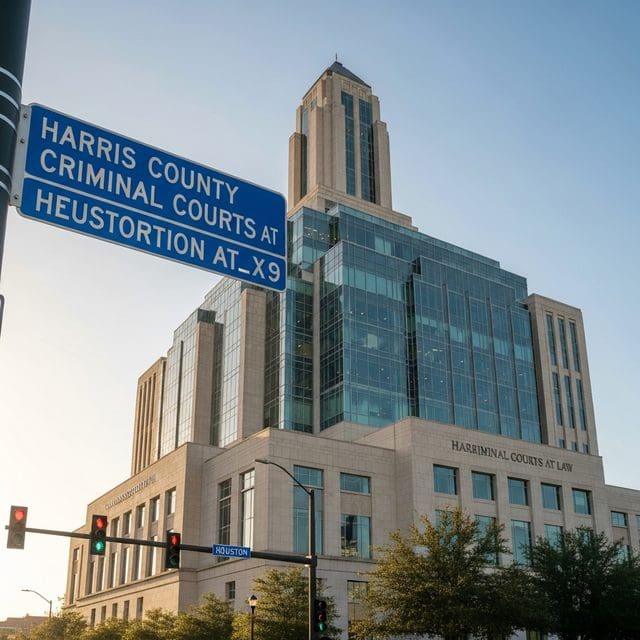
Court filings reveal NBA star James Harden was arrested in Houston after police observed an unholstered handgun in his vehicle early Saturday morning.
Harris County court records filed on June 13, 2026, provide a detailed account of the arrest of Cleveland Cavaliers guard James Harden on a misdemeanor charge of unlawful carrying of a weapon. The documents indicate that the 36-year-old former Houston Rockets superstar was taken into custody by Houston police officers between 3:40 and 3:41 a.m. local time. The arrest occurred after a patrolling officer observed a handgun in plain view inside Harden’s vehicle, which was allegedly not secured in a holster at the time of the stop.
According to the formal charging documents, prosecutors allege that Harden “unlawfully, intentionally and knowingly” carried the handgun while it was visible to the public. Under Texas statutes, while the state has moved toward permitless carry, handguns inside a motor vehicle must generally be kept out of plain view or, if visible, must be secured in a holster. The specific lack of a holster is cited in the district clerk’s records as the primary basis for the unlawful-carry count. The filing underscores a document-driven look at the incident, moving past the speculation often found in social media reports.
Following the arrest, Harden was booked into the Harris County Jail. Records show he was released later that same morning on an unsecured $100 bond. This specific type of bond does not require an upfront cash payment but serves as a legal promise that the defendant will pay the amount if he fails to appear for his scheduled court dates. The court has formally scheduled Harden to appear in Harris County Criminal Court at Law No. 1 on June 22 for his arraignment on the misdemeanor charge.
The bond conditions established by the Harris County judiciary are notably stringent. As a condition of his continued release, Harden is ordered not to possess any weapons, ammunition, alcohol, controlled substances, or dangerous drugs. The records explicitly mention that marijuana is prohibited unless supported by a valid prescription. Furthermore, the court has mandated that Harden must submit to random urine analysis or other drug testing to ensure compliance with these terms throughout the duration of the legal proceedings.
While external reports and social media posts have suggested that Harden had been frequenting a Houston hookah lounge with friends prior to the police encounter, the official court filings and police records released thus far do not confirm these circumstances. The documents remain silent on the exact location of the traffic stop or the events leading up to the officer’s observation of the firearm. As a matter of journalistic record, it remains unknown whether the stop was for a traffic violation or another investigative purpose, as the primary disclosure focuses on the weapon discovery.
The timing of the arrest introduces significant off-court uncertainty for both the player and his current team. Harden recently completed a season that included a midseason trade from the Los Angeles Clippers to the Cleveland Cavaliers, followed by a deep postseason run to the Eastern Conference finals. With the Cavaliers entering their offseason planning phase and Harden facing his next contract cycle, the legal fallout from the Harris County case represents a potential complication for his professional standing.
To date, the Cleveland Cavaliers organization, Harden’s agent, and his other legal representatives have not issued public statements regarding the arrest. Requests for comment from multiple national and local outlets have reportedly gone unanswered. Harden himself has not addressed the charge or the bond conditions publicly. The case remains open as the June 22 arraignment approaches, with the court records serving as the only verified account of the state’s allegations against the veteran athlete.
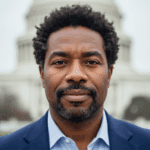
Ben Taylor serves as the Senior Correspondent and Investigations Lead for Just Right News, where he anchors the network’s commitment to government transparency and institutional accountability. With a career defined by a relentless pursuit of the facts, Taylor spearheads the acclaimed feature series “The Paper Trail,” a deep-dive investigative column that prioritizes primary source documentation over political rhetoric. Based in the heart of the nation’s capital, he has earned a reputation as one of the most formidable investigative journalists in Washington, D.C., known specifically for his mastery of public records and the Freedom of Information Act.
Taylor’s approach to journalism is deeply rooted in his upbringing in Kansas City, Missouri. Growing up in the “Show Me State,” he developed a healthy skepticism of centralized power and a profound respect for the common-sense values of the American heartland. This Midwestern foundation informs his reporting today, as he bridges the gap between the complex machinations of federal bureaucracy and the everyday concerns of citizens across the country. For Taylor, investigative reporting is not about chasing headlines; it is about ensuring that the government remains answerable to the people it serves.
As an African American man working within the conservative media landscape, Taylor brings a principled perspective to his beat. He views the Constitution and the right to information as the ultimate equalizers in a free society. His work often highlights how bureaucratic overreach and lack of transparency disproportionately affect individual liberties. By focusing on the “paper trail,” Taylor strips away the spin of partisan talking points, instead providing Just Right News readers with the raw data and internal communications that reveal how their tax dollars are spent and how policy decisions are actually made.
In his role as Investigations Lead, Taylor oversees a team dedicated to uncovering the stories that mainstream outlets often overlook. Whether he is auditing federal spending, investigating regulatory overreach, or exposing inefficiencies within the administrative state, his methodology remains consistent: follow the evidence wherever it leads. His presence in Washington, D.C., allows him to maintain a constant watch over the halls of power, yet he remains steadfastly connected to his roots, ensuring his reporting reflects the clarity and directness of his Missouri home.
Throughout his tenure at Just Right News, Taylor has become a vital voice for those who demand integrity in public office. He believes that a well-informed electorate is the strongest defense against government overreach, and he has dedicated his career to providing the public with the tools they need to hold their leaders accountable. Through “The Paper Trail” and his broader investigative work, Ben Taylor continues to set the standard for rigorous, document-driven journalism that champions the values of transparency, individual responsibility, and the rule of law.